Maintenance Plans in Culver City, CA
Maintenance in Culver City has to respect schedules built around productions, service hours and creative workflows. Plans may include quiet-hours access for edit suites, early-morning visits before restaurants prep, and coordinated shutdown windows for studio spaces. Visits cover coils, belts, filters, drains and electrical, with attention to economizer function given the mild climate. Everything is logged in the DaVinci Portal, which gives property managers of mixed-use creative buildings a clear record shared across tenants.
Studio and creative offices, Downtown Culver City restaurants, converted Hayden Tract buildings and medical offices on the Westside.
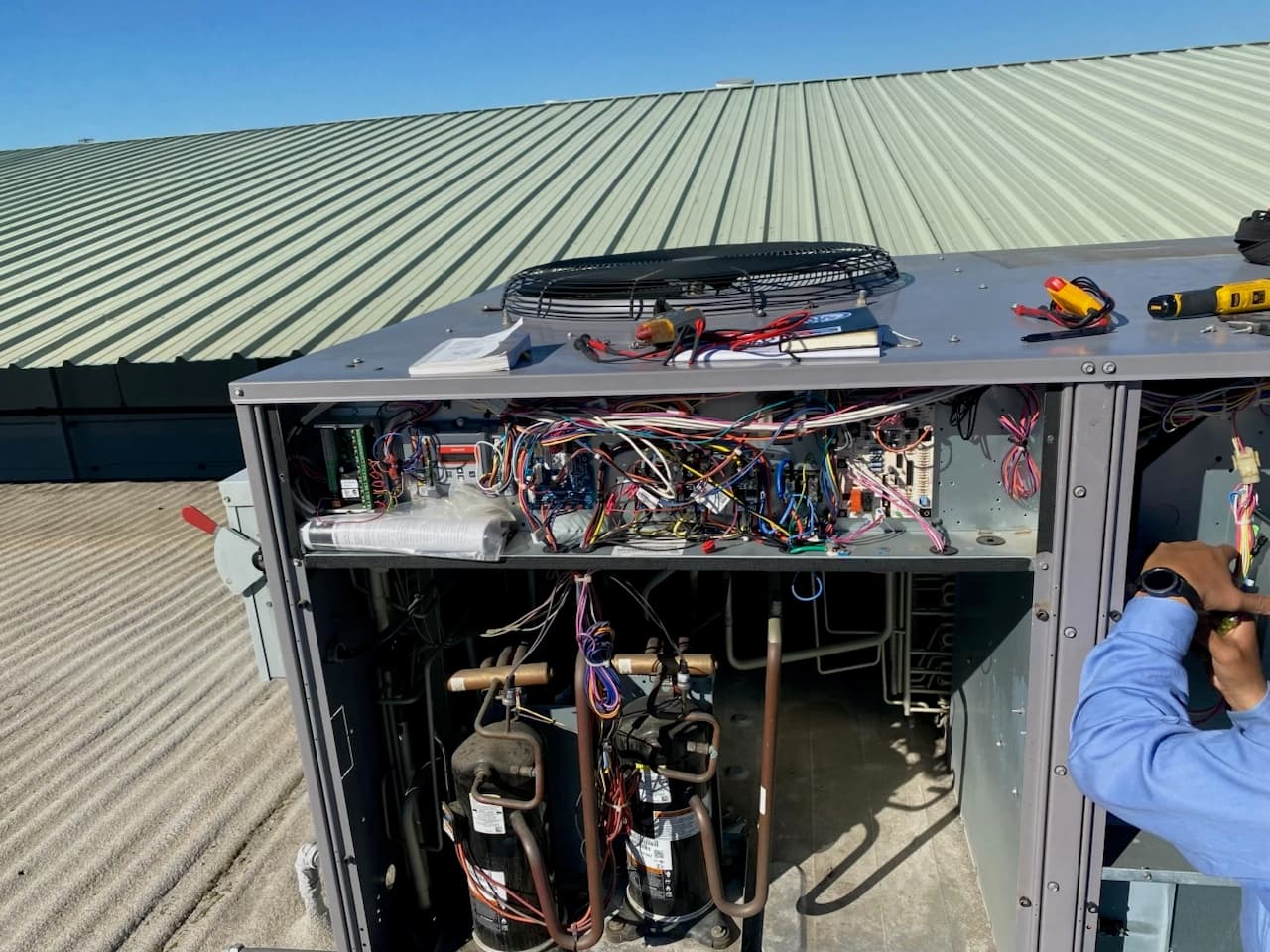
How maintenance plans work plays out in Culver City
A maintenance program in Culver City is a scheduling agreement as much as a technical one. Studio and post-production tenants need quiet-hours access and advance notice so a visit never lands during a mix or a shoot. Downtown restaurants want technicians on the roof before prep begins and gone before the first reservation. Medical offices along Sepulveda and Venice want evenings or days the practice is closed. Creative offices in the Hayden Tract and around Ivy Station and Platform are easier on hours but harder on access, with roof hatches, ladders and unusual structures that need to be planned for.
The technical emphasis is different from inland cities. Culver City's marine-influenced climate means a working economizer can carry a large share of the cooling load, so every visit verifies damper travel, sensors and changeover rather than just changing filters. Coils load with freeway and traffic particulate from the 10 and the 405 and with kitchen exhaust downtown, so condenser cleaning is on every cooling-season visit. Ductless and VRF systems are everywhere in converted buildings, and their condensate drains and filters are the most common failure we prevent. Quarterly cadence fits restaurants, food halls and studio commissaries; bi-annual fits offices, creative space and clinics; annual fits light-duty storage and small self-contained spaces.
Findings, readings and photos go into the DaVinci Portal under a QR tag on each unit, which is useful in Culver City's mixed-tenant buildings where the landlord, the tenant and a production company may all need to see the same history. The PM program guide describes a visit in detail, and the property management industry page covers multi-tenant coordination.
Culver City's climate and what it does to this equipment
Culver City sits a few miles inland from the coast on the Westside, so the marine layer regularly cools mornings and evenings, and the city sees fewer extreme heat days than the valleys. Afternoons in summer are warm, with a heat wave now and then, and humidity is moderate. That mildness means free cooling is available much of the year, which makes economizer function valuable. Salt is a lesser concern than at the beach, but sea breeze, traffic and nearby freeway particulate still load coils. Equipment runs a long cooling season with moderate peak stress.
For the equipment background behind this page, read our preventive maintenance program guide or the full Commercial Maintenance Plans service page.
- Studio campuses (Sony Pictures Studios and the Culver Studios area)Soundstages, edit suites, chilled-water systems and noise-sensitive spaces with strict uptime and acoustic requirements.
- Downtown Culver City (Culver and Washington Boulevards)Restaurants, food halls and boutique retail in older low-rise buildings with tight kitchens and shared roofs.
- Hayden Tract and the Helms Bakery DistrictConverted warehouse and creative-office buildings with exposed systems, unusual roof structures and mixed-generation equipment.
- Sepulveda, Venice and Fox Hills medical and office corridorsMedical offices and mid-rise professional buildings with zoned comfort and after-hours service needs.
- Free diagnostic on repairs for plan members
- Included labor per tier, with a member rate for anything over
- Photo-logged reports with temps, pressures, and amp draws
- DaVinci Portal included with QR tracking and self-service scheduling
What a maintenance plans visit includes, and the problems we most often find
- Walk every covered asset — RTUs, refrigeration, ice machines, water heaters
- Take and log readings against each unit's history, not a generic checklist
- Flag anything trending toward failure before it becomes a breakdown
- Deliver a photo-logged report after every visit
- Free diagnostic on any repair that comes out of the visit
- Equipment that 'seemed fine' failing without any maintenance history to catch the trend
- Multiple pieces of equipment aging out around the same time with no replacement plan
- Surprise repair costs that a documented PM history would have flagged months earlier
- Multi-location accounts with no consistent record across sites
Maintenance tiers for Culver City properties
Culver City plans are tailored to production, restaurant and creative-office schedules, with quiet-hours access, economizer verification in a mild climate, and shared records for mixed-tenant buildings.
See maintenance plan tiers