Commercial Refrigeration in Santa Monica, CA
Restaurants along Main Street and around the Promenade rely on walk-in and reach-in refrigeration located in basements, alleys, or rear service areas. Salt air attacks condenser coils and fan motors, while compact spaces limit airflow. Common failures include corroded coils, weak evaporator fans, and door-seal problems. Diagnosis considers the surrounding environment, because a well-placed, well-protected unit lasts far longer than the same equipment in a damp, poorly ventilated corner. Restaurants near the shoreline see this most clearly.
A coastal commercial market of Third Street Promenade retail, Main Street restaurants, creative and tech offices, and hospitals, all exposed to salt air.
How commercial refrigeration work plays out in Santa Monica
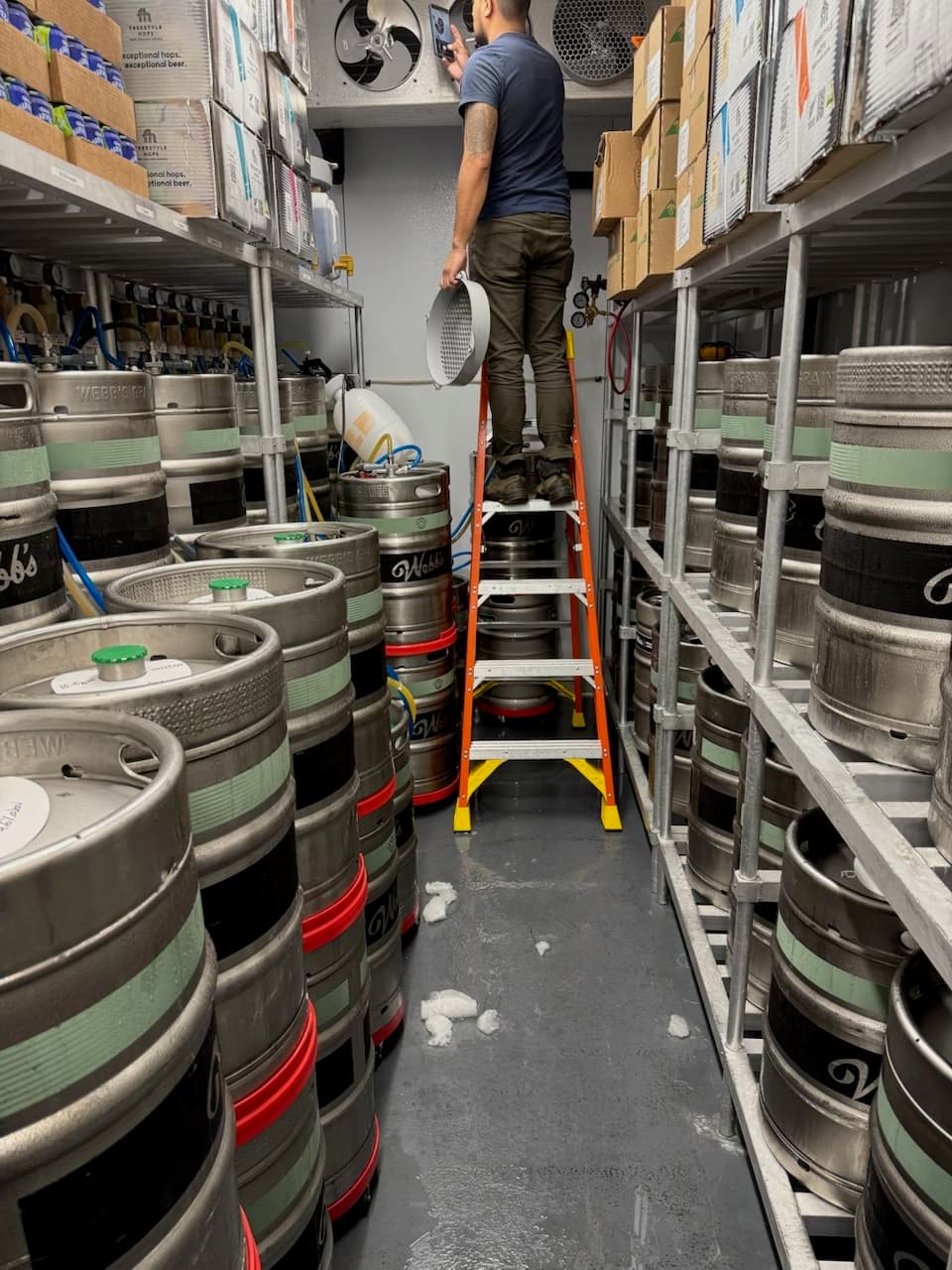
Walk-in coolers in Santa Monica live in places they were never meant to be. Restaurants along Main Street and Ocean Park Boulevard occupy small lots, so the walk-in sits in a back room, a basement, or a lean-to behind the kitchen, and its condensing unit is on a wall bracket in an alley or on a roof reachable only by ladder. Those condensers pull in salt air all day. Markets and grocery stores on Wilshire, Lincoln, and Pico Boulevards run rows of display cases with remote racks, and the corrosion story moves to the rack room and the roof-mounted condensers above it.
The failure pattern here is distinctive. Evaporator fan motors fail from moisture and salt in the box atmosphere, drain lines clog and freeze in walk-in freezers that cycle constantly on busy nights, and condensing units lose capacity gradually as fins corrode, which shows up as a box that holds 41 degrees in April and 46 degrees in August with nothing else changed. A cook props the door while prepping for the dinner rush, and the box never recovers. We look at the complete system: door gaskets and closers, evaporator airflow, defrost schedule, condenser condition and placement, and the actual load going into the box.
The job itself has to fit around service. A Main Street kitchen can usually give up its walk-in between the lunch close and dinner prep, which is a narrow window. Product is moved to a reach-in or a rented box, the repair is done, and temperatures are logged on recovery. For a grocery operator, the case lineup and rack are worked in sections so no department goes dark. Every reading goes into the asset record so the next technician knows where the box stood. Walk-in and reach-in refrigeration covers the full scope, and the walk-in guide explains how we think about box load.
Santa Monica's climate and what it does to this equipment
Santa Monica is directly on the Pacific, so salt air is the defining condition. Marine layer keeps summers mild and mornings gray, but the constant moist, salty air corrodes condenser coils, fasteners, electrical enclosures, and exposed copper far faster than inland conditions. Heat waves are less severe than in the valleys, although occasional offshore wind events can briefly drive temperatures up. Because equipment runs fewer extreme hours but suffers from corrosion, coil protection, frequent inspection, and careful hardware choices matter more than raw capacity.
For the equipment background behind this page, read our walk-in cooler and freezer guide or the full Refrigeration: Walk-In & Reach-In Coolers/Freezers service page.
- Downtown and Third Street PromenadeDense retail, restaurants, hotels, and offices with shared rooftops, limited access, and heavy foot traffic.
- Main Street and the shorelineRestaurants, cafes, and small hotels near the beach, where salt air accelerates corrosion on exposed equipment.
- Bergamot, Olympic Boulevard, and creative or tech officesConverted industrial buildings and newer mid-rise offices with modern comfort expectations and often VRF or advanced rooftop systems.
- Hospital and medical corridorsHospital campuses and medical office buildings where filtration, redundancy, and coordination with in-house engineers are central.
- Evaporator/condenser coil cleaning and defrost checks
- TXV/EEV, superheat, subcool, and pressure readings logged
- Door seals, drains, heaters, and fan packages inspected
- DaVinci Portal: temps and pressures logged by asset over time
What a commercial refrigeration visit includes, and the problems we most often find
- Check current box temperature against setpoint and recent trend
- Inspect door seals, drains, and evaporator/condenser coils for buildup
- Take superheat, subcool, and pressure readings against manufacturer spec
- Address the root cause — not just a temporary recharge
- Log readings to the asset so drift is caught early next visit
- Door seals and hinges that no longer hold a tight close
- Evaporator coils iced over from a defrost cycle issue
- Condenser coils caked with grease or debris, especially near kitchen exhaust
- Slow refrigerant leaks that show up as gradual temperature drift, not sudden failure