Chiller & Central Plant Service in Santa Monica, CA
Santa Monica's larger offices, hospital campuses, and hotels use chilled water plants and cooling towers, where salt air adds corrosion risk to tower hardware, basins, and exposed piping. Consistent water treatment and regular inspection matter more here than in dry inland settings. Davinci Mechanical tracks plant performance trends, so owners can plan overhaul or replacement work before capacity falls short, and coordinates timing around hospital operations and building schedules. Tower basins near the coast also deserve extra attention for debris and scale.
A coastal commercial market of Third Street Promenade retail, Main Street restaurants, creative and tech offices, and hospitals, all exposed to salt air.
How chiller & central plant service work plays out in Santa Monica
Central plants in Santa Monica belong to a small set of property types: the hospital campuses and their medical office buildings, larger hotels on Ocean Avenue, mid-rise office towers along Wilshire Boulevard and in the downtown core, and the newer creative campuses around Bergamot and Olympic Boulevard that were built with chilled water rather than rooftop units. These plants run far more hours than their size suggests, since mild weather means the chillers rarely stop, and a hospital plant never stops at all.
The ocean sets the maintenance agenda. Cooling towers within a mile of the beach collect salt in their basins, fill, and drift eliminators, which raises conductivity and makes water treatment harder to hold. Tower fan motors, structural fasteners, and condenser water piping corrode faster than inland. Inside the plant, the issue is usually fouled condenser tubes that push approach temperatures up and efficiency down, and a plant that slowly loses capacity until a hot September afternoon exposes it. Trending approach temperature, pump amperage, and tower performance over time is how a plant manager in this city sees problems coming.
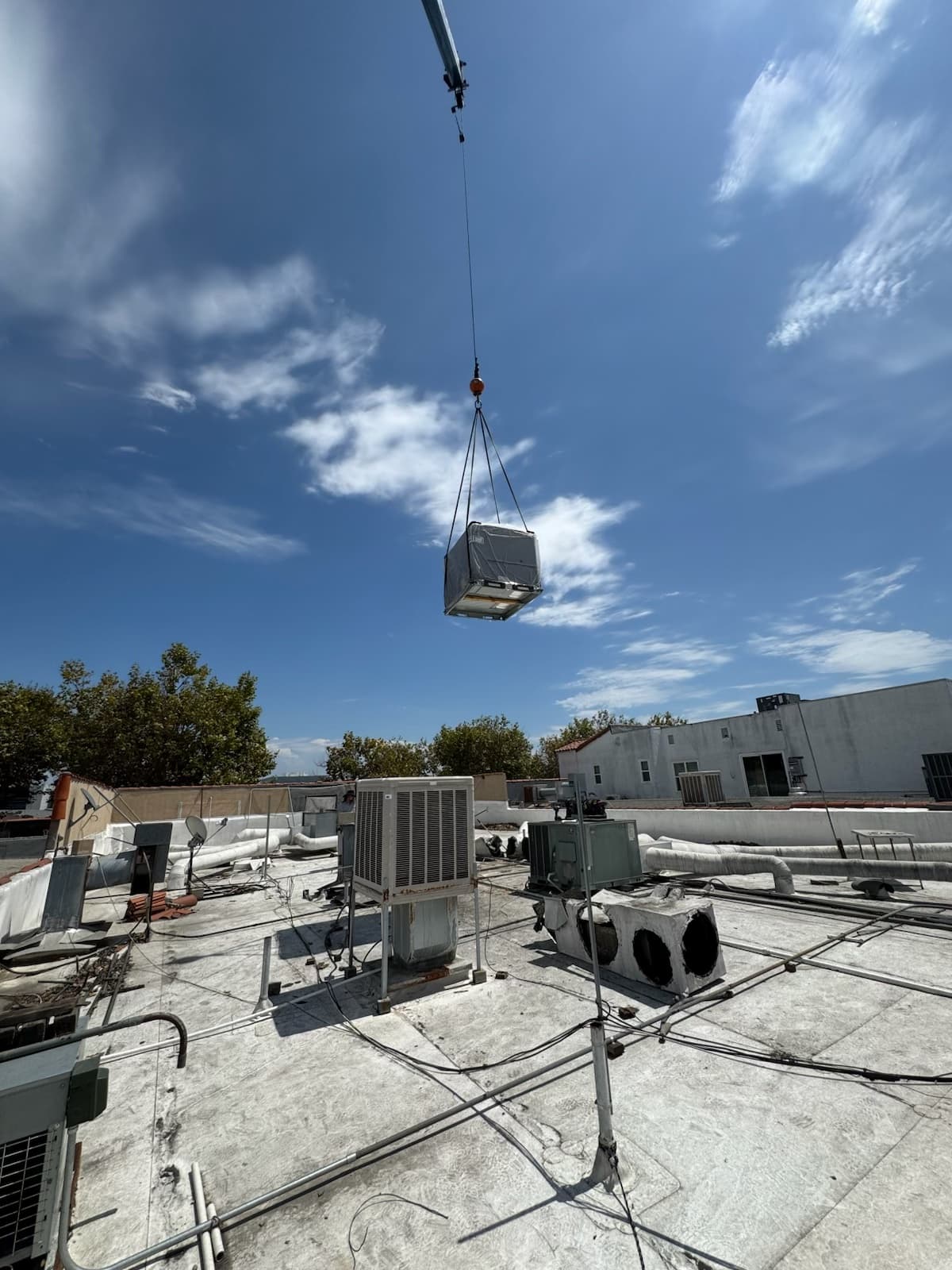
Work in a Santa Monica plant is coordinated with in-house engineers, especially at hospitals, where redundancy and infection control procedures govern every shutdown. A tower rebuild or chiller replacement is staged so one machine carries the load while the other is out, with lift logistics planned around the same street and roof constraints as any downtown job. We document every reading and every stage so the plant's record stays complete. Chillers and central plant and the chillers and hydronic guide go deeper, and larger plant projects are handled through our bid and project work.
Santa Monica's climate and what it does to this equipment
Santa Monica is directly on the Pacific, so salt air is the defining condition. Marine layer keeps summers mild and mornings gray, but the constant moist, salty air corrodes condenser coils, fasteners, electrical enclosures, and exposed copper far faster than inland conditions. Heat waves are less severe than in the valleys, although occasional offshore wind events can briefly drive temperatures up. Because equipment runs fewer extreme hours but suffers from corrosion, coil protection, frequent inspection, and careful hardware choices matter more than raw capacity.
For the equipment background behind this page, read our chillers and hydronic systems guide or the full Chillers & Central Plant Service service page.
- Downtown and Third Street PromenadeDense retail, restaurants, hotels, and offices with shared rooftops, limited access, and heavy foot traffic.
- Main Street and the shorelineRestaurants, cafes, and small hotels near the beach, where salt air accelerates corrosion on exposed equipment.
- Bergamot, Olympic Boulevard, and creative or tech officesConverted industrial buildings and newer mid-rise offices with modern comfort expectations and often VRF or advanced rooftop systems.
- Hospital and medical corridorsHospital campuses and medical office buildings where filtration, redundancy, and coordination with in-house engineers are central.
- Chiller, tower, pump, and VFD service with logged operating data
- Trend-based diagnosis: approach, delta-T, amp draw, and pressures
- Replacement planning with rigging, power, and temporary cooling considered
- Water-treatment and Legionella-control coordination for water-cooled plants
What a chiller & central plant service visit includes, and the problems we most often find
- Review the plant: chillers, pumps, towers, controls, and recent operating history
- Take full operating readings and compare against design and prior visits
- Inspect and test safeties, strainers, VFDs, valves, and control sequences
- Report findings with prioritized repairs and a forward capital outlook
- Document the plant by asset in the DaVinci Portal for the next visit
- Falling delta-T pushing chillers to run more than the load requires
- Fouled condenser tubes or coils raising approach temperature and amp draw
- Neglected water treatment causing scale, corrosion, and biological growth
- Controls overridden to manual and never returned to automatic