Building Controls & Automation in Santa Monica, CA
Santa Monica's creative and tech offices often expect modern controls, yet many buildings have systems added over time that no longer work together. Coastal mild weather means economizers should be earning their keep for many hours, so verifying their operation can deliver real savings and comfort. Updating schedules, checking sensors, and documenting setpoints supports the city's emphasis on building performance without requiring a full controls replacement. Offices around Bergamot are a common place to start.
A coastal commercial market of Third Street Promenade retail, Main Street restaurants, creative and tech offices, and hospitals, all exposed to salt air.
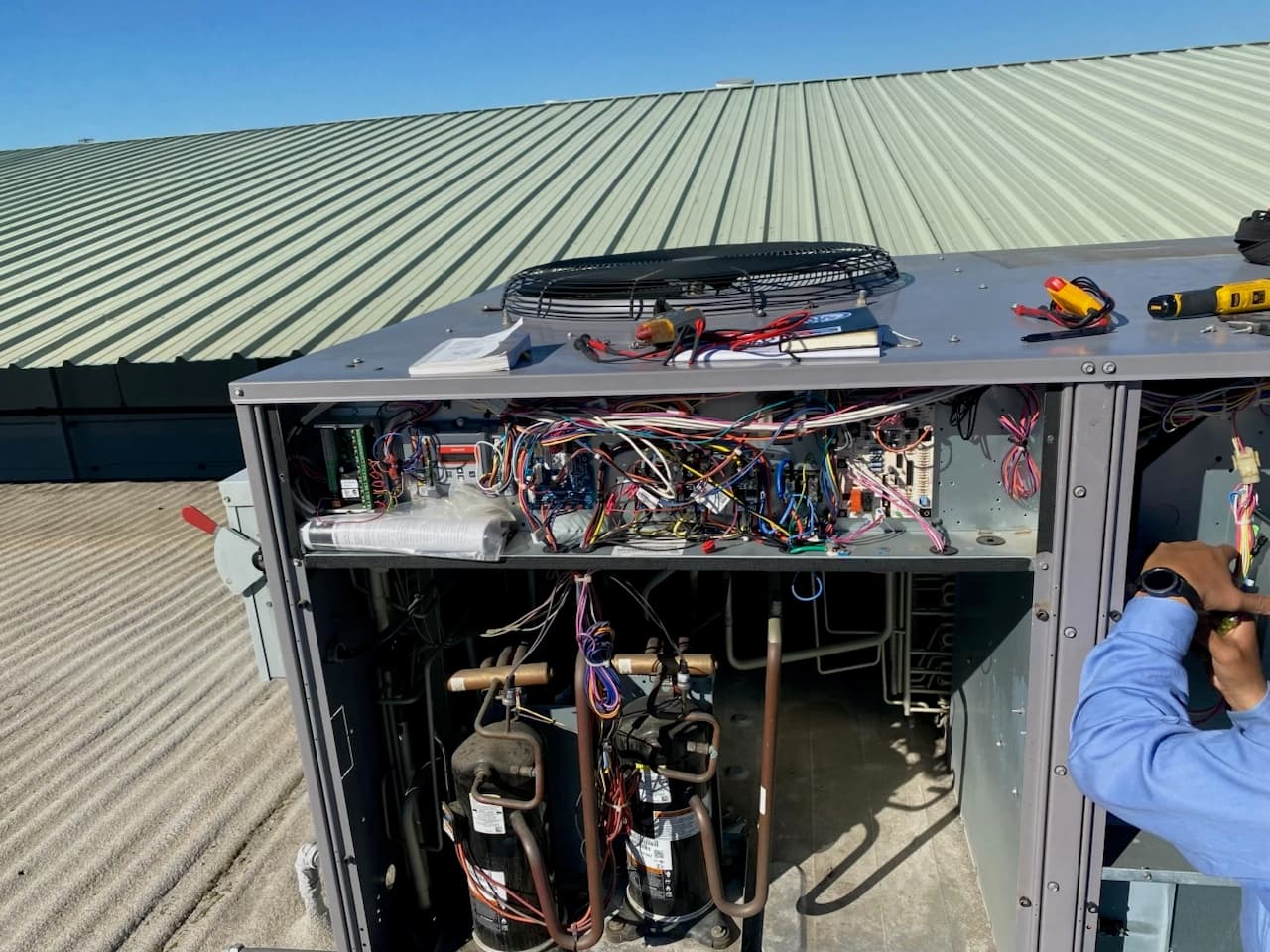
How building controls & automation work plays out in Santa Monica
Santa Monica has the climate for free cooling and the building stock that rarely uses it correctly. Offices around Bergamot, Olympic Boulevard, and the downtown core sit in air that is between 60 and 72 degrees most of the year, which means an economizer that works should carry a large share of the cooling load. In practice, damper actuators seize, outdoor air sensors drift from salt exposure, and economizers that were commissioned once a decade ago now sit closed while compressors run. Verifying that economizers actually modulate, and that sensors read the real outdoor conditions, is the highest-value controls task in this city.
The second common situation is layered systems. A creative office in a converted industrial building might have a building automation system on the central equipment, a separate VRF controller for a later tenant improvement, and standalone thermostats on a few packaged units, none of which share a schedule. Tenants complain about rooms that are too cold at 7 a.m. and too warm at 4 p.m., and the building runs equipment on weekends nobody is there. Medical office buildings near the hospital corridors have the opposite problem: tight temperature expectations and clinic schedules that the controls do not reflect.
A controls engagement here starts with an inventory of what exists and what is actually connected, then moves through sensor verification, schedule and setpoint correction, and economizer and fault detection testing. The city's emphasis on building performance means owners are often asked to document how their systems are operating, and a commissioned, documented controls setup supports that without a full system replacement. Findings and setpoints are logged against each asset in the DaVinci Portal. See building controls and automation and the property management industry page.
Santa Monica's climate and what it does to this equipment
Santa Monica is directly on the Pacific, so salt air is the defining condition. Marine layer keeps summers mild and mornings gray, but the constant moist, salty air corrodes condenser coils, fasteners, electrical enclosures, and exposed copper far faster than inland conditions. Heat waves are less severe than in the valleys, although occasional offshore wind events can briefly drive temperatures up. Because equipment runs fewer extreme hours but suffers from corrosion, coil protection, frequent inspection, and careful hardware choices matter more than raw capacity.
For the equipment background behind this page, read our building controls and energy guide or the full Building Controls & Automation service page.
- Downtown and Third Street PromenadeDense retail, restaurants, hotels, and offices with shared rooftops, limited access, and heavy foot traffic.
- Main Street and the shorelineRestaurants, cafes, and small hotels near the beach, where salt air accelerates corrosion on exposed equipment.
- Bergamot, Olympic Boulevard, and creative or tech officesConverted industrial buildings and newer mid-rise offices with modern comfort expectations and often VRF or advanced rooftop systems.
- Hospital and medical corridorsHospital campuses and medical office buildings where filtration, redundancy, and coordination with in-house engineers are central.
- Schedule, setpoint, and sequence review across rooftop and central equipment
- Sensor calibration and economizer verification
- Alarm and trend setup so problems surface early
- Programmable and networked thermostat installation
What a building controls & automation visit includes, and the problems we most often find
- Inventory controllers, thermostats, and any building automation system
- Compare schedules and setpoints to how the building is actually used
- Verify sensors, actuators, and economizer logic against measured conditions
- Correct overrides, sequences, and alarms; document the changes
- Review trends after adjustment to confirm savings and stability
- Schedules left at default so equipment runs when nobody is there
- Equipment overridden manually and never returned to automatic
- Drifting or miswired sensors producing comfort complaints
- Economizers that never actually modulate
Building Controls & Automation in Santa Monica: questions we get
Our Bergamot-area office has economizers but the energy bills suggest they are not doing anything. How would you confirm?
We command each economizer through its range, watch the damper actually move, and compare the mixed-air temperature against outdoor and return air to confirm it is bringing in outside air. Then we check the outdoor air sensor against a calibrated reference, since salt-exposed sensors drift. If the damper moves and the sensor is accurate but the sequence never calls for free cooling, the control logic or setpoints are wrong. Each unit gets a documented result so you know exactly which ones are working.
Can our building automation system and a tenant's separate VRF controls be made to share a schedule?
Often yes, through a gateway or integration module the VRF manufacturer offers, which lets the building system see the VRF zones and push schedules and setpoints to them. Whether it is worth doing depends on how many zones are involved and how the lease allocates control. In some cases, the practical answer is aligning the two schedules manually and documenting both, rather than integrating. We review what the equipment supports and recommend the path that fits the building.
Do you install building automation systems?
We install and service thermostats and controls on rooftop and mechanical equipment, and work with larger automation systems on a project basis.
Can better controls really cut energy use?
Often. Correct schedules, setpoints, and economizer operation are among the cheapest efficiency gains in an existing building.
Can you connect to our existing system?
In most cases. Send us what is installed and we will confirm the integration approach.