Maintenance Plans in Whittier, CA
Maintenance in Whittier favors consistency over scale. A typical plan covers a restaurant, a medical office suite or a small industrial building, each with a handful of units whose condition tells you how the building is aging. Visits focus on coil cleanliness, drains, belts and electrical connections, with extra filter attention during fire season. Because many buildings are older, we flag items approaching end of life early so owners can plan replacements deliberately. All history is kept in the DaVinci Portal.
Uptown Whittier restaurants, hospital and medical campuses, light industrial streets and Quad-area retail on aging but well-kept commercial buildings.
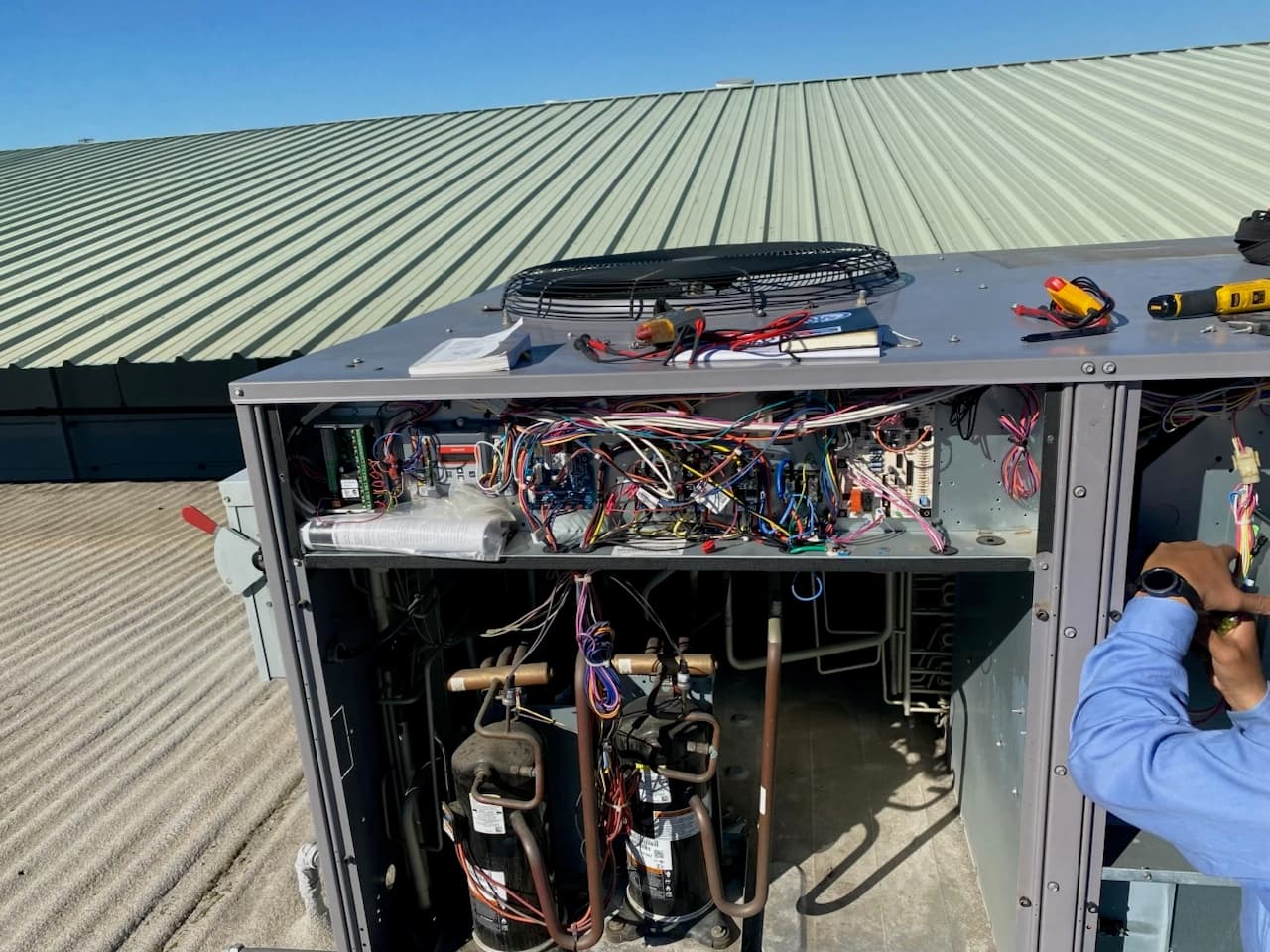
How maintenance plans work plays out in Whittier
Whittier maintenance is about watching a small number of old units closely. The typical property here is not a 40-unit distribution center; it is a two-story medical building near Washington Boulevard with six packaged units, a restaurant on Greenleaf with one rooftop unit, a walk-in and an ice machine, or a Telegraph Road shop building with three units over an office and a bay. On properties like that, each unit's condition is a leading indicator for the building, and the value of a program is catching a weak compressor, a corroded contactor or a cracked heat exchanger a season before it fails.
The seasons shape the cadence. Spring is for condenser cleaning, charge verification and economizer checks before the warm months. Fall is the Whittier-specific visit: Puente Hills fire season and Santa Ana winds load filters and coils with ash and dust, so a filter and coil pass in October or November is not optional, and heating gets started up at the same time since the city's cool evenings bring heating calls earlier than people expect. Restaurants and grocery tenants run quarterly because refrigeration and kitchen equipment never pause; medical and professional offices and most retail fit a two-visit year; a small industrial building with light-duty units can run annually with filter changes handled in between.
What distinguishes a good program for Whittier's older stock is the end-of-life flag. When a unit is approaching the point where repair no longer makes sense, the owner should hear about it in spring, with a condition report and a replacement window suggested for the following winter, rather than in a July emergency. Records and flags live in the DaVinci Portal. Program structures are on the plans page, and the general approach is in the preventive maintenance guide.
Whittier's climate and what it does to this equipment
Whittier sits in the foothills edge of the Los Angeles basin, with the Puente Hills to the east, and the marine layer reaches it more often than it reaches the San Gabriel Valley. Summers are warm to hot, commonly in the 80s and 90s with periodic heat waves, and nights cool enough to give economizers real use. Hillside areas see higher fire-season smoke and ash, which clog filters and coils. Santa Ana winds bring dust and heat in fall. Equipment faces moderate heat but significant air quality swings and the wear of buildings that are decades old.
For the equipment background behind this page, read our preventive maintenance program guide or the full Commercial Maintenance Plans service page.
- Uptown Whittier (Greenleaf Avenue)Historic low-rise restaurants, cafes and shops with retrofitted kitchens, walk-ins and shared or hard-to-reach roofs.
- Whittier Boulevard and Painter Avenue retailMid-size centers and freestanding pads with grocery, pharmacy and restaurant tenants and aging packaged units.
- PIH Health Whittier Hospital and medical office areaHospital-adjacent buildings with strict temperature, humidity and ventilation needs and after-hours service demands.
- Telegraph Road and light-industrial blocksSmall manufacturing, auto and contractor buildings with a handful of older rooftop units and limited controls.
- Free diagnostic on repairs for plan members
- Included labor per tier, with a member rate for anything over
- Photo-logged reports with temps, pressures, and amp draws
- DaVinci Portal included with QR tracking and self-service scheduling
What a maintenance plans visit includes, and the problems we most often find
- Walk every covered asset — RTUs, refrigeration, ice machines, water heaters
- Take and log readings against each unit's history, not a generic checklist
- Flag anything trending toward failure before it becomes a breakdown
- Deliver a photo-logged report after every visit
- Free diagnostic on any repair that comes out of the visit
- Equipment that 'seemed fine' failing without any maintenance history to catch the trend
- Multiple pieces of equipment aging out around the same time with no replacement plan
- Surprise repair costs that a documented PM history would have flagged months earlier
- Multi-location accounts with no consistent record across sites
Maintenance tiers for Whittier properties
Whittier plans suit small groups of older units in restaurants, medical offices and light-industrial buildings, with fire-season filter checks and early end-of-life flagging so replacements can be planned.
See maintenance plan tiers