Ice Machine Service in Santa Monica, CA
Beachfront hotels, restaurants, and bars around Santa Monica produce a lot of ice, especially in warm months and busy tourist seasons. Salt-laden air speeds corrosion on condenser fins and cabinet hardware, and water quality leads to scale inside machines. Service combines sanitation, filter replacement, and condenser cleaning, and recording each visit in the DaVinci Portal gives managers a clear trail that supports inspections and warranty claims. Beachfront operators in particular should keep proof of cleaning cycles.
A coastal commercial market of Third Street Promenade retail, Main Street restaurants, creative and tech offices, and hospitals, all exposed to salt air.
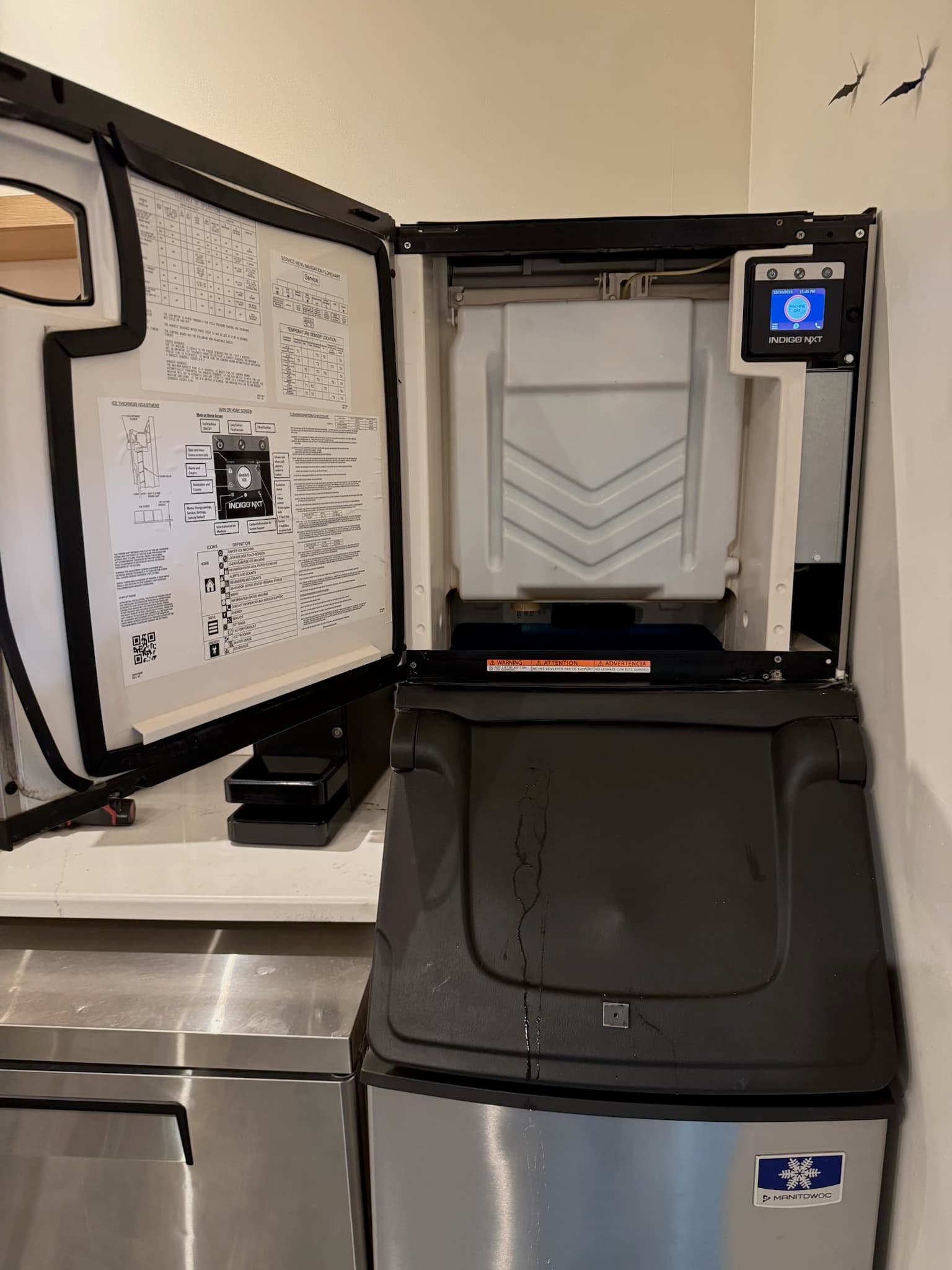
How ice machine service work plays out in Santa Monica
The hotel strip along Ocean Avenue and the restaurant and bar clusters on the Promenade, Main Street, and Montana Avenue make Santa Monica a heavy ice market for a city of its size. Summer tourism, the pier, and weekend events keep bars and hotel dispensers running at capacity from June through September, and the same salt air that attacks rooftop coils works on ice machine condensers crammed into bar back rooms, hotel service closets, and poolside enclosures with little ventilation.
Two conditions dominate ice machine problems here. First, condenser fouling from humid, salty air mixed with kitchen grease and dust cuts production and lengthens freeze cycles until the machine throws a high-temperature or long-cycle fault at the worst time. Second, water quality drives scale on evaporator plates and distribution tubes, so an unfiltered or poorly filtered machine produces smaller, cloudier cubes and starts to taste off. On a cooled hotel machine stacked in a closet with a dryer or a water heater, add heat load from neighboring equipment to the list.
A service visit in Santa Monica covers the condenser and airflow clearances, water filter condition and sizing, a full clean and sanitize, inspection of the water distribution system, and a cycle timing check against the manufacturer's spec for the measured water and air temperatures. For hotels, we schedule around checkout and housekeeping peaks; for bars, mid-morning before stocking. The sanitation record and the readings are logged so health inspections and brand audits have something to look at. See commercial ice machine service and the ice machine guide for the detail behind the checklist.
Santa Monica's climate and what it does to this equipment
Santa Monica is directly on the Pacific, so salt air is the defining condition. Marine layer keeps summers mild and mornings gray, but the constant moist, salty air corrodes condenser coils, fasteners, electrical enclosures, and exposed copper far faster than inland conditions. Heat waves are less severe than in the valleys, although occasional offshore wind events can briefly drive temperatures up. Because equipment runs fewer extreme hours but suffers from corrosion, coil protection, frequent inspection, and careful hardware choices matter more than raw capacity.
For the equipment background behind this page, read our commercial ice machine guide or the full Ice Machines — Service & Sanitation service page.
- Downtown and Third Street PromenadeDense retail, restaurants, hotels, and offices with shared rooftops, limited access, and heavy foot traffic.
- Main Street and the shorelineRestaurants, cafes, and small hotels near the beach, where salt air accelerates corrosion on exposed equipment.
- Bergamot, Olympic Boulevard, and creative or tech officesConverted industrial buildings and newer mid-rise offices with modern comfort expectations and often VRF or advanced rooftop systems.
- Hospital and medical corridorsHospital campuses and medical office buildings where filtration, redundancy, and coordination with in-house engineers are central.
- Scale removal, deep sanitation, and filter change-out programs
- Bin sensors, harvest cycles, pumps, and valves checked
- OEM-spec readings taken against manufacturer PM intervals
- DaVinci Portal: photo-logged cleanings and reminder scheduling
What a ice machine service visit includes, and the problems we most often find
- Check ice quality, production rate, and bin sensor operation
- Full descale of water lines and evaporator plate
- Sanitize all food-contact surfaces per manufacturer spec
- Inspect water filtration and replace if due
- Photo-document the cleaning for your compliance records
- Scale buildup from hard water slowing production and clouding ice
- Bin sensors misreading and causing over- or under-production
- Water filters overdue for change, affecting both taste and machine health
- Visible slime or mold in the bin — the most common health-inspection flag