Building Controls & Automation in Downey, CA
Mall tenants, medical buildings and legacy industrial properties in Downey tend to have a patchwork of control systems added over time. We map what is installed, verify sensors and dampers, and clean up schedules and setpoints. In humid summers, controls that manage dehumidification and fresh air matter for comfort and mold prevention. For hospital-adjacent buildings, we confirm that pressure relationships and ventilation schedules match design, and we deliver trend reports that facility teams can use directly.
Stonewood-area retail, multiple hospital campuses, former aerospace sites and light industrial blocks in the Gateway Cities.
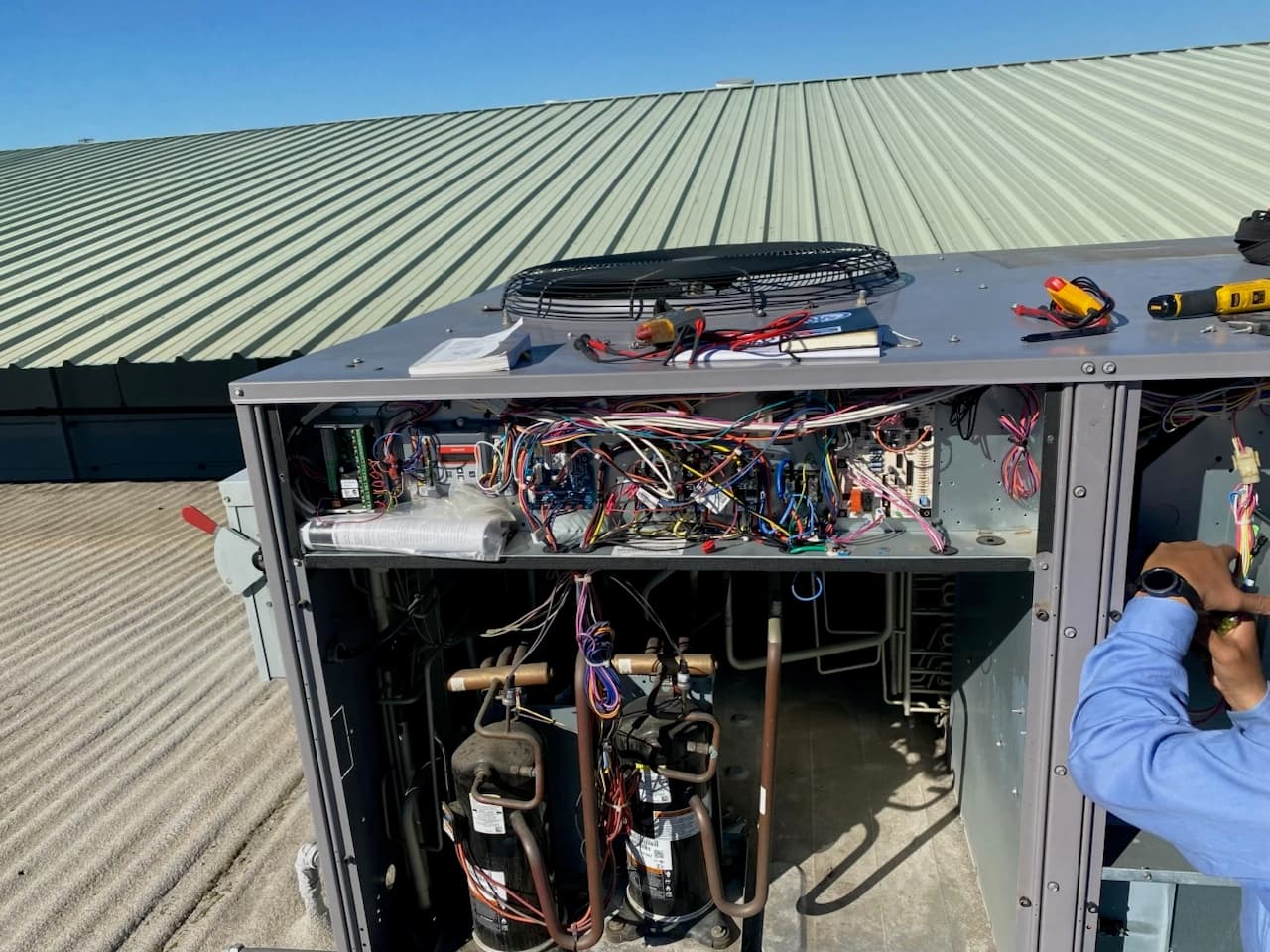
How building controls & automation work plays out in Downey
Controls in Downey are a layer cake. A medical office near Rancho Los Amigos might have a building automation system from the 1990s on the central equipment, programmable thermostats added by tenants in the 2000s, and wireless thermostats a franchisee installed last year, none of which talk to each other. Stonewood-area retail tenants often have landlord-controlled rooftop units and tenant-controlled splits in the same space. Former aerospace buildings retrofitted for new tenants may still have pneumatic controls on some equipment and direct digital controls on others.
The work starts with a map: what is installed, what it controls, who owns it and what schedule it is actually running. From there we verify the pieces that matter most in this climate. Economizers deserve attention because Downey gets a usable number of mild mornings for free cooling, yet most dampers we open are stuck, disconnected or wired to a failed sensor. Fresh-air settings matter because humid outdoor air brought in without control raises latent load and feeds mold in ceiling spaces. Schedules matter because an office unit running all weekend to serve a single server closet is a common waste we find in Downey professional buildings.
For clinical and care buildings we go further: confirm that pressure relationships between procedure, waiting and corridor spaces match the design intent, that ventilation schedules follow occupancy, and that the trend logs can be exported for a compliance file. The deliverable is a cleaned-up schedule and setpoint set, verified sensors and dampers, and a trend report the owner can read. Records live in the DaVinci Portal. For the broader approach see the diagnostics guide.
Downey's climate and what it does to this equipment
Downey is part of the flat, warm Gateway Cities plain, inland of the coast but still influenced by the marine layer on many mornings. Summers bring warm, humid afternoons in the 80s and low 90s, with occasional heat waves that push higher, and warm nights that keep cooling equipment running late. Humidity makes condensate and coil cleanliness more important than in drier valleys. Freeway traffic, rail and nearby industry put fine particulate on filters and coils. Equipment is rarely heat-limited but works long hours in moderately dirty, humid air.
For the equipment background behind this page, read our building controls and energy guide or the full Building Controls & Automation service page.
- Stonewood Center and Lakewood Boulevard retailEnclosed-mall and surrounding national tenants with restaurants, food courts and shared roof and plant systems.
- Kaiser Downey and Rancho Los Amigos medical corridorHospital and rehabilitation campuses plus nearby medical offices with strict environmental and documentation requirements.
- Downtown Downey and Firestone BoulevardOlder low-rise offices, restaurants and professional buildings with aging rooftop and split-system equipment.
- Former aerospace and rail-line light industrial areasLarge legacy buildings and smaller industrial properties adapted from aerospace use, often with mixed-vintage mechanical systems.
- Schedule, setpoint, and sequence review across rooftop and central equipment
- Sensor calibration and economizer verification
- Alarm and trend setup so problems surface early
- Programmable and networked thermostat installation
What a building controls & automation visit includes, and the problems we most often find
- Inventory controllers, thermostats, and any building automation system
- Compare schedules and setpoints to how the building is actually used
- Verify sensors, actuators, and economizer logic against measured conditions
- Correct overrides, sequences, and alarms; document the changes
- Review trends after adjustment to confirm savings and stability
- Schedules left at default so equipment runs when nobody is there
- Equipment overridden manually and never returned to automatic
- Drifting or miswired sensors producing comfort complaints
- Economizers that never actually modulate