Building Controls & Automation in Pomona, CA
Campus buildings, hospitals and larger industrial tenants in Pomona often have controls that are only partly used. Schedules drift, sensors read wrong and economizers sit closed through the cool mornings when free cooling would carry the load. We verify sensors and dampers, commission scheduling, and review alarms so real issues stand out. With hot afternoons and cool, dry nights, correct economizer operation and night setback produce meaningful runtime savings, and trend data supports replacement planning for institutional budgets.
A mixed inland city of Cal Poly Pomona, the Fairplex, industrial parks and a revitalizing downtown, where hot, dry summers drive heavy cooling loads.
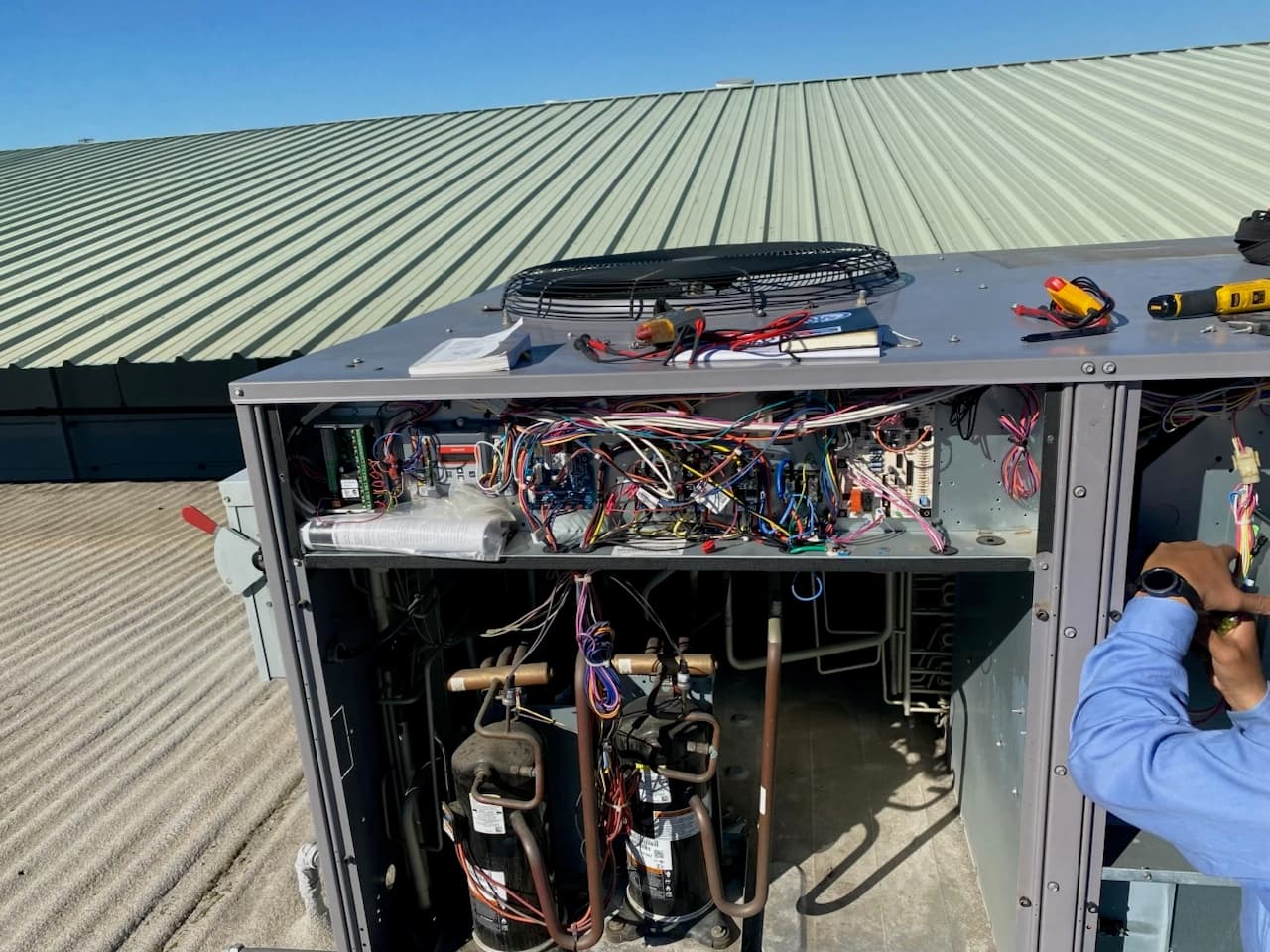
How building controls & automation work plays out in Pomona
Pomona's nights are the opportunity. Even in July, a dry inland evening can drop into the 60s, and a building whose economizers open and whose schedule sets back at night pre-cools itself for free before the morning. Walk through the office parks near the 71 and the 60, the medical buildings along Garey Avenue or an older campus building, and the most common finding is that none of that is happening: economizers stuck closed since a repair years ago, outdoor air sensors reading ten degrees off, schedules set to occupied around the clock because someone got a complaint once and never changed it back.
Institutional buildings tend to have a building automation system that is only partly used. Points exist but are not trended, alarms are so numerous that staff ignore all of them, and sequences written for the original tenant no longer match how the building is occupied. For a public owner, verifying what the system actually does is also a compliance exercise, since Title 24 acceptance testing on new equipment assumes the controls perform as documented. Our visits verify sensors against reference instruments, stroke dampers and actuators, confirm schedules against actual occupancy and prune the alarm list to what matters.
For the single-tenant industrial buildings that make up much of the city's commercial stock, the controls question is simpler: a handful of thermostats, often mismatched and sometimes residential grade, on units that would benefit from a basic networked platform with remote visibility. That upgrade is modest, and the data it produces feeds replacement planning. The building controls page covers the range, from thermostat standardization to full BAS commissioning.
Pomona's climate and what it does to this equipment
Pomona lies in the eastern part of the Los Angeles basin where the marine layer rarely reaches in summer, so days are hot, sunny and dry, with frequent stretches above 95 degrees and occasional triple-digit heat. Cooling coils work long hours, condensers reject heat into very hot air, and compressors see sustained high head pressure. Santa Ana winds in fall bring dust and debris that clog outdoor coils and intake screens. Winters are mild but nights can be cool enough for heating calls. Smog and fine particulate also load filters faster than at the coast.
For the equipment background behind this page, read our building controls and energy guide or the full Building Controls & Automation service page.
- Cal Poly Pomona campus and surrounding institutional areaUniversity buildings with chilled water, lab ventilation and public-agency procurement requirements.
- Fairplex and the Fairplex Drive corridorExhibition halls and event facilities with highly seasonal loads, large spaces and temporary-use cooling.
- Downtown Pomona and the Arts ColonyOlder masonry buildings housing restaurants, breweries and galleries, with tight back-of-house refrigeration and rooftop access challenges.
- Mission, Holt and Garey industrial parksMulti-generation warehouse and manufacturing buildings with mixed-vintage rooftop fleets and aging controls.
- Schedule, setpoint, and sequence review across rooftop and central equipment
- Sensor calibration and economizer verification
- Alarm and trend setup so problems surface early
- Programmable and networked thermostat installation
What a building controls & automation visit includes, and the problems we most often find
- Inventory controllers, thermostats, and any building automation system
- Compare schedules and setpoints to how the building is actually used
- Verify sensors, actuators, and economizer logic against measured conditions
- Correct overrides, sequences, and alarms; document the changes
- Review trends after adjustment to confirm savings and stability
- Schedules left at default so equipment runs when nobody is there
- Equipment overridden manually and never returned to automatic
- Drifting or miswired sensors producing comfort complaints
- Economizers that never actually modulate