Building Controls & Automation in Culver City, CA
Creative offices and studio spaces in Culver City often have sophisticated comfort expectations but inconsistent control hardware: a mixture of thermostats, building automation points and tenant-installed devices. We verify sensors, dampers and schedules, and clean up logic so that production, office and event spaces run on rules that match how they are used. With a mild coastal-influenced climate, economizers and night flush should carry a large share of cooling, and we confirm they actually do. Trend reporting gives managers evidence for tenant discussions.
Studio and creative offices, Downtown Culver City restaurants, converted Hayden Tract buildings and medical offices on the Westside.
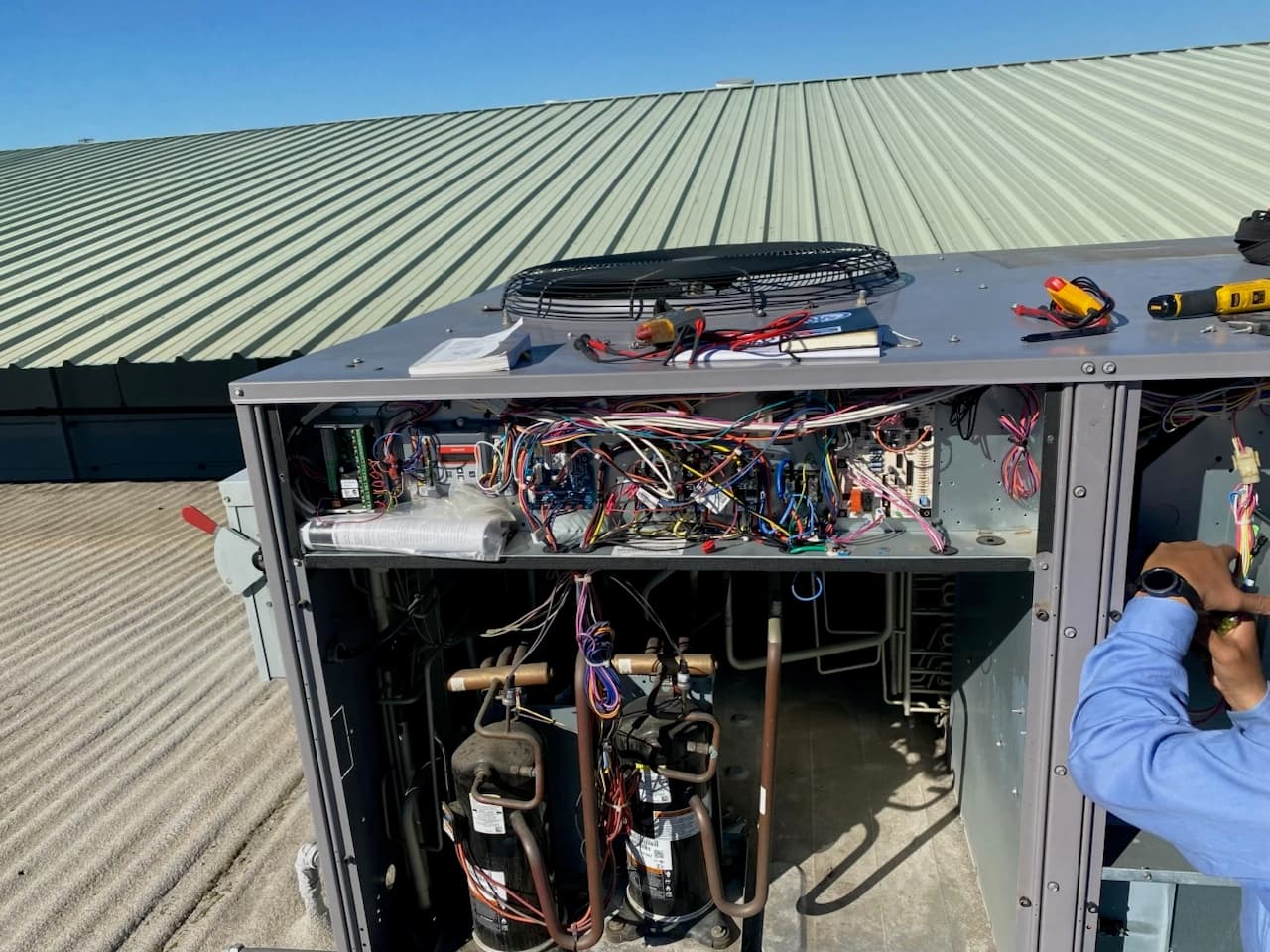
How building controls & automation work plays out in Culver City
Controls in Culver City have to serve people who care about comfort precisely. A color-grading suite needs a stable temperature with no airflow noise, a stage needs to be pre-cooled on a schedule tied to a call sheet, a creative office wants a cool, quiet open floor with no visible equipment, and a restaurant wants the dining room comfortable without the kitchen's heat driving the thermostat. The hardware behind those expectations is usually a mix of a building automation system on central equipment, standalone thermostats on rooftop units, and manufacturer controllers on VRF and ductless systems, often with no common schedule.
The first task is mapping what controls what and who owns it, which in a Hayden Tract or Ivy Station building may involve the landlord, the tenant and a production company. The second is making the mild climate work. Culver City has many hours when outdoor air can cool a building for free, so we verify economizer dampers, sensors and changeover logic, and we set up night flush where the building allows it. The third is schedules: production spaces tied to a calendar, offices to occupancy, restaurants to service hours. A server room or edit bay that keeps a whole rooftop unit running all night is a frequent find, and a dedicated split or VRF zone is often the fix.
The deliverable is a documented control scheme, verified sensors and dampers, and trend reports a facilities manager can show a tenant who insists the space is too warm. Records live in the DaVinci Portal. For how controls fit into a broader diagnostic approach, see the root-cause diagnostics guide.
Culver City's climate and what it does to this equipment
Culver City sits a few miles inland from the coast on the Westside, so the marine layer regularly cools mornings and evenings, and the city sees fewer extreme heat days than the valleys. Afternoons in summer are warm, with a heat wave now and then, and humidity is moderate. That mildness means free cooling is available much of the year, which makes economizer function valuable. Salt is a lesser concern than at the beach, but sea breeze, traffic and nearby freeway particulate still load coils. Equipment runs a long cooling season with moderate peak stress.
For the equipment background behind this page, read our building controls and energy guide or the full Building Controls & Automation service page.
- Studio campuses (Sony Pictures Studios and the Culver Studios area)Soundstages, edit suites, chilled-water systems and noise-sensitive spaces with strict uptime and acoustic requirements.
- Downtown Culver City (Culver and Washington Boulevards)Restaurants, food halls and boutique retail in older low-rise buildings with tight kitchens and shared roofs.
- Hayden Tract and the Helms Bakery DistrictConverted warehouse and creative-office buildings with exposed systems, unusual roof structures and mixed-generation equipment.
- Sepulveda, Venice and Fox Hills medical and office corridorsMedical offices and mid-rise professional buildings with zoned comfort and after-hours service needs.
- Schedule, setpoint, and sequence review across rooftop and central equipment
- Sensor calibration and economizer verification
- Alarm and trend setup so problems surface early
- Programmable and networked thermostat installation
What a building controls & automation visit includes, and the problems we most often find
- Inventory controllers, thermostats, and any building automation system
- Compare schedules and setpoints to how the building is actually used
- Verify sensors, actuators, and economizer logic against measured conditions
- Correct overrides, sequences, and alarms; document the changes
- Review trends after adjustment to confirm savings and stability
- Schedules left at default so equipment runs when nobody is there
- Equipment overridden manually and never returned to automatic
- Drifting or miswired sensors producing comfort complaints
- Economizers that never actually modulate
Building Controls & Automation in Culver City: questions we get
Our Culver City color suite needs a very stable temperature. Can standard controls achieve that?
Standard thermostats usually cannot; they cycle equipment and let the room swing. Stable rooms come from a dedicated zone with modulating capacity, such as a VRF indoor unit or a variable-speed system, a sensor placed where the room is actually sensed, and control logic tuned for narrow deadband without short-cycling. We also address airflow noise, since a quiet room that drifts and a stable room that hums both fail the colorist. Trend logs show the result.
How much can an economizer really save in Culver City?
More than in most of Southern California. The marine layer and sea breeze keep many mornings, evenings and shoulder-season days cool enough to carry the building on outdoor air, so a functioning economizer can displace a meaningful share of mechanical cooling hours. Most economizers we inspect are not working. We verify damper travel, actuator, sensors and changeover, and we log before and after so you can see the mechanical cooling hours drop.
Do you install building automation systems?
We install and service thermostats and controls on rooftop and mechanical equipment, and work with larger automation systems on a project basis.
Can better controls really cut energy use?
Often. Correct schedules, setpoints, and economizer operation are among the cheapest efficiency gains in an existing building.
Can you connect to our existing system?
In most cases. Send us what is installed and we will confirm the integration approach.