Building Controls & Automation in Whittier, CA
Whittier's mix of older medical offices, retail and small plants means a lot of aging thermostats and standalone controllers. We verify schedules, sensor accuracy and economizer operation, and upgrade controls where it pays. Because evenings cool off reliably, economizers should do real work, but we often find them stuck closed or disabled by a past repair. For the hospital campus and larger buildings, we review alarm configuration and trending so facility teams can respond to problems before occupants notice them.
Uptown Whittier restaurants, hospital and medical campuses, light industrial streets and Quad-area retail on aging but well-kept commercial buildings.
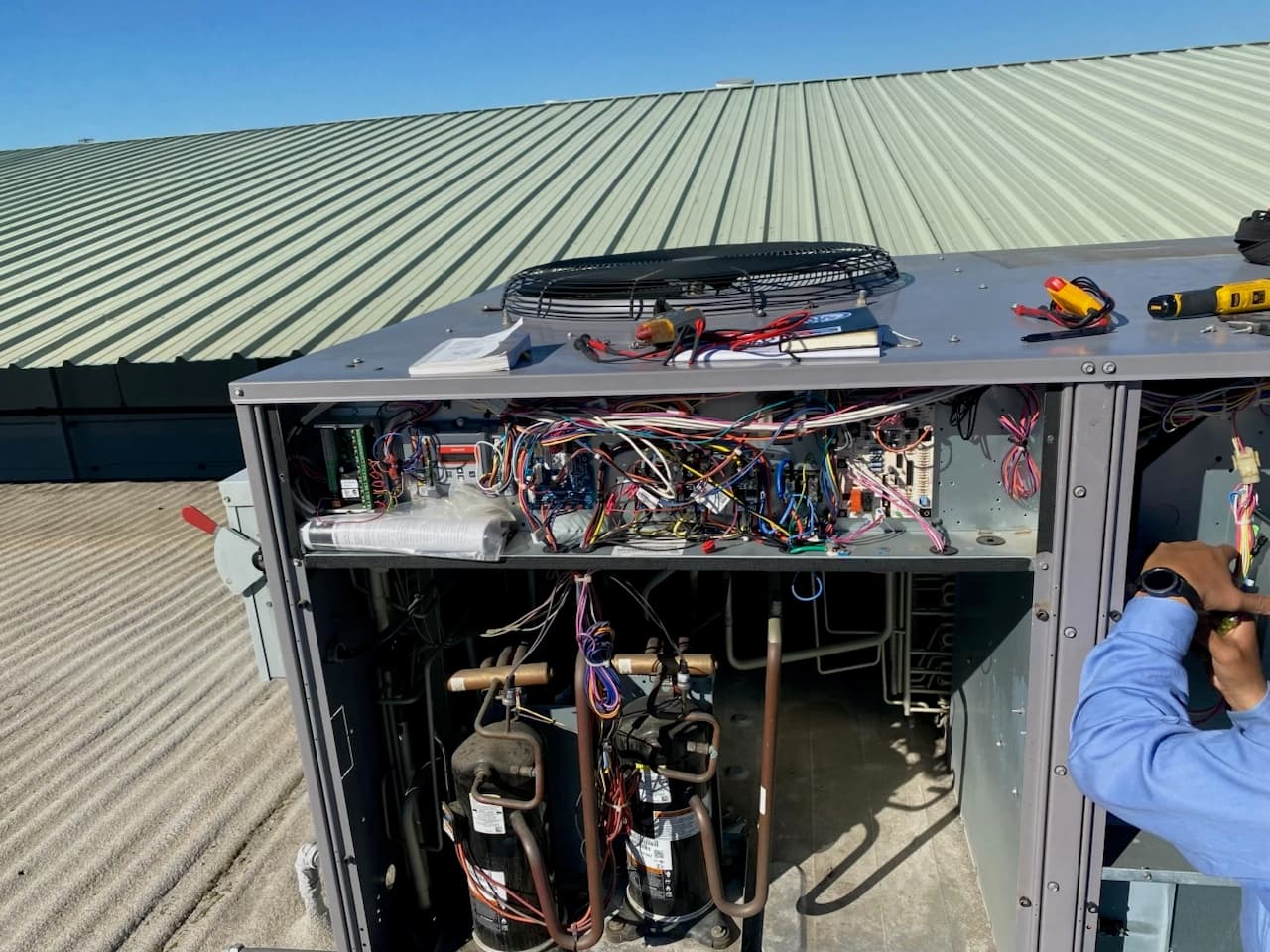
How building controls & automation work plays out in Whittier
Controls in Whittier are usually a collection rather than a system. A medical office building near the hospital has thermostats from three decades, a Whittier Boulevard retail center has a different thermostat in every suite, and a Telegraph Road shop runs on whatever the last contractor had on the truck. On the institutional side, the hospital campus, Whittier College buildings and civic properties have building automation that controls more than anyone currently trends, with alarm lists long enough to be ignored and schedules that reflect a tenant who left years ago.
The city's climate makes economizers worth fixing. Marine influence reaches Whittier more often than the inland valleys, and evenings cool reliably, so a rooftop unit whose economizer actually opens can carry much of the morning load on outside air. The common finding is an economizer disabled by a past repair, an outdoor air sensor reading wrong or a damper actuator long since failed. Night setback that has been overridden to occupied around the clock is nearly as common. Verifying these on every unit is a small job with a visible effect on runtime, and on new equipment it is also what Title 24 acceptance testing assumes.
For the medical campus and larger buildings, the work is a points-and-sequence review: which points are live, which sensors are accurate, what schedules and setpoints are actually in force, which alarms matter. For small properties, standardizing on a networked thermostat platform gives the owner remote visibility and a data trail that feeds replacement planning. Either way, the findings go into the asset record. The building controls and automation page walks through both the campus-scale review and the small-property thermostat approach.
Whittier's climate and what it does to this equipment
Whittier sits in the foothills edge of the Los Angeles basin, with the Puente Hills to the east, and the marine layer reaches it more often than it reaches the San Gabriel Valley. Summers are warm to hot, commonly in the 80s and 90s with periodic heat waves, and nights cool enough to give economizers real use. Hillside areas see higher fire-season smoke and ash, which clog filters and coils. Santa Ana winds bring dust and heat in fall. Equipment faces moderate heat but significant air quality swings and the wear of buildings that are decades old.
For the equipment background behind this page, read our building controls and energy guide or the full Building Controls & Automation service page.
- Uptown Whittier (Greenleaf Avenue)Historic low-rise restaurants, cafes and shops with retrofitted kitchens, walk-ins and shared or hard-to-reach roofs.
- Whittier Boulevard and Painter Avenue retailMid-size centers and freestanding pads with grocery, pharmacy and restaurant tenants and aging packaged units.
- PIH Health Whittier Hospital and medical office areaHospital-adjacent buildings with strict temperature, humidity and ventilation needs and after-hours service demands.
- Telegraph Road and light-industrial blocksSmall manufacturing, auto and contractor buildings with a handful of older rooftop units and limited controls.
- Schedule, setpoint, and sequence review across rooftop and central equipment
- Sensor calibration and economizer verification
- Alarm and trend setup so problems surface early
- Programmable and networked thermostat installation
What a building controls & automation visit includes, and the problems we most often find
- Inventory controllers, thermostats, and any building automation system
- Compare schedules and setpoints to how the building is actually used
- Verify sensors, actuators, and economizer logic against measured conditions
- Correct overrides, sequences, and alarms; document the changes
- Review trends after adjustment to confirm savings and stability
- Schedules left at default so equipment runs when nobody is there
- Equipment overridden manually and never returned to automatic
- Drifting or miswired sensors producing comfort complaints
- Economizers that never actually modulate