Building Controls & Automation in Los Angeles, CA
Many Los Angeles office and mixed-use buildings run on automation that has been added to in layers, with scheduling that no longer matches occupancy and economizers that have quietly stopped modulating. Studio and production-adjacent spaces often have unusual schedules that standard setups do not suit. Verifying sensors, resetting schedules, and confirming economizer behavior can recover comfort and reduce waste without major capital spending, and documenting the changes keeps the next engineer from guessing.
A sprawling mix of high-rise offices, production and creative space, food distribution in the industrial core, and a long LAX-adjacent logistics corridor, all under one of the state's most demanding permit environments.
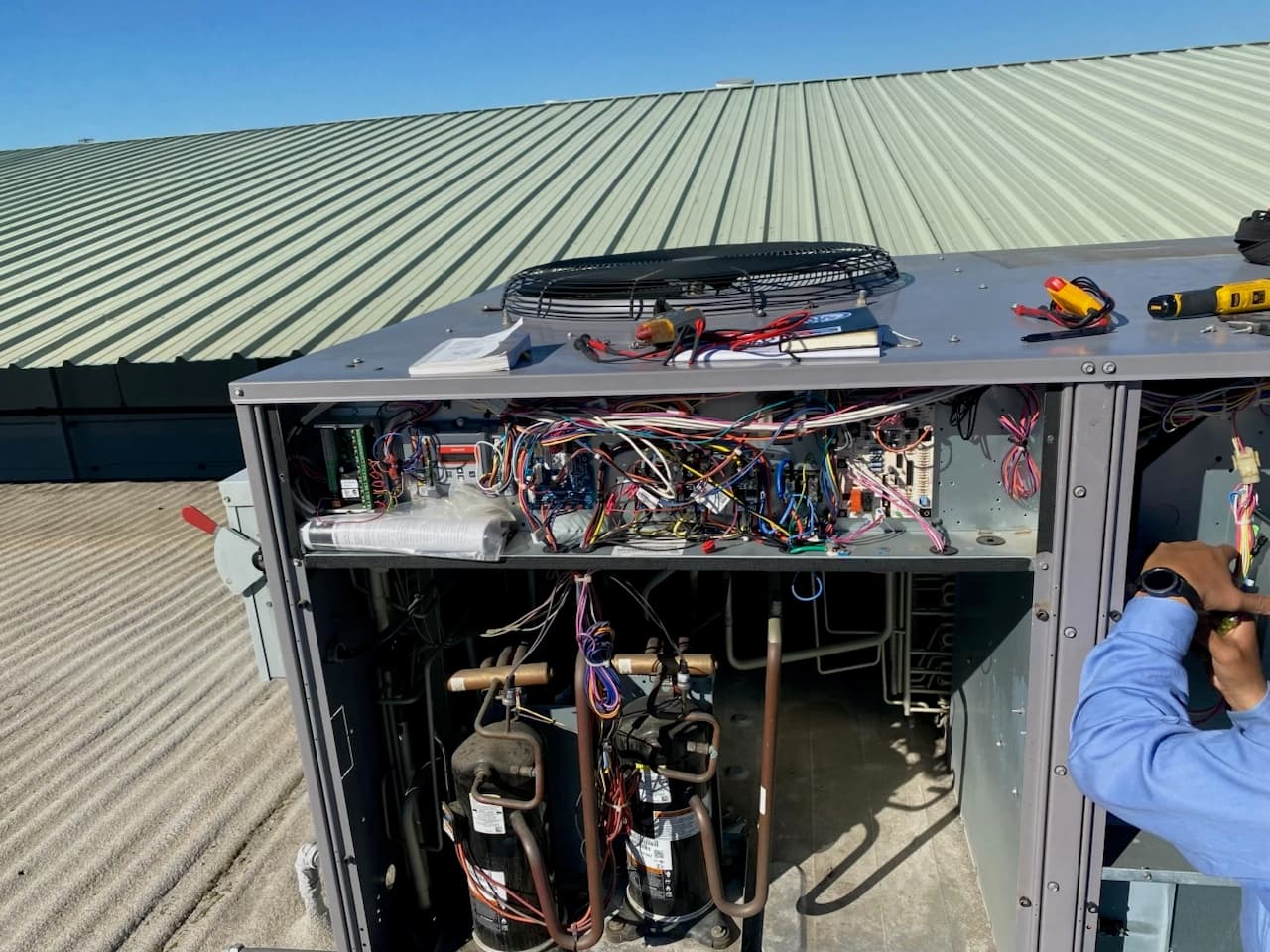
How building controls & automation work plays out in Los Angeles
Walk into a Mid-Wilshire office building's control room and the history is on the wall: a pneumatic panel that was abandoned in place, a 1990s DDC system that still runs the air handlers, and a newer front end that was added for a tenant and only covers two floors. Nobody on site knows which schedule is actually governing the chilled water plant at 3 a.m. Across Los Angeles, from Bunker Hill towers to Culver City-adjacent creative offices and Hollywood production buildings, this layering is normal, and it quietly wastes energy and comfort every night.
Production and media spaces make it harder. An edit facility near Sunset and Vine runs until the cut is done, which is not 6 p.m., and a schedule built for office hours shuts the air off on a room full of equipment. Economizers across the basin have often failed closed or failed open: closed means mechanical cooling on mild days the coast would have cooled for free, open means hot dusty Valley air pouring in during a heat wave. Sensors drift, especially outdoor air sensors mounted where afternoon sun hits them.
The practical work is verification before replacement. Confirming what each sensor reads against a calibrated instrument, rebuilding schedules around actual occupancy, testing economizer modulation through its full range, and documenting the sequence so the next engineer does not start over. In City of Los Angeles buildings, Title 24 acceptance requirements and the city's building performance programs shape what is expected when systems are modified, so current rules are confirmed per project. Changes get recorded in DaVinci Portal alongside the equipment they govern.
Los Angeles's climate and what it does to this equipment
Los Angeles has a Mediterranean climate, but the city spans very different conditions. Areas near the coast stay under the marine layer through much of late spring and early summer, while the basin and downtown run noticeably hotter in late summer and early fall, and Santa Ana wind events can bring dry heat and blowing dust. Equipment sees long cooling seasons, and rooftop condensers in urban areas collect soot, leaf litter, and airborne grime. Older buildings with undersized airflow often show problems only during the first stretch of real heat, which is exactly when response time matters most.
For the equipment background behind this page, read our building controls and energy guide or the full Building Controls & Automation service page.
- Downtown Los Angeles and the Historic CoreConverted older buildings, high-rise offices, and new mixed-use towers, with a mix of central plants, VRF, and rooftop equipment that often needs careful hoisting and access planning.
- Mid-Wilshire, Miracle Mile, and Century CityDense office towers and professional suites along Wilshire, where chilled water systems, after-hours scheduling, and tenant-sensitive work windows shape every service call.
- Hollywood and studio-related production spaceProduction offices, post-production suites, and sound-sensitive rooms where noise, humidity, and tight temperature control matter as much as capacity.
- Arts District, Vernon-adjacent industrial, and the LAX corridorFood distribution, cold storage, and warehouse buildings east of downtown, plus hotels and logistics buildings along the airport corridor on the west side.
- Schedule, setpoint, and sequence review across rooftop and central equipment
- Sensor calibration and economizer verification
- Alarm and trend setup so problems surface early
- Programmable and networked thermostat installation
What a building controls & automation visit includes, and the problems we most often find
- Inventory controllers, thermostats, and any building automation system
- Compare schedules and setpoints to how the building is actually used
- Verify sensors, actuators, and economizer logic against measured conditions
- Correct overrides, sequences, and alarms; document the changes
- Review trends after adjustment to confirm savings and stability
- Schedules left at default so equipment runs when nobody is there
- Equipment overridden manually and never returned to automatic
- Drifting or miswired sensors producing comfort complaints
- Economizers that never actually modulate