Maintenance Plans in Ontario, CA
For Ontario's big-roof properties, a maintenance program is mostly a logistics exercise: knowing every unit, its location, its age, and its last reading. We build rooftop inventories, schedule coil cleaning and electrical inspection before summer, and rotate through filters, belts, and control checks over the year. Because many tenants share buildings with strict access rules, our program planning respects dock schedules and security, and the portal gives landlords one reference for the whole property.
Built around Ontario International Airport, enormous distribution and cold-storage buildings, Ontario Mills, and the Convention Center district, with Santa Ana wind and extreme heat exposure.
How maintenance plans work plays out in Ontario
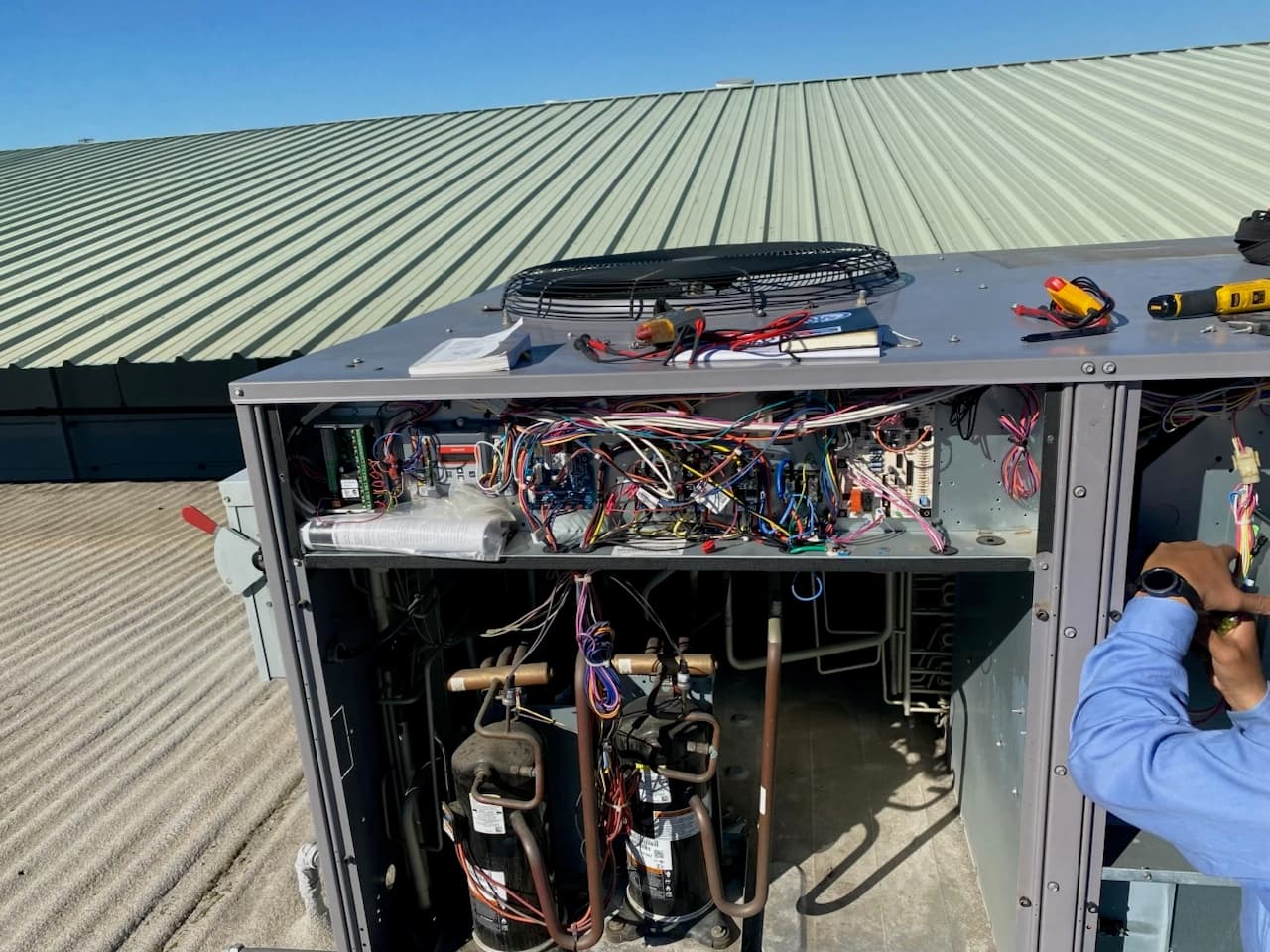
The first maintenance visit to a large Ontario property is usually a counting exercise. Roofs on the distribution buildings near the airport and along the Jurupa, Francis, and Philadelphia Street corridors can carry dozens of packaged units, exhaust fans, and refrigeration condensers, often installed by several contractors over several ownerships, with no single list of what is up there. Before any schedule means anything, every unit needs a tag, a photo, a nameplate record, and baseline readings. That inventory becomes the backbone of the program and the first thing a new landlord or tenant asks for.
From there the calendar is driven by the heat. Coil cleaning, refrigerant and electrical checks, and belt and bearing inspection happen in spring, before the first stretch of triple-digit days finds the weak units. Filters, economizer function, and controls get checked on interim visits, and a fall visit handles heating changeover and the cleanup after Santa Ana wind season has blown debris across the roof. For retail and hospitality around Ontario Mills, the Convention Center, and Inland Empire Boulevard, the cadence tightens to quarterly because run hours are long and a failure is visible to customers. Cold storage refrigeration runs on its own schedule inside the same program.
Access rules shape the visits. Logistics tenants require check-in and defined windows, landlords want to know when anyone is on the roof, and some sites have security requirements that take days to clear, so we plan rounds in advance rather than showing up. Everything recorded goes into the DaVinci Portal, where a property manager with several buildings can see the whole portfolio and pull a unit's history for a lease negotiation, an insurance review, or a capital plan. The preventive maintenance program guide describes what each visit includes.
Ontario's climate and what it does to this equipment
Ontario is flat, hot, and open, so Santa Ana winds arrive with little to slow them. Dry gusts carry dust from nearby industrial sites and open ground onto huge rooftops, where condenser coils collect it quickly. Summer highs are routinely well above 100 degrees on the hottest days, and large dark roofs raise local rooftop air temperatures further. Regional smog and wildfire smoke affect filtration, and sharp swings between day and night temperatures stress controls and refrigeration defrost cycles. For cold storage, this means condensers are working against the worst ambient conditions of the year, usually with the heaviest product loads.
For the equipment background behind this page, read our preventive maintenance program guide or the full Commercial Maintenance Plans service page.
- Airport and logistics corridorsDistribution and cargo buildings near Ontario International Airport, including cold storage and large rooftop equipment arrays.
- Ontario Mills and Ontario GatewayLarge-format retail, entertainment, and hospitality properties with extended operating hours and heavy rooftop equipment loads.
- Convention Center and arena districtEvent venues, hotels, and surrounding offices where ventilation and cooling demand surges during conventions and games.
- Guasti, Inland Empire Boulevard, and Ontario RanchMixed office, restaurant, and newer warehouse and commercial development south and east of the core.
- Free diagnostic on repairs for plan members
- Included labor per tier, with a member rate for anything over
- Photo-logged reports with temps, pressures, and amp draws
- DaVinci Portal included with QR tracking and self-service scheduling
What a maintenance plans visit includes, and the problems we most often find
- Walk every covered asset — RTUs, refrigeration, ice machines, water heaters
- Take and log readings against each unit's history, not a generic checklist
- Flag anything trending toward failure before it becomes a breakdown
- Deliver a photo-logged report after every visit
- Free diagnostic on any repair that comes out of the visit
- Equipment that 'seemed fine' failing without any maintenance history to catch the trend
- Multiple pieces of equipment aging out around the same time with no replacement plan
- Surprise repair costs that a documented PM history would have flagged months earlier
- Multi-location accounts with no consistent record across sites
Maintenance tiers for Ontario properties
Ontario's large-roof and cold-storage properties call for a plan built on complete rooftop and refrigeration inventories, with major service completed ahead of the summer logistics peak.
See maintenance plan tiersMaintenance Plans in Ontario: questions we get
We just took over an Ontario industrial building with no HVAC records. What does the first year of a program look like?
The first visit is an inventory: every unit tagged, photographed, and baseline readings recorded, plus a condition grade so you know which units are near the end. The first spring visit then focuses on coils, charge, and electrical connections across the roof, with any urgent repairs quoted separately. By the end of the first year you have a documented roof, a realistic replacement forecast, and a cadence set to how the building actually runs. Most of the value shows up in the second summer.
Our tenant controls access and our building is on a secured logistics site. How do maintenance visits work?
We set the schedule with the tenant's facilities contact and the landlord together, usually a recurring window the tenant can clear in advance with security. Technicians check in, follow the site's badge and escort rules, and stay in the agreed area. If the site needs a vendor onboarding or background process, we complete it before the first visit. The visit windows and any access notes are recorded in the portal so a new tenant contact does not have to rebuild the arrangement from scratch.
What's the difference between the plan tiers?
Tiers differ by visit frequency and included labor. Quarterly is best for kitchens and refrigeration-heavy sites; annual fits lighter-use office or retail space.
Can one plan cover multiple locations?
Yes — multi-site accounts are common. We'll set up the Portal so each location's equipment and history stay organized separately.
Other services in Ontario
Maintenance Plans nearby in Inland Empire (Riverside & San Bernardino Counties)
Commercial HVAC and refrigeration across Inland Empire (Riverside & San Bernardino Counties)