Ice Machine Service in Ontario, CA
Ice demand in Ontario spikes with convention events, food courts at Ontario Mills, hotel operations, and food distribution kitchens. Machines located in hot back-of-house areas lose capacity, and mineral buildup from local water adds to the problem. We service and sanitize machines on schedules tied to event calendars and operating hours, verify condenser airflow, and make sure filtration is appropriate, so event ice supply does not come down to a single failing unit.
Built around Ontario International Airport, enormous distribution and cold-storage buildings, Ontario Mills, and the Convention Center district, with Santa Ana wind and extreme heat exposure.
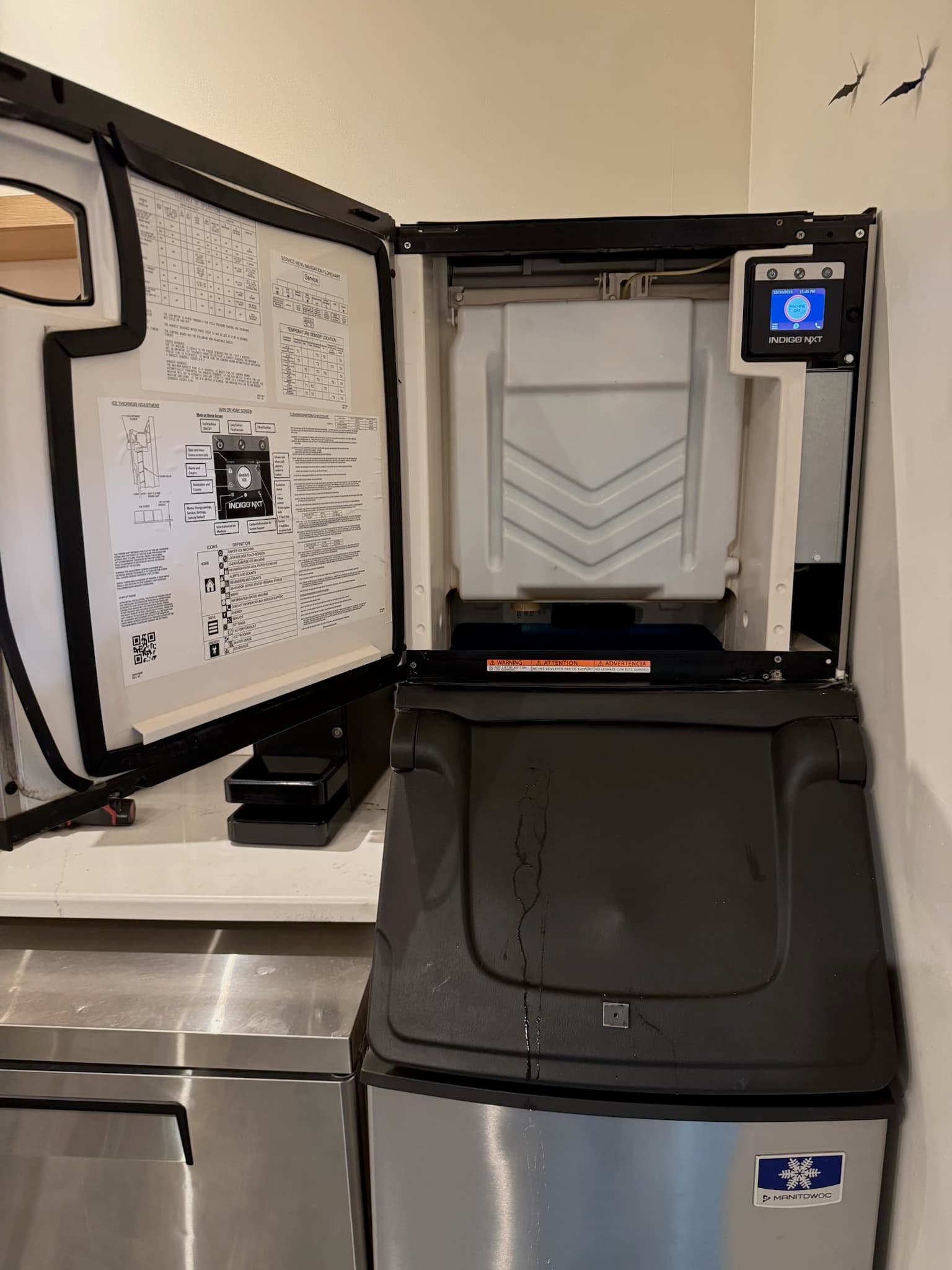
How ice machine service work plays out in Ontario
When the Convention Center has a large show in and Toyota Arena has a game the same night, every hotel bar, restaurant, and banquet kitchen in the Ontario Gateway area is pulling ice at once. That is the demand profile that defines ice machine service here: sharp spikes tied to an event calendar, layered on top of the steady draw from the Ontario Mills food court, airport-area hotels, and the break rooms and cafeterias inside distribution buildings that run around the clock. A machine that keeps up on an ordinary Wednesday can be empty by nine on a convention Saturday.
The physical conditions make it worse. Back-of-house rooms in hotels and food court tenants run hot, and air-cooled machines lose production as the room warms. Ontario's water tends to carry enough mineral content that scale builds on evaporator plates and in distribution tubes quickly, especially in machines that run heavy cycles for a few days and then sit. Dust that gets into these rooms, which is hard to avoid in a city with this much open ground and truck traffic, collects on the condenser and finishes the job.
For event-driven operators we start with the calendar. We time cleaning and sanitation ahead of the heavy weeks, make sure filtration is current, verify the condenser is clear and the room is not strangling it, and look at bin capacity so ice made overnight is there at the peak. For distribution buildings, the schedule is steadier but the machines are often forgotten; a sanitation record in the DaVinci Portal matters when a corporate safety audit asks about break room equipment. The commercial ice machine guide covers cleaning intervals, and the hotels and convention sector page covers event-driven planning.
Ontario's climate and what it does to this equipment
Ontario is flat, hot, and open, so Santa Ana winds arrive with little to slow them. Dry gusts carry dust from nearby industrial sites and open ground onto huge rooftops, where condenser coils collect it quickly. Summer highs are routinely well above 100 degrees on the hottest days, and large dark roofs raise local rooftop air temperatures further. Regional smog and wildfire smoke affect filtration, and sharp swings between day and night temperatures stress controls and refrigeration defrost cycles. For cold storage, this means condensers are working against the worst ambient conditions of the year, usually with the heaviest product loads.
For the equipment background behind this page, read our commercial ice machine guide or the full Ice Machines — Service & Sanitation service page.
- Airport and logistics corridorsDistribution and cargo buildings near Ontario International Airport, including cold storage and large rooftop equipment arrays.
- Ontario Mills and Ontario GatewayLarge-format retail, entertainment, and hospitality properties with extended operating hours and heavy rooftop equipment loads.
- Convention Center and arena districtEvent venues, hotels, and surrounding offices where ventilation and cooling demand surges during conventions and games.
- Guasti, Inland Empire Boulevard, and Ontario RanchMixed office, restaurant, and newer warehouse and commercial development south and east of the core.
- Scale removal, deep sanitation, and filter change-out programs
- Bin sensors, harvest cycles, pumps, and valves checked
- OEM-spec readings taken against manufacturer PM intervals
- DaVinci Portal: photo-logged cleanings and reminder scheduling
What a ice machine service visit includes, and the problems we most often find
- Check ice quality, production rate, and bin sensor operation
- Full descale of water lines and evaporator plate
- Sanitize all food-contact surfaces per manufacturer spec
- Inspect water filtration and replace if due
- Photo-document the cleaning for your compliance records
- Scale buildup from hard water slowing production and clouding ice
- Bin sensors misreading and causing over- or under-production
- Water filters overdue for change, affecting both taste and machine health
- Visible slime or mold in the bin — the most common health-inspection flag
Ice Machine Service in Ontario: questions we get
Our hotel near the Convention Center runs out of ice during big shows. Do we need another machine?
How often should ice machines in our distribution center break rooms be cleaned if they are not used for food service?
How often should ice machines be sanitized?
Can you fix low production without a full replacement?
Other services in Ontario
Ice Machine Service nearby in Inland Empire (Riverside & San Bernardino Counties)
Commercial HVAC and refrigeration across Inland Empire (Riverside & San Bernardino Counties)