Maintenance Plans in Temecula, CA
Temecula operators plan their year around events and peak seasons, and maintenance should follow the same calendar. We schedule major inspections ahead of the busiest hospitality months and avoid disruptive work on event weekends, while medical and business park customers get fixed windows. Each unit's history sits in the DaVinci Portal, which helps owners of multiple locations compare equipment across properties and plan replacements before a failure lands during a high-revenue weekend.
A hospitality-driven valley city where wine-country restaurants, Old Town dining, a growing medical sector, and business parks all depend on dependable cooling in summer heat and wind.
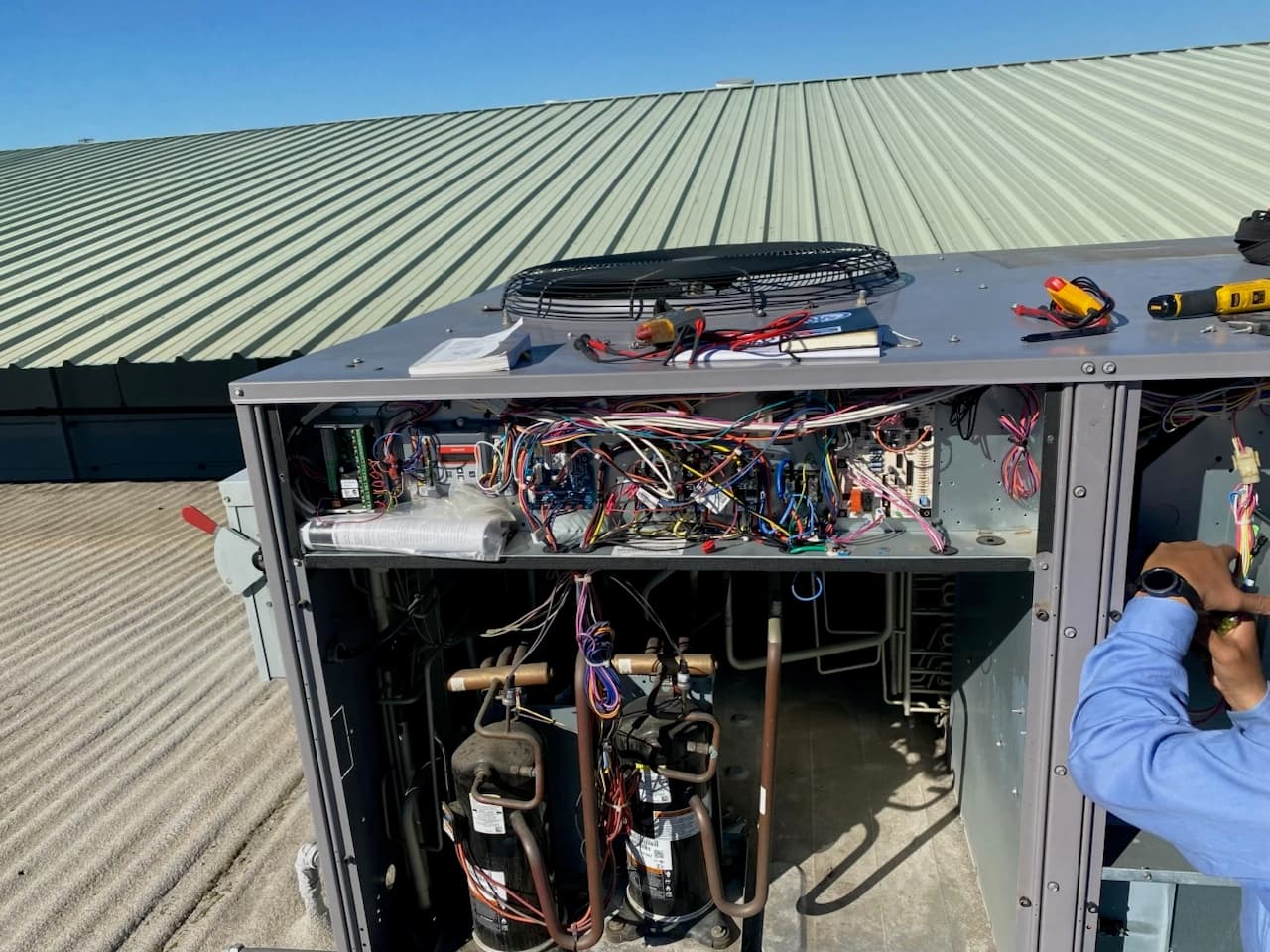
How maintenance plans work plays out in Temecula
The maintenance calendar in Temecula has to be built backward from the events that matter. For wine country, that is the run from the spring festival season through harvest, with weddings stacked on nearly every weekend between. For Old Town, it is the summer evenings and holiday weekends when Front Street is at its busiest. For the Promenade and the Temecula Parkway retail centers, it is the back-to-school and holiday shopping periods. A pre-summer visit that lands in late May is useful to all of them; one that lands in July, after the first heat wave has already found the weak units, is not.
The property types also sort naturally into service tiers. Restaurant kitchens, event venues with full catering operations, and the hotel properties near the freeway run equipment hard enough that a quarterly cadence pays for itself in avoided weekend failures. The medical offices and imaging centers around Temecula Valley Hospital, and the professional offices and light manufacturing in the Diaz Road and Winchester Road business parks, usually fit a bi-annual rhythm with a cooling visit before summer and a heating and economizer visit in the fall. Smaller tasting rooms with a single unit and a reach-in often do well on an annual inspection with filter changes handled in between.
Every visit records readings, photos, and work performed under each unit's QR tag in the DaVinci Portal, which turns out to be especially useful for the multi-location operators common in the valley, where one ownership group might run a tasting room on Rancho California Road, a restaurant in Old Town, and a production facility in a business park. They can compare equipment across sites and plan replacements for the off season. Our preventive maintenance program guide explains what a visit includes at each tier.
Temecula's climate and what it does to this equipment
Temecula sits farther from the coast than most of Southern California's urban areas but still catches a marine layer that funnels through the Rainbow Gap, so evenings can cool noticeably after very hot days. The wide daily temperature swing is hard on equipment because it stresses controls, economizers, and refrigerant systems differently from a steady climate. Summer afternoons are hot and dry, with gusty winds that carry dust from vineyards and construction sites into coils and intakes. Wildfire smoke from inland hills and the surrounding region can load filters, and fall Santa Ana conditions add heat and debris at the end of the cooling season.
For the equipment background behind this page, read our preventive maintenance program guide or the full Commercial Maintenance Plans service page.
- Old Town TemeculaFront Street restaurants, boutiques, and event spaces in older buildings, usually with compact rooftop or split equipment and limited access.
- Wine country and Rancho California RoadTasting rooms, resorts, event venues, and restaurants with seasonal peaks and walk-in storage that supports food and beverage programs.
- Temecula Valley Hospital and medical districtClinics, imaging centers, and specialty offices near the hospital campus with strict temperature and air quality expectations.
- Winchester Road and Ynez corridor business parksRetail centers, offices, and light industrial space with multi-tenant rooftop systems along the main commercial arteries.
- Free diagnostic on repairs for plan members
- Included labor per tier, with a member rate for anything over
- Photo-logged reports with temps, pressures, and amp draws
- DaVinci Portal included with QR tracking and self-service scheduling
What a maintenance plans visit includes, and the problems we most often find
- Walk every covered asset — RTUs, refrigeration, ice machines, water heaters
- Take and log readings against each unit's history, not a generic checklist
- Flag anything trending toward failure before it becomes a breakdown
- Deliver a photo-logged report after every visit
- Free diagnostic on any repair that comes out of the visit
- Equipment that 'seemed fine' failing without any maintenance history to catch the trend
- Multiple pieces of equipment aging out around the same time with no replacement plan
- Surprise repair costs that a documented PM history would have flagged months earlier
- Multi-location accounts with no consistent record across sites
Maintenance tiers for Temecula properties
Temecula's hospitality and medical properties are best served by a plan scheduled around event calendars and busy seasons, with pre-summer inspections completed before the first major heat.
See maintenance plan tiersMaintenance Plans in Temecula: questions we get
We host weddings nearly every weekend from April through November. When can maintenance actually happen without disrupting events?
Tuesday through Thursday mornings during the season, and more freely in the winter months. We build the plan around your event calendar: the heavy pre-season work, including coil cleaning and refrigerant checks, happens in late winter or early spring before bookings pick up, and in-season visits are shorter and scheduled midweek. We also avoid noisy rooftop work during any midweek events you flag. The goal is for you never to see a technician on a Saturday unless something has failed.
Our ownership group has a tasting room, an Old Town restaurant, and a warehouse. Can one maintenance program cover all three?
Yes, and that is the case where a program works best. Each site gets its own equipment inventory and visit cadence suited to its load, but all of it rolls up to one account and one portal view, so you can see every unit's age, condition, and history side by side. That makes it much easier to decide which site's equipment gets replaced first and to schedule that work for the quiet season rather than reacting to a failure during a busy one.
What's the difference between the plan tiers?
Tiers differ by visit frequency and included labor. Quarterly is best for kitchens and refrigeration-heavy sites; annual fits lighter-use office or retail space.
Can one plan cover multiple locations?
Yes — multi-site accounts are common. We'll set up the Portal so each location's equipment and history stay organized separately.
Other services in Temecula
Maintenance Plans nearby in Inland Empire (Riverside & San Bernardino Counties)
Commercial HVAC and refrigeration across Inland Empire (Riverside & San Bernardino Counties)