Maintenance Plans in Chino, CA
Chino's industrial and food-related properties need maintenance plans that integrate HVAC and refrigeration under a single schedule. We map equipment by building and process area, establish seasonal tasks such as pre-summer condenser cleaning and charge checks, and add interim visits for filters, belts, and control verification. The DaVinci Portal keeps all service history in one place, so plant engineers do not need to chase paperwork when an audit is scheduled.
A food processing, manufacturing, and former dairy-region industrial city with an airport-area business cluster, Chino Spectrum retail, and heavy refrigeration demand.
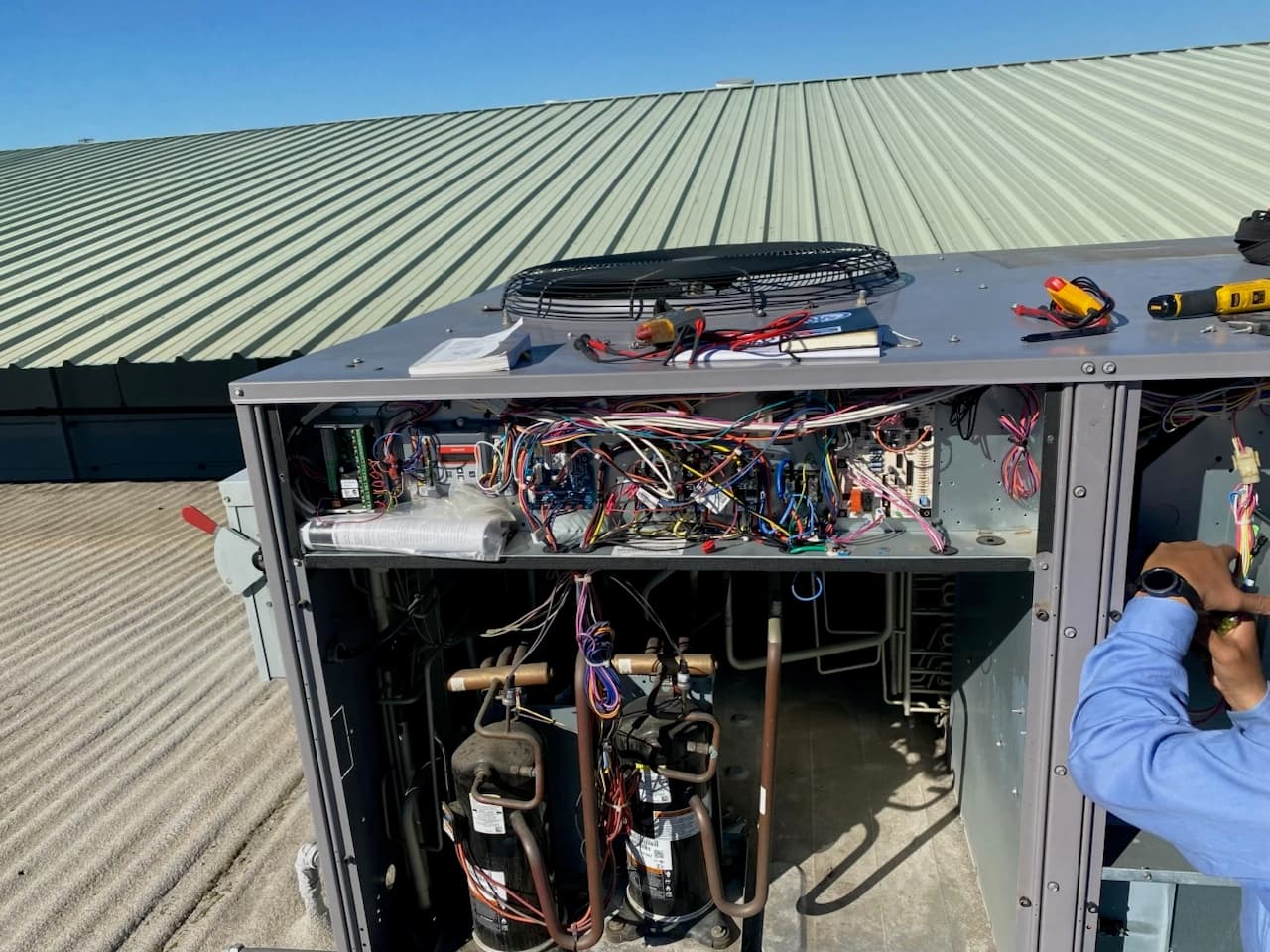
How maintenance plans work plays out in Chino
The maintenance problem in Chino is that HVAC and refrigeration are usually serviced by different vendors, on different schedules, with records in different places. A plant engineer at a food facility along Euclid Avenue may have a refrigeration contractor's logs in a binder, an HVAC contractor's invoices in email, and no single view of what equipment is on the roof or how it has been trending. When an auditor asks for the maintenance history of the condenser serving cooler number three, the answer takes an afternoon to assemble. A program that treats the whole building as one mechanical system, with a single inventory and a single record, fixes that.
We map equipment by building and by process area, so a plant manager can see which units serve raw receiving, which serve packaging, and which serve the office. Visit frequency follows criticality and exposure. Refrigeration and production-area HVAC in the industrial south are on a quarterly cadence because dust, heat, and washdown degrade them fast. Retail and restaurant tenants at Chino Spectrum fit quarterly or bi-annual depending on kitchen load. Medical offices and the lighter commercial buildings toward the Chino Hills border do well on bi-annual service, with the heavy pre-summer visit scheduled for April.
Every visit produces a dated entry in the DaVinci Portal, attached to the unit's QR code, with readings and photos. For food operations, that record is formatted so it can be handed to a quality manager or auditor without translation. The maintenance plans overview describes the tiers, and the warehouses industry page covers the logistics-building side of the program.
Chino's climate and what it does to this equipment
Chino's flat terrain and open surroundings make it hot, breezy, and dusty. Summer highs are intense, Santa Ana winds blow through with little obstruction, and remaining agricultural land and busy industrial sites contribute dust to the air. Dairy and agricultural operations also add ammonia and organic particulate that can foul coils and filters faster than in a typical commercial area, and regional smog and wildfire smoke add more. For food processing and cold storage, hot afternoons coincide with peak production, so refrigeration condensers must hold performance exactly when the load is greatest.
For the equipment background behind this page, read our preventive maintenance program guide or the full Commercial Maintenance Plans service page.
- Former dairy-region industrial areaFood processing, cold storage, manufacturing, and distribution buildings in the south and southeast, with large refrigeration and rooftop loads.
- Chino Spectrum and Ontario borderBig-box retail, restaurants, and entertainment with dense rooftop equipment and extended operating hours.
- Chino Airport and Merrill Avenue areaAviation-related users, light industrial tenants, and business space with wide-open exposure to wind.
- Downtown Chino and Chino Hills borderOlder storefronts, restaurants, medical offices, and community retail along the central corridors and at the city's northern edge.
- Free diagnostic on repairs for plan members
- Included labor per tier, with a member rate for anything over
- Photo-logged reports with temps, pressures, and amp draws
- DaVinci Portal included with QR tracking and self-service scheduling
What a maintenance plans visit includes, and the problems we most often find
- Walk every covered asset — RTUs, refrigeration, ice machines, water heaters
- Take and log readings against each unit's history, not a generic checklist
- Flag anything trending toward failure before it becomes a breakdown
- Deliver a photo-logged report after every visit
- Free diagnostic on any repair that comes out of the visit
- Equipment that 'seemed fine' failing without any maintenance history to catch the trend
- Multiple pieces of equipment aging out around the same time with no replacement plan
- Surprise repair costs that a documented PM history would have flagged months earlier
- Multi-location accounts with no consistent record across sites
Maintenance tiers for Chino properties
Chino's food, manufacturing, and retail properties suit a combined HVAC and refrigeration plan, with pre-summer condenser work and records ready for quality and audit review.
See maintenance plan tiersMaintenance Plans in Chino: questions we get
Can one maintenance program cover both the refrigeration and the HVAC at our Chino facility?
How often should condenser coils be cleaned on a Chino industrial roof?
What's the difference between the plan tiers?
Can one plan cover multiple locations?
Other services in Chino
Maintenance Plans nearby in Inland Empire (Riverside & San Bernardino Counties)
Commercial HVAC and refrigeration across Inland Empire (Riverside & San Bernardino Counties)