Building Controls & Automation in Ontario, CA
Ontario's large buildings usually have an automation system, but hot-weather performance is often poorly tuned. Sequencing, economizer lockouts, and schedule overrides collect over time and cause units to run when they do not need to. We audit programming and sensors, verify damper movement, check setpoints against how spaces are used, and document changes, giving facility teams a controls baseline for both distribution centers and event buildings.
Built around Ontario International Airport, enormous distribution and cold-storage buildings, Ontario Mills, and the Convention Center district, with Santa Ana wind and extreme heat exposure.
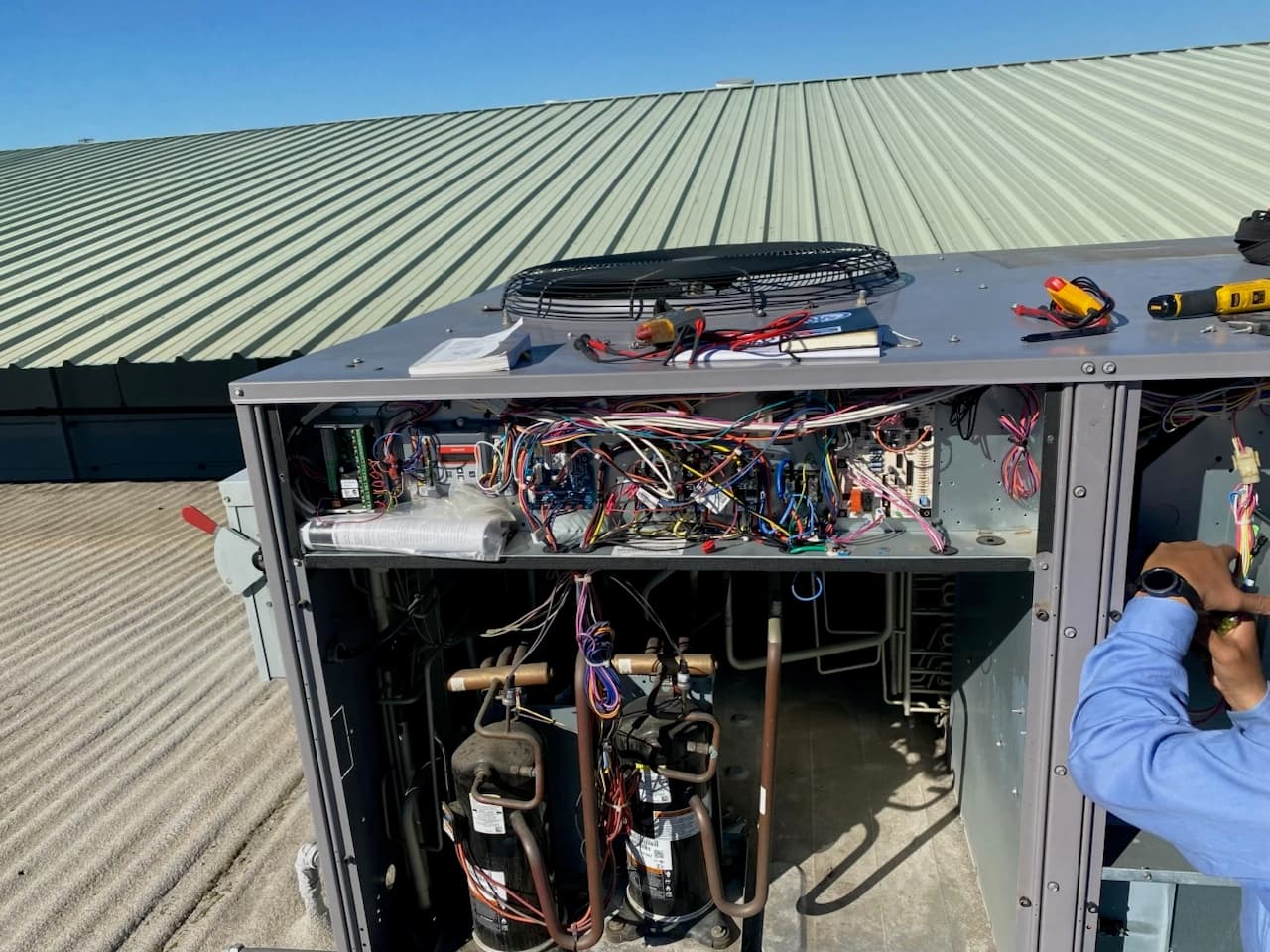
How building controls & automation work plays out in Ontario
Most large Ontario buildings have an automation system of some kind, and most of them are running on decisions nobody remembers making. Distribution centers have thermostats and controllers set for a tenant two leases ago. Hotels have overrides stacked on overrides from years of guest complaints. Retail around Ontario Mills runs schedules that were set at opening and never adjusted for seasonal hours. In a city where the cooling season is long and the afternoons are brutal, the gap between how a building is controlled and how it is actually used is one of the largest avoidable costs on the property.
The climate complicates the economizer story. Ontario nights cool off more than coastal cities, so economizers have real value in the evening and early morning, but Santa Ana wind brings dust and sometimes smoke that make outdoor air a poor choice for hours or days at a time. Controls here need to use outdoor air when it is good and lock it out when it is not, and the lockouts need to be deliberate rather than the result of a damper actuator that failed closed years ago. Sensors drift in the heat, and a mixed air sensor reading five degrees high can quietly disable an economizer for a whole summer.
We start by verifying what the system is actually doing: damper travel, sensor accuracy against a reference, economizer changeover logic, and the schedules against real operating hours. Then we correct what is wrong, rebuild schedules around shifts and event calendars, and document the sequences so the next facilities manager inherits a baseline rather than a mystery. For logistics tenants we often standardize settings across a portfolio so buildings can be compared. Documentation lives in the DaVinci Portal. The building controls and automation page describes the scope.
Ontario's climate and what it does to this equipment
Ontario is flat, hot, and open, so Santa Ana winds arrive with little to slow them. Dry gusts carry dust from nearby industrial sites and open ground onto huge rooftops, where condenser coils collect it quickly. Summer highs are routinely well above 100 degrees on the hottest days, and large dark roofs raise local rooftop air temperatures further. Regional smog and wildfire smoke affect filtration, and sharp swings between day and night temperatures stress controls and refrigeration defrost cycles. For cold storage, this means condensers are working against the worst ambient conditions of the year, usually with the heaviest product loads.
For the equipment background behind this page, read our building controls and energy guide or the full Building Controls & Automation service page.
- Airport and logistics corridorsDistribution and cargo buildings near Ontario International Airport, including cold storage and large rooftop equipment arrays.
- Ontario Mills and Ontario GatewayLarge-format retail, entertainment, and hospitality properties with extended operating hours and heavy rooftop equipment loads.
- Convention Center and arena districtEvent venues, hotels, and surrounding offices where ventilation and cooling demand surges during conventions and games.
- Guasti, Inland Empire Boulevard, and Ontario RanchMixed office, restaurant, and newer warehouse and commercial development south and east of the core.
- Schedule, setpoint, and sequence review across rooftop and central equipment
- Sensor calibration and economizer verification
- Alarm and trend setup so problems surface early
- Programmable and networked thermostat installation
What a building controls & automation visit includes, and the problems we most often find
- Inventory controllers, thermostats, and any building automation system
- Compare schedules and setpoints to how the building is actually used
- Verify sensors, actuators, and economizer logic against measured conditions
- Correct overrides, sequences, and alarms; document the changes
- Review trends after adjustment to confirm savings and stability
- Schedules left at default so equipment runs when nobody is there
- Equipment overridden manually and never returned to automatic
- Drifting or miswired sensors producing comfort complaints
- Economizers that never actually modulate
Building Controls & Automation in Ontario: questions we get
Our warehouse offices are cooled on a schedule set by a previous tenant. How much effort is it to fix the schedules on a building this size?
Should we lock out economizers during Santa Ana wind and smoke events in Ontario?
Do you install building automation systems?
Can better controls really cut energy use?
Can you connect to our existing system?
Other services in Ontario
Building Controls & Automation nearby in Inland Empire (Riverside & San Bernardino Counties)
Commercial HVAC and refrigeration across Inland Empire (Riverside & San Bernardino Counties)