Maintenance Plans in San Bernardino, CA
San Bernardino's government and institutional properties need maintenance programs that produce documentation, not just service. We build unit inventories, set inspection frequencies by equipment criticality, and keep records in the DaVinci Portal that can be shared with facilities managers, auditors, or oversight committees. Pre-summer coil and charge work, fall heating changeover, and filtration management during smoke events are built into the annual plan.
The county seat, with downtown government buildings, hospitals, rail-served logistics, and aging mixed-use property stock that works hard through hot, smoggy summers.
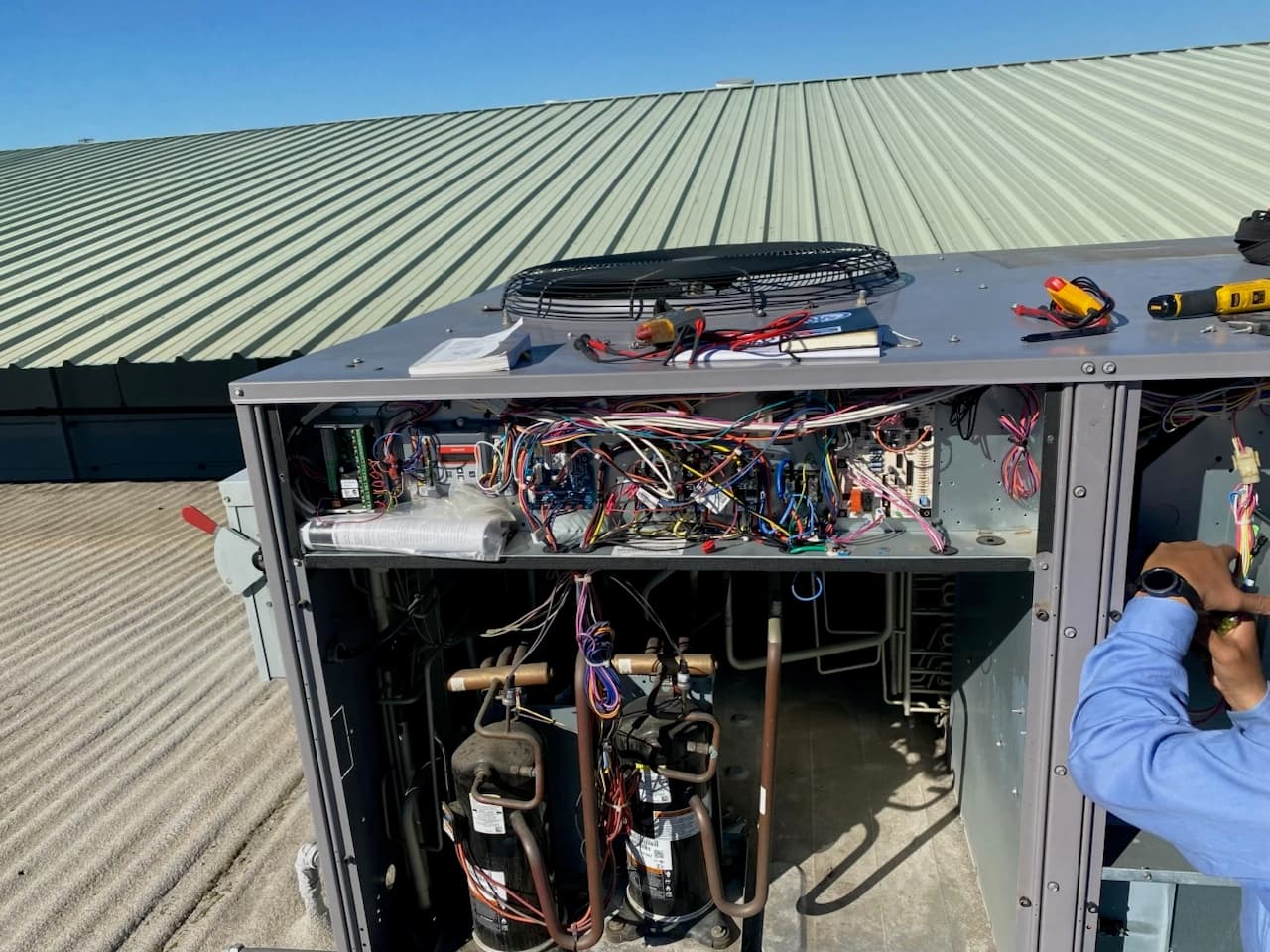
How maintenance plans work plays out in San Bernardino
Picture the facilities manager for a county department that occupies three buildings downtown, a leased clinic on the Tippecanoe corridor, and a corporation yard near the rail lines. Each site has rooftop equipment from a different era, some of it on an old service contract, some of it never serviced since installation. The first value of a maintenance program in San Bernardino is not the filter change. It is the inventory: tagging every unit, recording its model, age, refrigerant, and baseline readings, and attaching that record to a QR code the facilities team can scan on the roof. Once the inventory exists, decisions about repair versus replacement stop being guesses.
Seasonal timing here is more pronounced than in coastal Orange County. The pre-summer visit, ideally in April or early May before the first sustained heat, carries the most weight: condenser cleaning after a winter of Santa Ana dust, charge verification, capacitor and contactor checks, belt condition, and economizer function. A fall visit handles the heating changeover, which matters in a city with cold winter mornings at the base of the mountains, and checks that filters loaded during late-summer smoke events have been replaced. Properties with kitchens, hospitals, hotels, and long-hour retail near Inland Center fit a quarterly cadence; offices along Hospitality Lane and most clinics do well on bi-annual service.
For public agencies, the program also has to produce records that survive an audit or a grand jury inquiry into deferred maintenance. Every visit creates a dated, photographed entry in the DaVinci Portal that a new facilities director can read without calling the previous one. The preventive maintenance guide describes how we structure visit lists by equipment type.
San Bernardino's climate and what it does to this equipment
San Bernardino sits at the foot of the mountains in a pocket where hot, polluted air often collects. Summer highs are among the highest in the region, and smog and fine particulate coat coils and clog filters faster than in coastal areas. Santa Ana winds in fall and winter bring heat, dust, and elevated fire danger, and wildfire smoke from nearby mountains is a recurring factor, sometimes closing windows of acceptable outdoor air for economizer use. Cold winter nights give heating real work to do. Equipment here is hit by every factor at once: high ambient, dirty air, and wide seasonal range.
For the equipment background behind this page, read our preventive maintenance program guide or the full Commercial Maintenance Plans service page.
- Downtown and government centerCounty and city offices, courts, and older commercial buildings with mixed equipment generations and strict reliability expectations.
- Hospitality Lane and Tri-City corporate areaHotels, offices, restaurants, and corporate buildings with large chilled and packaged systems and long cooling hours.
- Inland Center and Tippecanoe corridorMall-area retail, big-box tenants, and surrounding service businesses with dense rooftop equipment.
- Rail and airport logistics areaWarehouses, distribution buildings, and industrial space near the rail yards and San Bernardino International Airport.
- Free diagnostic on repairs for plan members
- Included labor per tier, with a member rate for anything over
- Photo-logged reports with temps, pressures, and amp draws
- DaVinci Portal included with QR tracking and self-service scheduling
What a maintenance plans visit includes, and the problems we most often find
- Walk every covered asset — RTUs, refrigeration, ice machines, water heaters
- Take and log readings against each unit's history, not a generic checklist
- Flag anything trending toward failure before it becomes a breakdown
- Deliver a photo-logged report after every visit
- Free diagnostic on any repair that comes out of the visit
- Equipment that 'seemed fine' failing without any maintenance history to catch the trend
- Multiple pieces of equipment aging out around the same time with no replacement plan
- Surprise repair costs that a documented PM history would have flagged months earlier
- Multi-location accounts with no consistent record across sites
Maintenance tiers for San Bernardino properties
San Bernardino's public, medical, and mixed-age properties are best served by a documented plan with pre-summer cooling work, fall heating checks, and records suitable for audit.
See maintenance plan tiersMaintenance Plans in San Bernardino: questions we get
Our county facility has a lot of equipment that has never been on a program. Where does a maintenance plan start?
When should the pre-summer maintenance visit happen in San Bernardino?
What's the difference between the plan tiers?
Can one plan cover multiple locations?
Other services in San Bernardino
Maintenance Plans nearby in Inland Empire (Riverside & San Bernardino Counties)
Commercial HVAC and refrigeration across Inland Empire (Riverside & San Bernardino Counties)