Maintenance Plans in Rancho Cucamonga, CA
Wind and dust matter as much as heat when planning maintenance for Rancho Cucamonga. Coil cleaning and fastener checks matter after high-wind seasons, and retail tenants benefit from inspections ahead of holiday traffic. Medical offices need filtration and humidity checks on a consistent schedule. We tailor the visit list to property type and keep unit histories in the DaVinci Portal, which helps owners of mixed-use centers coordinate across tenants.
A foothill city mixing Victoria Gardens retail, medical offices, Foothill Boulevard commercial strips, and large industrial parks that sit directly in the path of canyon wind.
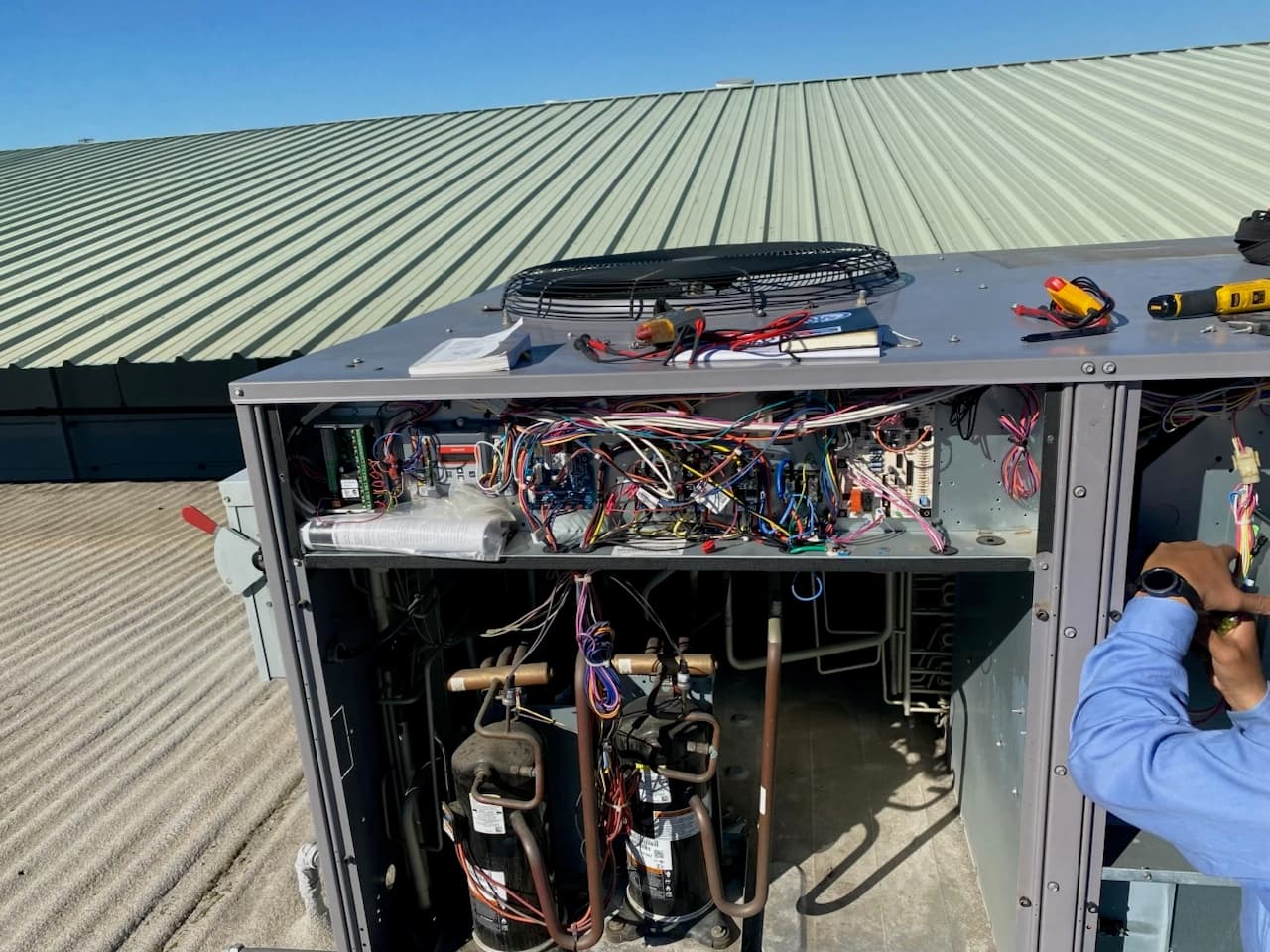
How maintenance plans work plays out in Rancho Cucamonga
The calendar for a maintenance program in Rancho Cucamonga is set by wind as much as by heat. The strongest canyon wind episodes typically land in fall and again in late winter or spring, and each one leaves coils dirtier, panels looser, and economizer dampers full of debris. A program that only visits in May and October misses the point. For retail and restaurant properties around Victoria Gardens and the Foothill corridor, we build quarterly visits that place a coil and fastener inspection after the wind season, a full cooling readiness check before summer, and a holiday-traffic check in the fall when stores and restaurants run their longest hours.
Medical office buildings along Haven Avenue and the Foothill corridor fit a bi-annual rhythm with filtration verified more often. Imaging and surgical suites have tighter expectations for temperature and air quality, and a filter loaded with wildfire smoke or canyon dust shows up as a comfort complaint and a pressure problem at the same time. We log static pressure and filter condition on each visit so the practice manager can see the trend and decide on interim filter changes without a service call.
Industrial landlords south of Arrow Route often own several buildings with dozens of units they have never had inventoried. The first step is an inventory with unit tags, photos, and baseline readings in the DaVinci Portal; only then does a visit schedule make sense. Owners who want to compare options can start with the maintenance program overview and the preventive maintenance guide.
Rancho Cucamonga's climate and what it does to this equipment
The city's position at the base of the San Gabriel Mountains defines its climate. Canyon winds through Cucamonga and Day Creek can arrive suddenly and hard, throwing dust, leaves, and debris across rooftops and into condenser coils. Summers are hot and dry, with the foothills adding to afternoon temperatures, and fall brings Santa Ana conditions and heightened fire risk in the surrounding hills. Wildfire smoke can load filters quickly. Winter nights are noticeably cooler than elsewhere in the Inland Empire, so equipment sees a wide range and economizers and heating components actually get used.
For the equipment background behind this page, read our preventive maintenance program guide or the full Commercial Maintenance Plans service page.
- Victoria Gardens and Day Creek areaOutdoor retail, dining, and entertainment with long operating hours and many tenant-controlled rooftop and split systems.
- Foothill Boulevard corridorRestaurants, medical offices, and older commercial strips along the historic route, many with mixed equipment generations.
- Industrial parks near Arrow Route and Haven AvenueManufacturing, food-related production, and distribution buildings with large rooftop packaged-unit arrays and refrigerated spaces.
- Epicenter and Etiwanda mixed-use areasEvent-oriented dining, newer offices, and developing commercial pads toward the city's northern and eastern edge.
- Free diagnostic on repairs for plan members
- Included labor per tier, with a member rate for anything over
- Photo-logged reports with temps, pressures, and amp draws
- DaVinci Portal included with QR tracking and self-service scheduling
What a maintenance plans visit includes, and the problems we most often find
- Walk every covered asset — RTUs, refrigeration, ice machines, water heaters
- Take and log readings against each unit's history, not a generic checklist
- Flag anything trending toward failure before it becomes a breakdown
- Deliver a photo-logged report after every visit
- Free diagnostic on any repair that comes out of the visit
- Equipment that 'seemed fine' failing without any maintenance history to catch the trend
- Multiple pieces of equipment aging out around the same time with no replacement plan
- Surprise repair costs that a documented PM history would have flagged months earlier
- Multi-location accounts with no consistent record across sites
Maintenance tiers for Rancho Cucamonga properties
Rancho Cucamonga properties benefit from a plan that adds post-wind coil and fastener checks to the usual pre-summer service, with filtration verification for medical suites.
See maintenance plan tiers