RTU & Split Installs in Ontario, CA
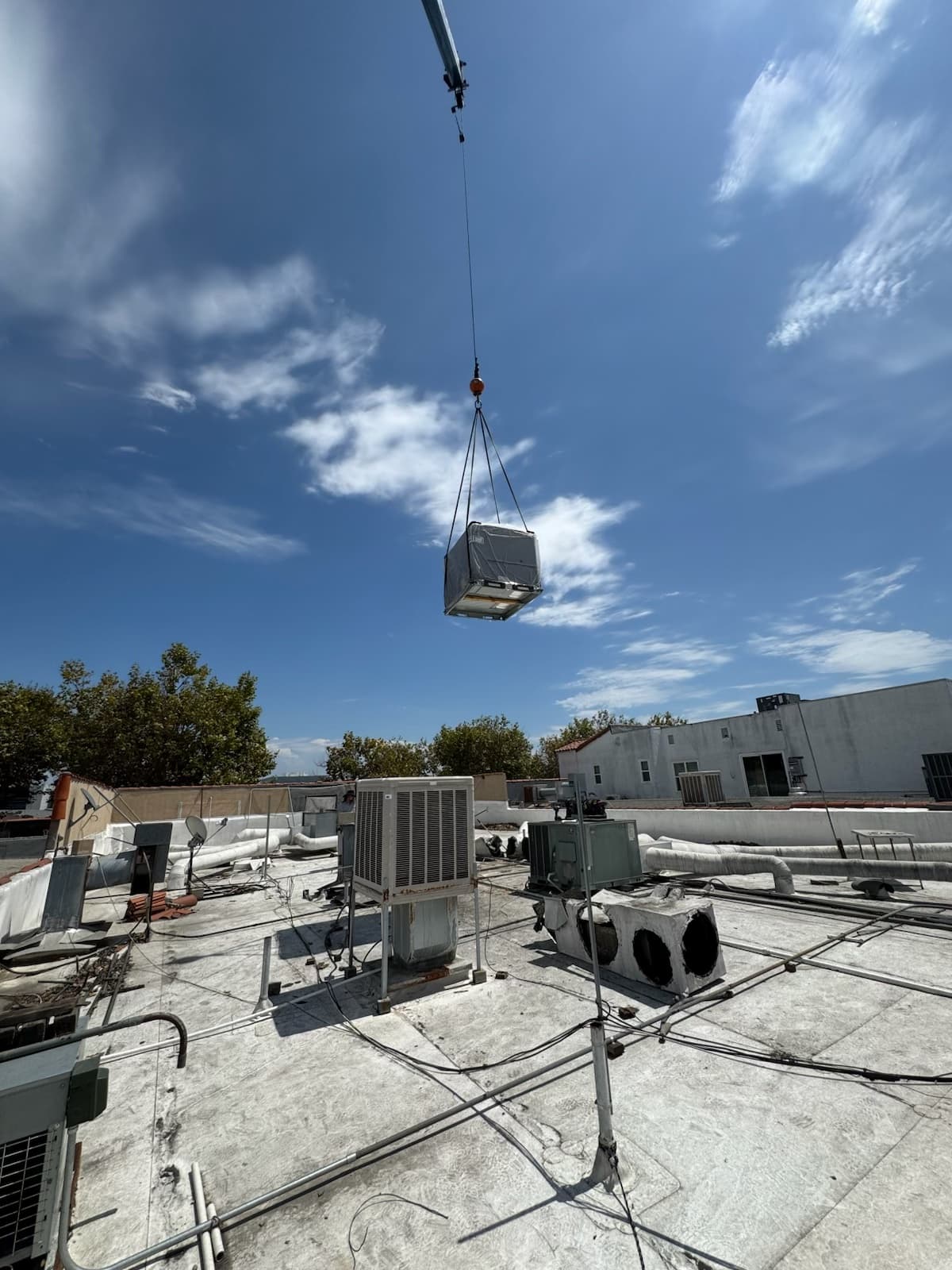
Warehouse and retail replacement programs near Ontario Airport can involve dozens of units across large roofs, so logistics determines success. We stage crane picks, coordinate with tenants running shipping operations, verify curbs and roof capacity, and phase replacements so critical areas stay conditioned. Equipment is selected for high ambient performance and, where dust is heavy, coil protection options. Permit and Title 24 paperwork is handled in scope, and each unit enters the DaVinci Portal as installed.
Built around Ontario International Airport, enormous distribution and cold-storage buildings, Ontario Mills, and the Convention Center district, with Santa Ana wind and extreme heat exposure.
How rtu & split installs work plays out in Ontario
A rooftop replacement program on an Ontario warehouse is a logistics project with HVAC inside it. The roof may be several hundred feet from the nearest crane position, the dock aprons are full of trailers on a schedule the tenant does not control, and the tenant's operation cannot pause for a week while units are swapped. We phase these jobs so a crane is on site for the shortest window, pre-stage curb adapters and electrical disconnects so each pick is a quick set, and sequence replacements so the areas with people in them, such as offices and break rooms, keep conditioning through the work.
Retail and hospitality replacements near Ontario Mills, around the Convention Center, and along the hotel row on Inland Empire Boulevard have a different rhythm. The roofs are easier to reach, but the hours are hard: stores open at ten, hotels have guests on every floor, and the Convention Center and Toyota Arena schedule the surrounding neighborhood's traffic. Picks there happen at dawn, and the units have to be ready to run before doors open. Older Euclid Avenue and Holt Boulevard buildings add their own wrinkle, with aging curbs and electrical services that need verification before anything is ordered.
Equipment selection for Ontario starts with high ambient ratings and ends with the coil. Units sized for a coastal design day will struggle here, and standard coils in heavy-dust locations near graded ground foul fast enough that coated coils or added filtration are worth discussing. Wind loading and anchoring get real attention on flat open roofs. Permits through the city, Title 24 acceptance testing, and the closeout package are included in the scope, and each unit is logged in the DaVinci Portal at startup. The commercial RTU replacement page explains how we scope multi-unit programs, and the rooftop unit guide covers selection in detail.
Ontario's climate and what it does to this equipment
Ontario is flat, hot, and open, so Santa Ana winds arrive with little to slow them. Dry gusts carry dust from nearby industrial sites and open ground onto huge rooftops, where condenser coils collect it quickly. Summer highs are routinely well above 100 degrees on the hottest days, and large dark roofs raise local rooftop air temperatures further. Regional smog and wildfire smoke affect filtration, and sharp swings between day and night temperatures stress controls and refrigeration defrost cycles. For cold storage, this means condensers are working against the worst ambient conditions of the year, usually with the heaviest product loads.
For the equipment background behind this page, read our commercial rooftop unit guide or the full RTU & Split System Installs service page.
- Airport and logistics corridorsDistribution and cargo buildings near Ontario International Airport, including cold storage and large rooftop equipment arrays.
- Ontario Mills and Ontario GatewayLarge-format retail, entertainment, and hospitality properties with extended operating hours and heavy rooftop equipment loads.
- Convention Center and arena districtEvent venues, hotels, and surrounding offices where ventilation and cooling demand surges during conventions and games.
- Guasti, Inland Empire Boulevard, and Ontario RanchMixed office, restaurant, and newer warehouse and commercial development south and east of the core.
- Site survey covering load, airflow balancing, and duct condition
- Clean rigging with code-correct gas, electrical, and condensate work
- Startup readings documented and stored in the Portal
- DaVinci Portal included: asset QR tag + warranty paperwork on file
What a rtu & split installs visit includes, and the problems we most often find
- Site survey — existing curb/duct compatibility, load, and airflow requirements
- Equipment selection sized to actual load and hours of operation, not just square footage
- Crane scheduling and rigging coordinated for roof access
- Install with code-correct gas, electrical, and condensate work
- Startup readings taken and documented; warranty registered in the Portal
- Undersized or oversized replacement units causing short-cycling or poor comfort
- Curb mismatches that turn a 'simple swap' into a bigger job mid-install
- Duct transitions that don't match the new unit's airflow requirements
- Aging units on refrigerant types that are getting harder and more expensive to service
RTU & Split Installs in Ontario: questions we get
Our Ontario warehouse tenant cannot stop receiving trucks. Can a crane work around active dock operations?
Is it worth paying for coated condenser coils on a new unit in Ontario?
Do you handle the crane pick and rigging?
Can you match an existing curb or duct layout?
Other services in Ontario
RTU & Split Installs nearby in Inland Empire (Riverside & San Bernardino Counties)
Commercial HVAC and refrigeration across Inland Empire (Riverside & San Bernardino Counties)