Commercial Refrigeration in Carson, CA
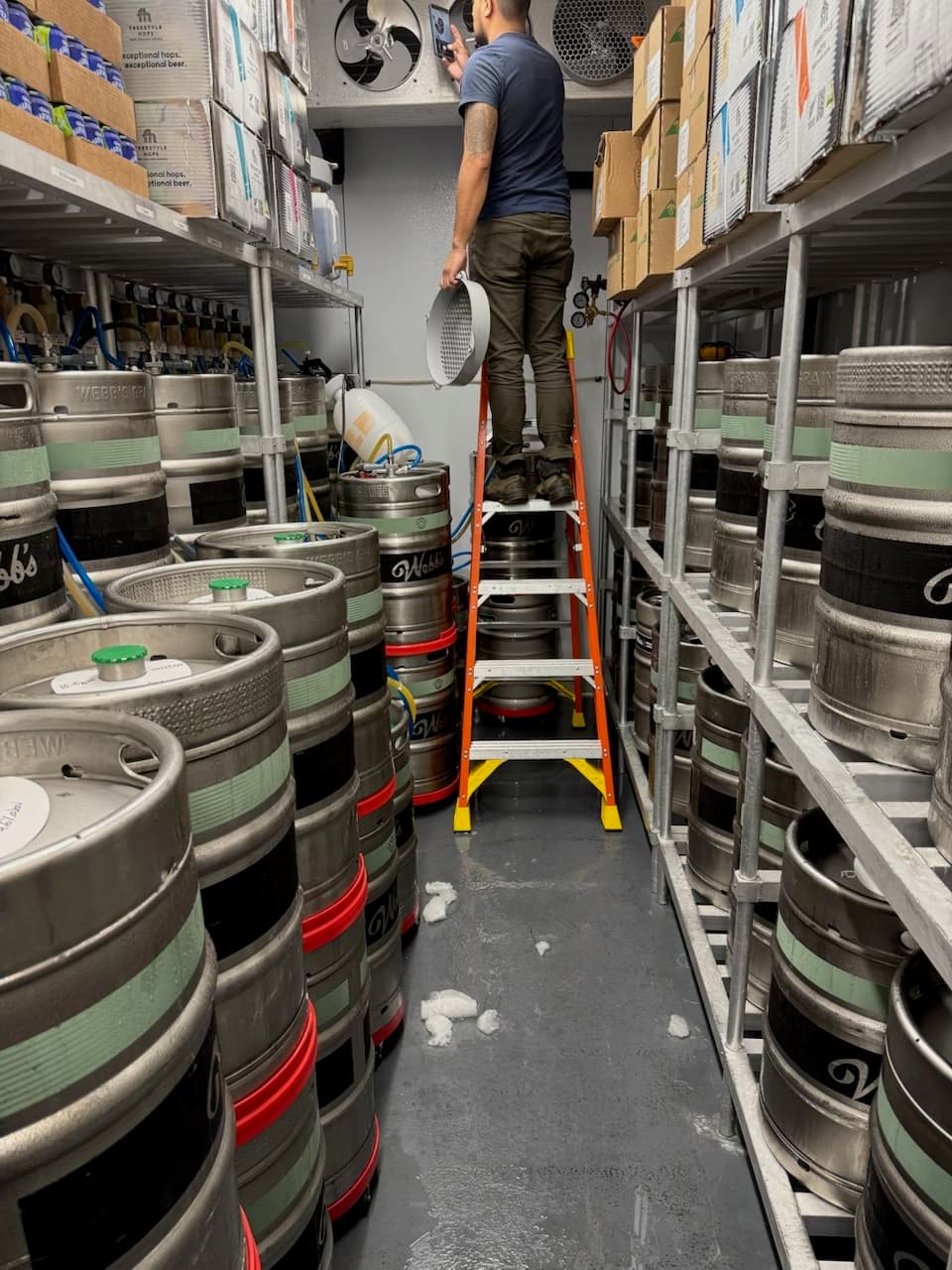
Food and consumer-product operations in Carson run large walk-ins, blast and holding freezers, and cold dock areas that carry real product value. Problems here are frequently airflow and defrost related, such as iced coils, failed evaporator fans and door seals worn out by forklift traffic, rather than outright refrigerant loss. We trace the whole system from condensing unit to box load, verify defrost termination and superheat, and document temperatures. For plants operating under customer audits, records of corrective action are part of the deliverable, not an afterthought.
Large industrial and distribution base in the South Bay, with food and consumer-product manufacturing, refinery-adjacent sites and the Dignity Health Sports Park area.
How commercial refrigeration work plays out in Carson
Carson's refrigeration load lives in the food and consumer-product plants between the 110 and Alameda Street, in the cold docks of the distribution centers near the 405, and in the grocery and restaurant tenants around South Bay Pavilion and Carson Street. These are three different jobs. At a plant, the walk-in is a production room, with forklifts, strip curtains that have been torn off, and evaporators coated with product dust. In a cold dock, the problem is infiltration from doors held open for trailers. In a market, it is a reach-in or a display case line on a condensing unit that has not been cleaned in years.
The humid South Bay summer afternoons matter more here than in a dry inland city. Warm, moist air pulled into a freezer through a damaged door gasket or a failed heater wire builds frost on the evaporator faster than the defrost cycle can clear it, and the box slowly loses capacity until an alarm goes off at two in the morning. We check gaskets, door heaters, defrost termination and drain line heat tape as a set, because fixing one without the others buys a few weeks.
Plants that supply national grocery chains operate under third-party food-safety audits, and the auditor wants to see temperature logs and corrective-action records for every cold space. Our service records are written so they can be dropped into that binder: readings before and after, what was replaced and why, and a photo of the condition we found. The walk-in cooler and freezer guide covers the failure modes we see most in these buildings.
Carson's climate and what it does to this equipment
Carson sits in the South Bay basin, close enough to the coast to get the marine layer on many mornings but inland enough to see warm, humid afternoons in late summer. The mix is hard on equipment in a quiet way: summer humidity loads cooling coils and condensate systems, warm nights keep cooling running late, and airborne particulate from freeways, ports and refineries coats outdoor coils and clogs filters. Hot spells push large warehouse roofs to extremes. Equipment is stressed by long run hours and dirty air more than by any single heat wave.
For the equipment background behind this page, read our walk-in cooler and freezer guide or the full Refrigeration: Walk-In & Reach-In Coolers/Freezers service page.
- Dominguez and 405 corridor industrial parksTilt-up distribution and light manufacturing buildings with large RTU fleets over office and warehouse zones.
- Dignity Health Sports Park and Cal State Dominguez HillsEvent venues, athletic facilities and university buildings with highly variable loads and public-agency procurement rules.
- South Bay Pavilion and Avalon Boulevard retailBig-box and strip retail with older packaged units, food service tenants and shared-roof access issues.
- Refinery-adjacent and food-manufacturing blocksFood and consumer-product plants with process refrigeration, make-up air and equipment exposed to industrial air.
- Evaporator/condenser coil cleaning and defrost checks
- TXV/EEV, superheat, subcool, and pressure readings logged
- Door seals, drains, heaters, and fan packages inspected
- DaVinci Portal: temps and pressures logged by asset over time
What a commercial refrigeration visit includes, and the problems we most often find
- Check current box temperature against setpoint and recent trend
- Inspect door seals, drains, and evaporator/condenser coils for buildup
- Take superheat, subcool, and pressure readings against manufacturer spec
- Address the root cause — not just a temporary recharge
- Log readings to the asset so drift is caught early next visit
- Door seals and hinges that no longer hold a tight close
- Evaporator coils iced over from a defrost cycle issue
- Condenser coils caked with grease or debris, especially near kitchen exhaust
- Slow refrigerant leaks that show up as gradual temperature drift, not sudden failure