Commercial Refrigeration in El Segundo, CA
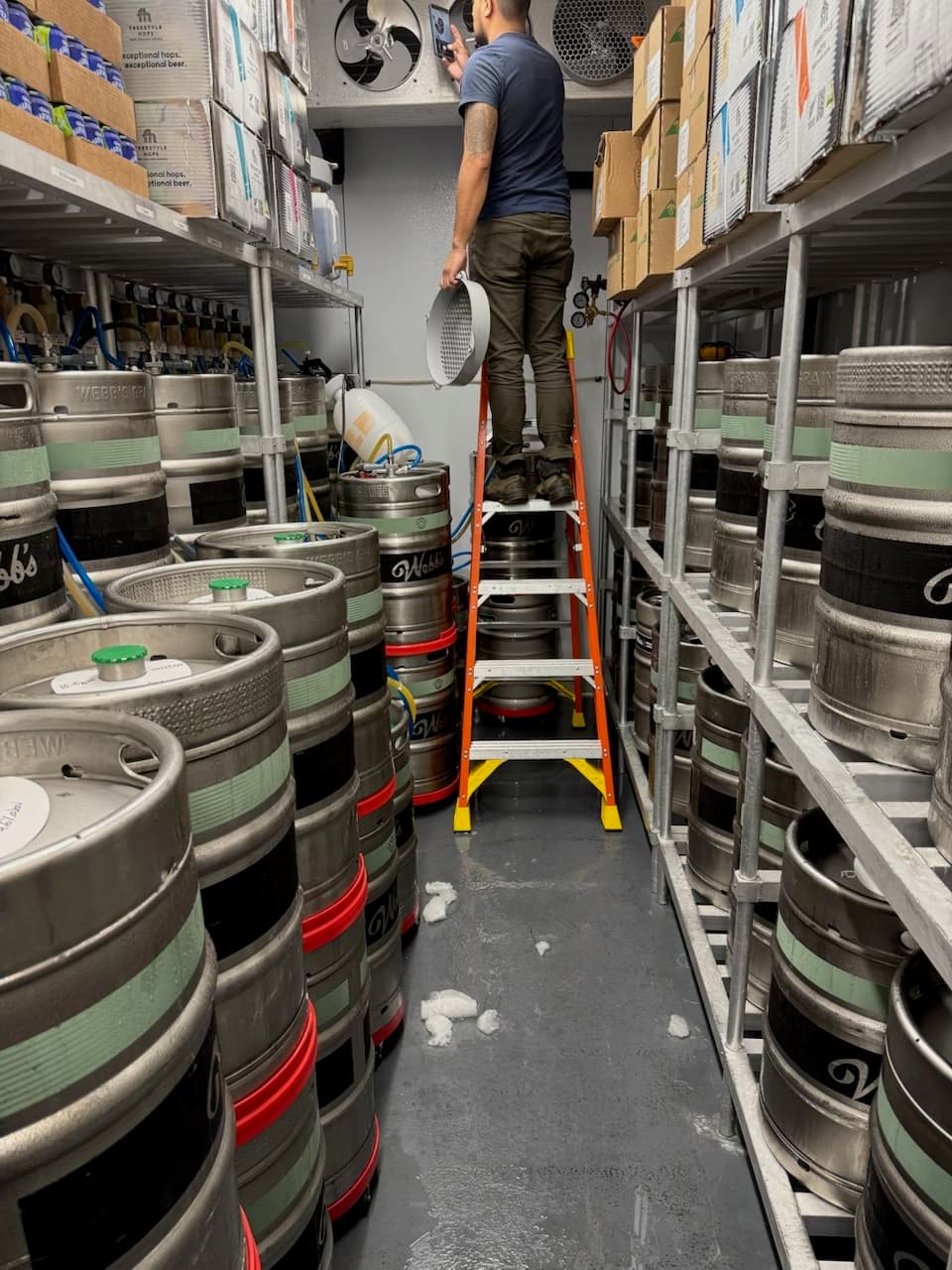
Downtown El Segundo restaurants and the cafes serving the campuses tend to be in older shells where the walk-in was added later, often in a back room with poor airflow. Warm, salty air and tight spaces shorten condenser life, and we see fan failures and iced evaporators caused by door gaskets and drain problems rather than refrigerant loss. We diagnose the whole box, including defrost timing, airflow and box load, so the fix holds through a busy lunch rush when corporate catering orders spike the door traffic and temperature recovery matters.
Aerospace, technology and corporate campuses wedged between LAX, the refinery and the Pacific Coast Highway corridor, with salt-laden coastal air shortening equipment life.
How commercial refrigeration work plays out in El Segundo
El Segundo's refrigeration lives in two places that have little in common. Along Main Street and the surrounding downtown blocks, restaurants and cafes operate walk-in coolers added to older low-rise buildings, with condensing units on back roofs or against alley walls that catch the afternoon sea breeze and all the salt in it. On the corporate campuses off Continental Boulevard and Douglas Street, food service is a corporate dining operation serving hundreds of employees at a sharp lunch peak, with walk-ins, reach-ins, and display cases in a purpose-built kitchen that still runs harder than its designers assumed.
Downtown failures are classic small-building problems amplified by the coast. Evaporator fans quit from moisture, door gaskets and closers fail from constant traffic during lunch and dinner, drains ice over in freezers, and the condensing unit slowly loses capacity as fins corrode until a warm September week pushes the box out of range. On campus, the problem is often load: a walk-in that was sized for a modest cafe now supports catering, grab-and-go programs, and all-day coffee service, and door openings during the lunch rush outrun recovery. Both need the whole system evaluated, from box load and airflow to defrost timing and condenser health.
Scheduling depends on the operator. A Main Street restaurant can give up a walk-in between lunch and dinner service; a corporate kitchen usually prefers early morning before prep or a weekend. Campus access involves badging and sometimes escorts. In each case, product is protected, the repair is completed, temperatures are logged on recovery, and the asset record is updated. See walk-in and reach-in refrigeration and the walk-in cooler and freezer guide.
El Segundo's climate and what it does to this equipment
El Segundo sits at the edge of Santa Monica Bay, so mornings often open under the marine layer and afternoons rarely reach the extremes seen inland. That mildness hides the real stress: constant salt-laden air attacks condenser fins, copper tubing, fan guards and rooftop cabinets, and airport and refinery particulates load coils and filters faster than inland offices. Humidity runs higher than most of Los Angeles County, which affects economizer behavior and condensate management. Equipment is rarely heat-stressed, but coating failure and coil corrosion cut service life well short of inland counterparts.
For the equipment background behind this page, read our walk-in cooler and freezer guide or the full Refrigeration: Walk-In & Reach-In Coolers/Freezers service page.
- Campus and corporate row (Douglas, Continental and Nash)Aerospace, entertainment-tech and corporate campuses with chilled-water plants, VAV systems and tight uptime expectations for labs and data rooms.
- Sepulveda and Imperial hotel and office stripAirport-serving hotels and mid-rise offices with continuous hot water demand, rooftop plant and strict noise limits at night.
- Downtown El Segundo (Main Street)Older low-rise buildings with restaurants, cafes and small retail, where walk-ins, makeup air and shared roofs are the main challenges.
- Smoky Hollow and the southern industrial blocksOlder creative-office conversions and light industrial buildings mixing legacy packaged units with newer tenant-driven mini-splits.
- Evaporator/condenser coil cleaning and defrost checks
- TXV/EEV, superheat, subcool, and pressure readings logged
- Door seals, drains, heaters, and fan packages inspected
- DaVinci Portal: temps and pressures logged by asset over time
What a commercial refrigeration visit includes, and the problems we most often find
- Check current box temperature against setpoint and recent trend
- Inspect door seals, drains, and evaporator/condenser coils for buildup
- Take superheat, subcool, and pressure readings against manufacturer spec
- Address the root cause — not just a temporary recharge
- Log readings to the asset so drift is caught early next visit
- Door seals and hinges that no longer hold a tight close
- Evaporator coils iced over from a defrost cycle issue
- Condenser coils caked with grease or debris, especially near kitchen exhaust
- Slow refrigerant leaks that show up as gradual temperature drift, not sudden failure