Commercial Refrigeration in City of Industry, CA
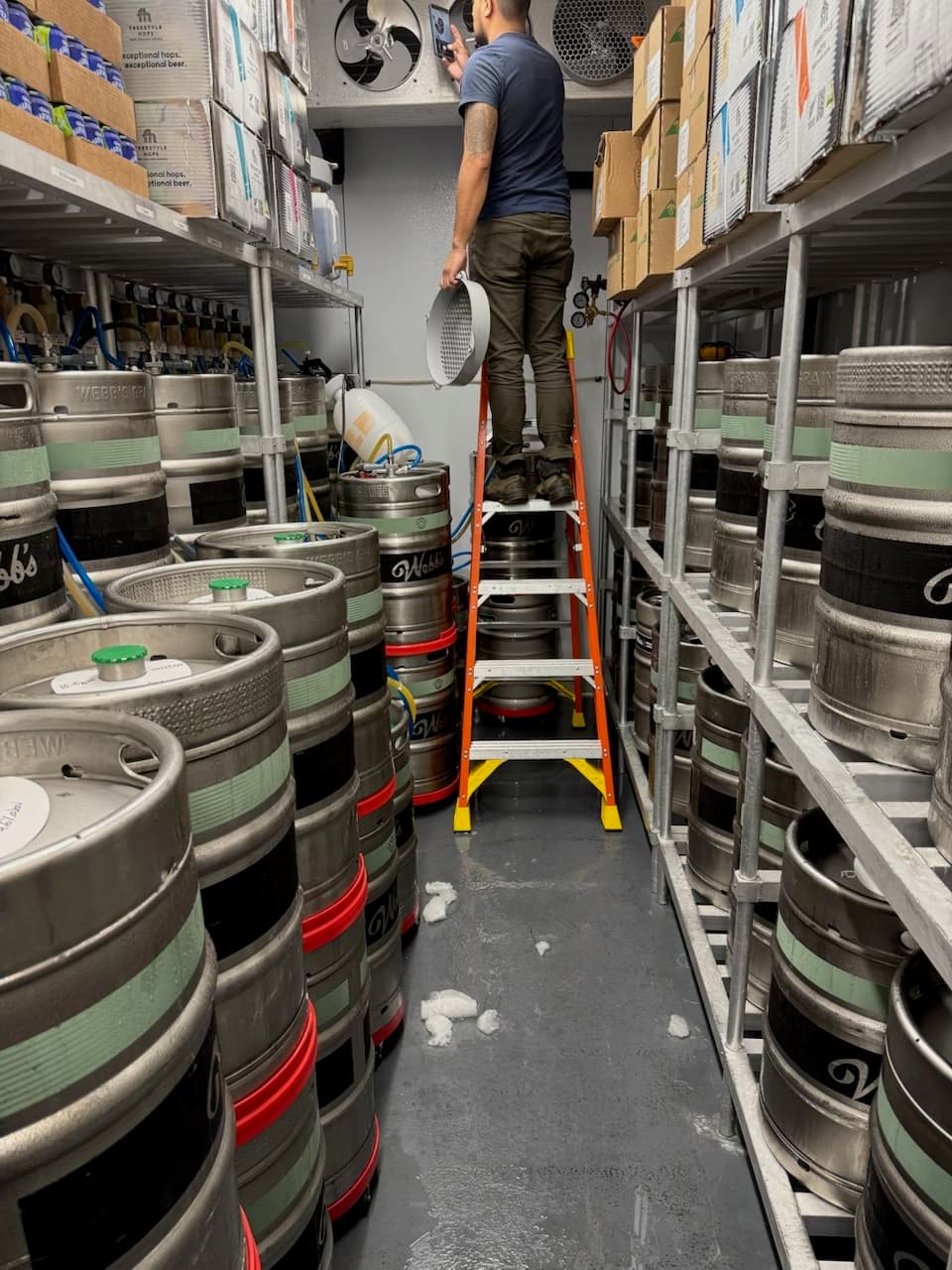
Cold storage and food processing define much of Industry's refrigeration work: large walk-in and built-up coolers, freezer docks, and evaporators that defrost many times a day. Frost buildup, dock door infiltration, failed fan motors and oil return problems all show up in these environments. In summer, extreme ambient heat pushes condensing units hard, so condenser cleanliness and head pressure control decide whether a system holds temperature. We diagnose the entire circuit, verify defrost cycles, and document readings for customers whose product audits require traceable records.
One of the largest warehouse, distribution and manufacturing concentrations in the San Gabriel Valley, with food processing, rail corridors and punishing inland summer heat.
How commercial refrigeration work plays out in City of Industry
Cold storage is a core industry here, and the refrigeration in a City of Industry food distributor is on a different scale from a restaurant walk-in. Built-up systems with multiple evaporators serve freezer rooms the size of a gymnasium, refrigerated docks hold trailers at temperature while they are unloaded, and produce and dairy rooms cycle through defrost many times a day. Along Gale Avenue and the food-processing blocks, the condensing equipment sits on roofs that reach extreme surface temperatures, and in July the whole system is working against the hottest ambient conditions in Los Angeles County.
The failures that matter are capacity failures that creep. Head pressure climbs as condensers load with dust from the rail yards and truck traffic, evaporator coils frost over because dock doors stay open longer during peak season, fan motors fail in pairs, and oil return problems appear in long-line systems that were never fully commissioned. A room that held temperature in May drifts a few degrees in August, and the first anyone notices is a product rejection. We trend readings so the drift is caught before that, and we clean, verify defrost and check oil levels as one scope.
Food-safety audits from national customers require traceable corrective action for every cold space, so our records include the before and after readings, the component condition and photographs. Plants here also run under hygiene rules that govern when and how a technician can be inside a room, and we schedule evaporator work inside sanitation windows. The refrigeration systems guide covers the built-up and rack systems common in this city, and the food manufacturing and cold storage sector page explains how we work with plants in the county.
City of Industry's climate and what it does to this equipment
City of Industry sits in the San Gabriel Valley, well inland, and summer afternoons regularly push past 95 degrees with stretches of triple digits. Large dark roofs soak up that heat, so rooftop units work against extreme ambient conditions plus radiant load from the roof surface. Low humidity makes evaporative approaches effective but also puts a premium on clean condensers, since dusty air from rail yards and truck traffic builds up fast on coils. Santa Ana wind events add debris and static pressure problems, and winter nights are mild enough that heating loads stay light.
For the equipment background behind this page, read our walk-in cooler and freezer guide or the full Refrigeration: Walk-In & Reach-In Coolers/Freezers service page.
- Valley Boulevard and Azusa Avenue distribution corridorLarge tilt-up warehouses with long rooftop unit rows, dock offices and multi-shift operations.
- Gale Avenue and Nelson Avenue manufacturing and food-processing blocksPlants with process refrigeration, sanitation hot water and make-up air demands that change with production.
- Puente Hills Mall and Fullerton Road retailAnchor and strip retail with restaurants, older packaged equipment and shared roof infrastructure.
- Industry Hills hospitality and business park areaResort, event and office properties with hot water loads, chilled-water or large packaged systems and seasonal event peaks.
- Evaporator/condenser coil cleaning and defrost checks
- TXV/EEV, superheat, subcool, and pressure readings logged
- Door seals, drains, heaters, and fan packages inspected
- DaVinci Portal: temps and pressures logged by asset over time
What a commercial refrigeration visit includes, and the problems we most often find
- Check current box temperature against setpoint and recent trend
- Inspect door seals, drains, and evaporator/condenser coils for buildup
- Take superheat, subcool, and pressure readings against manufacturer spec
- Address the root cause — not just a temporary recharge
- Log readings to the asset so drift is caught early next visit
- Door seals and hinges that no longer hold a tight close
- Evaporator coils iced over from a defrost cycle issue
- Condenser coils caked with grease or debris, especially near kitchen exhaust
- Slow refrigerant leaks that show up as gradual temperature drift, not sudden failure