Commercial Refrigeration in Burbank, CA
Magnolia Park restaurants, commissary-style kitchens serving studios, and food service operations near the airport all depend on dependable refrigeration. Valley heat drives condensing temperatures up, which reduces capacity and shortens compressor life in rooms with poor ventilation. Typical issues include dirty condensers, weak fans, and door infiltration. Diagnosis considers the environment around the equipment as well as the equipment, since a cooler in a hot alley fights a harder battle.
Studio and media campuses, airport-area industrial buildings, a restaurant-rich Magnolia Park, and hospital facilities in the heat of the San Fernando Valley.
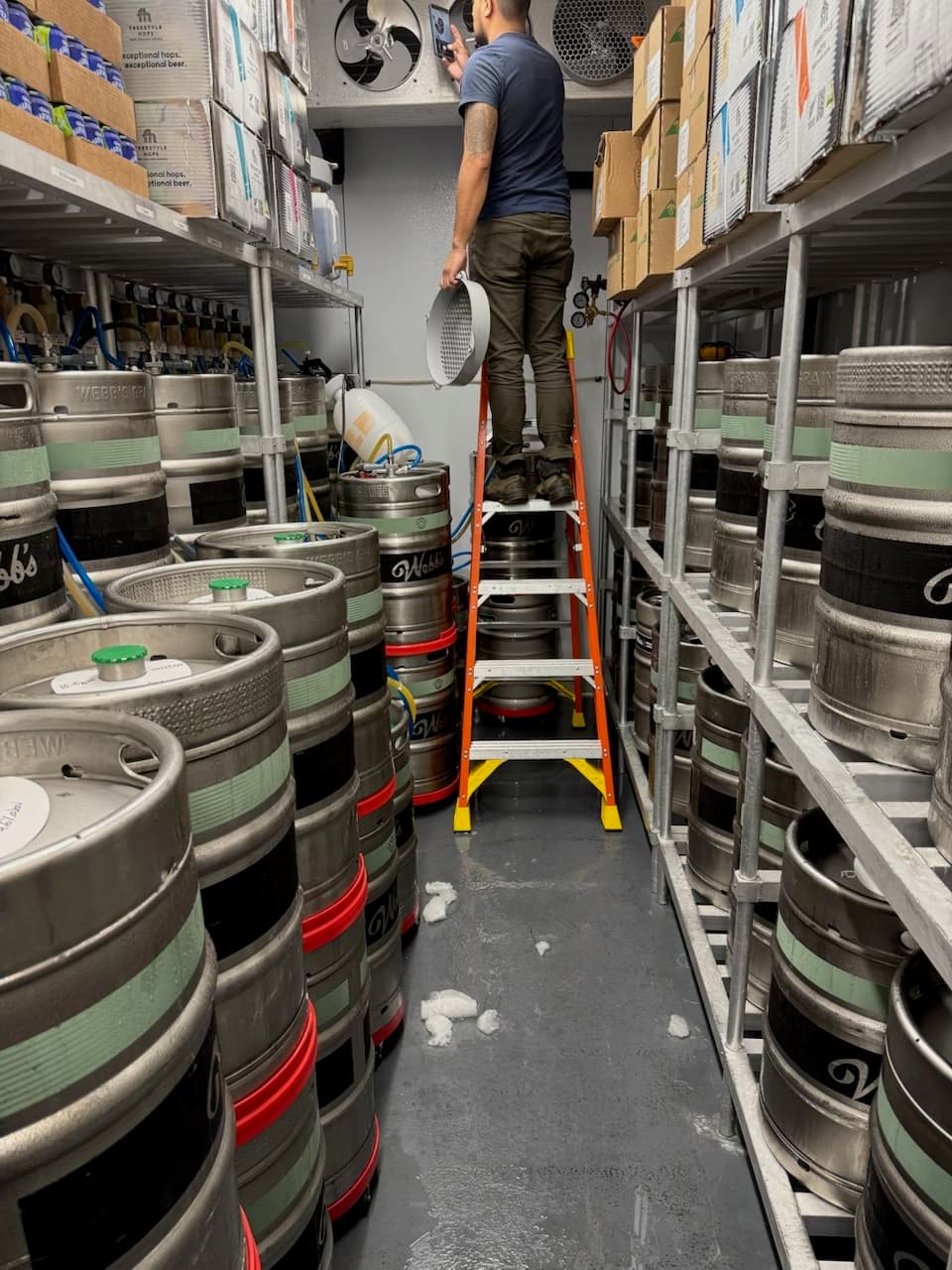
How commercial refrigeration work plays out in Burbank
Magnolia Park is where Burbank refrigeration lives. A long run of independent restaurants, bakeries, coffee roasters, and specialty food shops along Magnolia Boulevard operate walk-ins and reach-ins in buildings that were built as small storefronts, so the box is often in a back room with a condensing unit on a low roof or in the alley with a wall on three sides. Studio commissaries and the catering operations that feed productions run larger walk-ins with constant door traffic. Hotels near the airport keep kitchen and bar refrigeration busy, and Providence Saint Joseph and the medical offices around it run temperature-critical refrigeration where a drifting box is a documentation problem.
Valley heat is hard on all of it. Condensing units in alleys off Magnolia or on low roofs near the airport pull in air that is far hotter than design on summer afternoons, which raises head pressure, cuts capacity, and shortens compressor life. Commissary walk-ins see heavy door traffic during crew meal windows, loading the evaporator with warm humid air and causing defrost cycles to fall behind. The repair that lasts corrects the environment and the control settings along with the component: clearance, condenser cleanliness, gasket and closer condition, defrost timing, and fan operation.
Visits are scheduled around prep and service, usually early morning for restaurants and around meal windows for commissaries. Box temperature logs, superheat and head pressure readings, and photos of coil and door condition go into the DaVinci Portal, so the owner sees the trend rather than a single snapshot. For food tenants that cannot afford product loss, that trend is what justifies replacing a condensing unit before a holiday weekend. The refrigeration page and the refrigeration systems guide describe the full check.
Burbank's climate and what it does to this equipment
Burbank sits in the San Fernando Valley, and the valley holds heat. Summer days regularly reach the upper 90s and into the 100s during heat waves, with warm nights that limit equipment recovery. The marine layer that cools coastal cities rarely reaches this far, so cooling seasons are long and intense. Santa Ana winds add dry air, dust, and fire-season smoke that load filters and coils. In these conditions, rooftop condensers and chillers work close to their limits more often than elsewhere in the county.
For the equipment background behind this page, read our walk-in cooler and freezer guide or the full Refrigeration: Walk-In & Reach-In Coolers/Freezers service page.
- Media District and studio campusesProduction lots, office buildings, edit suites, and server areas with steady cooling loads and limited tolerance for interruption.
- Magnolia ParkIndependent restaurants, cafes, and shops in older commercial buildings, where kitchens, coolers, and rooftop equipment are compact.
- Airport-area industrial and business parksLarge industrial and light-industrial buildings near Hollywood Burbank Airport with substantial rooftop equipment counts.
- Downtown Burbank and hospital campusesOffices, retail, and medical buildings where comfort, filtration, and scheduling around clinical or business hours are essential.
- Evaporator/condenser coil cleaning and defrost checks
- TXV/EEV, superheat, subcool, and pressure readings logged
- Door seals, drains, heaters, and fan packages inspected
- DaVinci Portal: temps and pressures logged by asset over time
What a commercial refrigeration visit includes, and the problems we most often find
- Check current box temperature against setpoint and recent trend
- Inspect door seals, drains, and evaporator/condenser coils for buildup
- Take superheat, subcool, and pressure readings against manufacturer spec
- Address the root cause — not just a temporary recharge
- Log readings to the asset so drift is caught early next visit
- Door seals and hinges that no longer hold a tight close
- Evaporator coils iced over from a defrost cycle issue
- Condenser coils caked with grease or debris, especially near kitchen exhaust
- Slow refrigerant leaks that show up as gradual temperature drift, not sudden failure