Ice Machine Service in Burbank, CA
Burbank's restaurants, hotels near the airport, and studio catering operations use large volumes of ice, especially in the hottest months. High ambient temperatures cut machine output and strain compressors, particularly in enclosed spaces. Scale and bin contamination remain the usual sanitation concerns. Service combines cleaning, filtration checks, and condenser maintenance, with a documented schedule so catering and food service clients can show consistent care. Hotels near the airport also face steady guest demand around early flights and late arrivals.
Studio and media campuses, airport-area industrial buildings, a restaurant-rich Magnolia Park, and hospital facilities in the heat of the San Fernando Valley.
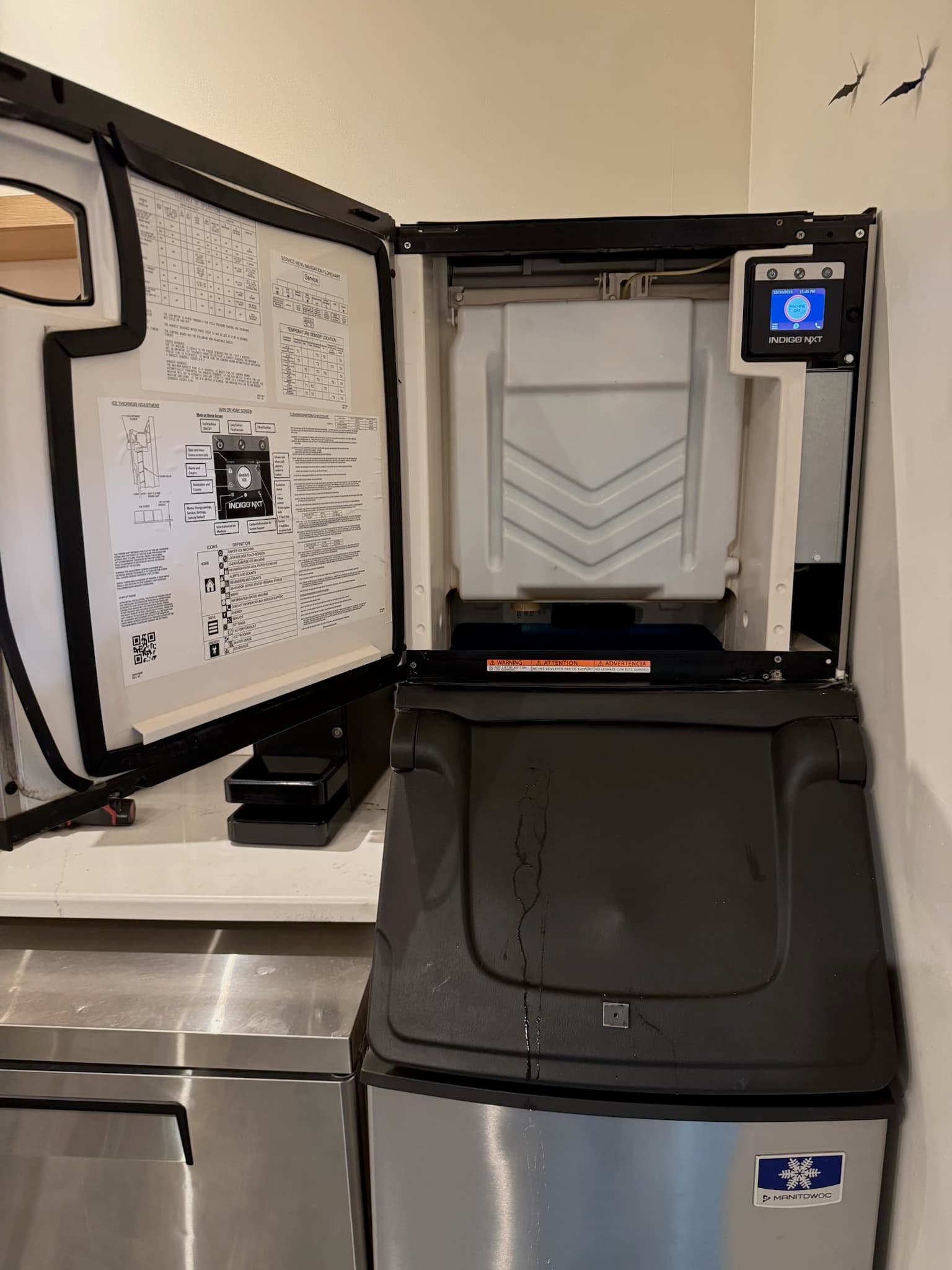
How ice machine service work plays out in Burbank
Studio catering is a volume of ice most cities never see. Productions on and around the Media District lots feed large crews in short windows, and the commissaries and craft service operations that supply them run ice machines at capacity through the summer shooting season. Hotels clustered near Hollywood Burbank Airport and along the 5 keep machines running for guests on early flights and late arrivals. Magnolia Park bars and cafes run through bins on hot evenings. And the hospital and medical offices around Providence Saint Joseph need clean, documented ice regardless of the season.
Burbank's heat is the limiting factor for most of these machines. Air-cooled ice machines lose a meaningful share of their rated production as room and inlet air temperatures rise, and a back-of-house room or kitchen alcove in Burbank in August can be hot enough that harvest cycles stretch and the bin never fills. Scale from local water builds on evaporator plates and in distribution tubes, and a machine that misses its cleaning schedule grows slime in the bin. The service combines sanitation and descaling, filter replacement, condenser cleaning, and a production check against the nameplate, with room temperature and ventilation noted when they are limiting.
Timing is set by the operation: before the lunch rush for restaurants, between meal windows for commissaries, in coordination with facilities for the hospital. Each cleaning is recorded in the DaVinci Portal with photos, so catering operators can show a production company's safety lead and restaurant managers can show a health inspector what was done and when. A cadence that cleans before the summer shooting season and again before the holidays prevents most emergency calls. The ice machine page describes the standard visit.
Burbank's climate and what it does to this equipment
Burbank sits in the San Fernando Valley, and the valley holds heat. Summer days regularly reach the upper 90s and into the 100s during heat waves, with warm nights that limit equipment recovery. The marine layer that cools coastal cities rarely reaches this far, so cooling seasons are long and intense. Santa Ana winds add dry air, dust, and fire-season smoke that load filters and coils. In these conditions, rooftop condensers and chillers work close to their limits more often than elsewhere in the county.
For the equipment background behind this page, read our commercial ice machine guide or the full Ice Machines — Service & Sanitation service page.
- Media District and studio campusesProduction lots, office buildings, edit suites, and server areas with steady cooling loads and limited tolerance for interruption.
- Magnolia ParkIndependent restaurants, cafes, and shops in older commercial buildings, where kitchens, coolers, and rooftop equipment are compact.
- Airport-area industrial and business parksLarge industrial and light-industrial buildings near Hollywood Burbank Airport with substantial rooftop equipment counts.
- Downtown Burbank and hospital campusesOffices, retail, and medical buildings where comfort, filtration, and scheduling around clinical or business hours are essential.
- Scale removal, deep sanitation, and filter change-out programs
- Bin sensors, harvest cycles, pumps, and valves checked
- OEM-spec readings taken against manufacturer PM intervals
- DaVinci Portal: photo-logged cleanings and reminder scheduling
What a ice machine service visit includes, and the problems we most often find
- Check ice quality, production rate, and bin sensor operation
- Full descale of water lines and evaporator plate
- Sanitize all food-contact surfaces per manufacturer spec
- Inspect water filtration and replace if due
- Photo-document the cleaning for your compliance records
- Scale buildup from hard water slowing production and clouding ice
- Bin sensors misreading and causing over- or under-production
- Water filters overdue for change, affecting both taste and machine health
- Visible slime or mold in the bin — the most common health-inspection flag