Ice Machine Service in City of Industry, CA
Ice use in Industry is typically industrial and institutional: food plants using ice for product handling, large employee cafeterias, and the resort and event operations in the Industry Hills. Hard water in the San Gabriel Valley scales machines quickly, and hot, dusty air clogs air-cooled condensers. We descale, sanitize and inspect water treatment, and where machines are located near docks or in mechanical rooms, we address clearances and airflow. Records are kept for food-safety and brand audits, which matter to the national tenants common in this city.
One of the largest warehouse, distribution and manufacturing concentrations in the San Gabriel Valley, with food processing, rail corridors and punishing inland summer heat.
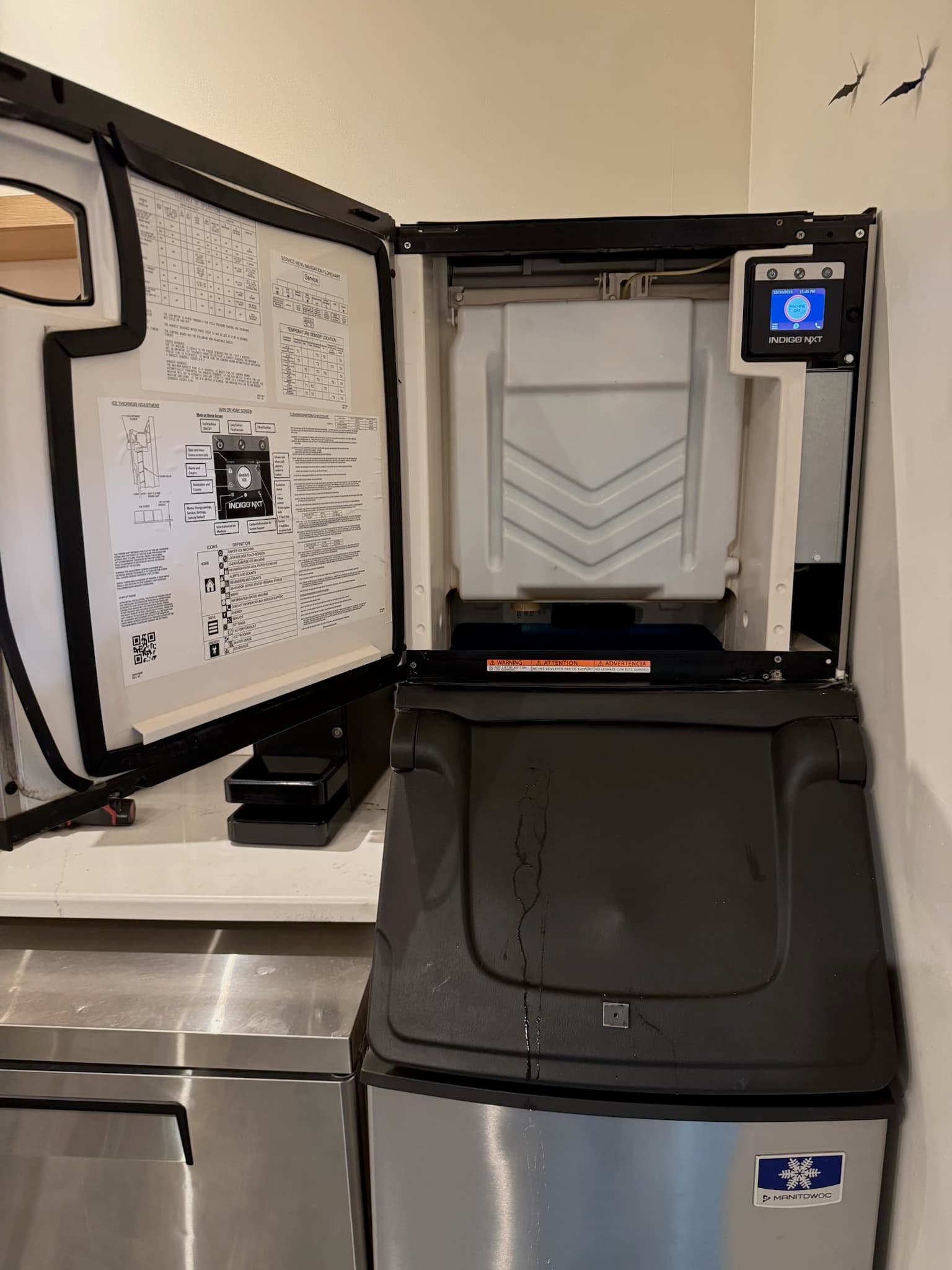
How ice machine service work plays out in City of Industry
Ice production in City of Industry serves plants, cafeterias and the hospitality cluster in the Industry Hills rather than a hotel row. Food processors use flake or nugget ice for product handling and chilling, which means the machine is part of the production line and its sanitation is part of the food-safety program. Employee cafeterias at the big distribution employers run cubers at high duty cycles through the shift, and the resort, golf and event facilities in the hills run a mix of machines that spike for banquets and tournaments and sit quieter between them.
Two local conditions dominate service. San Gabriel Valley water is hard, so scale builds on evaporator plates, float valves and sensors quickly and a machine that is not descaled on schedule starts producing thin, slow ice and eventually freezes up. Hot, dusty air from truck yards and rail lines loads air-cooled condensers, and a machine in a back room near a dock will see higher inlet temperatures than its rating assumes. We test water hardness, confirm filtration is correct and actually changed, clean condensers, and set descaling intervals to the real water and duty cycle.
For plants, our records are written so they slot into the sanitation log the auditor will review, with dates, chemicals used and condition found. For the hospitality properties, we schedule service ahead of known event peaks so a machine that idled for two weeks is not expected to run flat out without a check. The commercial ice machine guide details what a complete service visit includes.
City of Industry's climate and what it does to this equipment
City of Industry sits in the San Gabriel Valley, well inland, and summer afternoons regularly push past 95 degrees with stretches of triple digits. Large dark roofs soak up that heat, so rooftop units work against extreme ambient conditions plus radiant load from the roof surface. Low humidity makes evaporative approaches effective but also puts a premium on clean condensers, since dusty air from rail yards and truck traffic builds up fast on coils. Santa Ana wind events add debris and static pressure problems, and winter nights are mild enough that heating loads stay light.
For the equipment background behind this page, read our commercial ice machine guide or the full Ice Machines — Service & Sanitation service page.
- Valley Boulevard and Azusa Avenue distribution corridorLarge tilt-up warehouses with long rooftop unit rows, dock offices and multi-shift operations.
- Gale Avenue and Nelson Avenue manufacturing and food-processing blocksPlants with process refrigeration, sanitation hot water and make-up air demands that change with production.
- Puente Hills Mall and Fullerton Road retailAnchor and strip retail with restaurants, older packaged equipment and shared roof infrastructure.
- Industry Hills hospitality and business park areaResort, event and office properties with hot water loads, chilled-water or large packaged systems and seasonal event peaks.
- Scale removal, deep sanitation, and filter change-out programs
- Bin sensors, harvest cycles, pumps, and valves checked
- OEM-spec readings taken against manufacturer PM intervals
- DaVinci Portal: photo-logged cleanings and reminder scheduling
What a ice machine service visit includes, and the problems we most often find
- Check ice quality, production rate, and bin sensor operation
- Full descale of water lines and evaporator plate
- Sanitize all food-contact surfaces per manufacturer spec
- Inspect water filtration and replace if due
- Photo-document the cleaning for your compliance records
- Scale buildup from hard water slowing production and clouding ice
- Bin sensors misreading and causing over- or under-production
- Water filters overdue for change, affecting both taste and machine health
- Visible slime or mold in the bin — the most common health-inspection flag