Ice Machine Service in Carson, CA
Ice in Carson is a quieter need than in a hotel district, but it matters at food manufacturers, cafeterias at larger employers, the university and venue concessions around the stadium area. Event days produce heavy, concentrated demand, and a machine neglected during the off-season can fail on game day. Industrial dust and warm ambient air shorten condenser life, so cleaning intervals matter. We service, descale and sanitize machines, check water filtration, and record the work for health inspections and food-safety audits.
Large industrial and distribution base in the South Bay, with food and consumer-product manufacturing, refinery-adjacent sites and the Dignity Health Sports Park area.
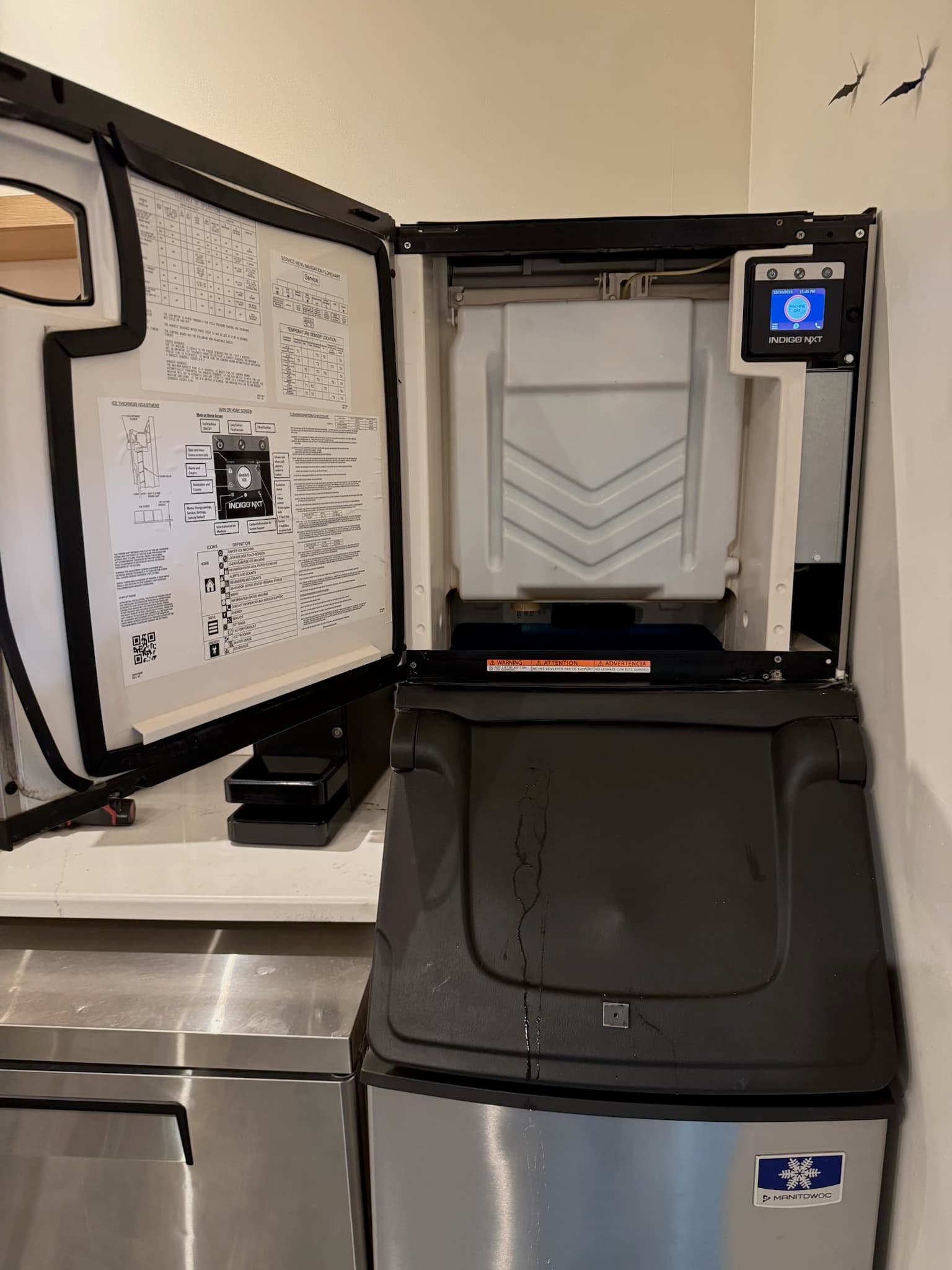
How ice machine service work plays out in Carson
Ice in Carson is less about hotels and more about workforce and events. Employee cafeterias at the larger distribution and manufacturing employers run cuber machines that feed a soda station used by hundreds of people a shift. The concession stands and club areas at Dignity Health Sports Park go from idle to full output on a game or concert day. The restaurants along Carson Street and Avalon Boulevard near the mall have under-counter and modular machines wedged into back-of-house spaces with poor airflow. Each of these fails in its own way.
In the plants and warehouses, dust is the enemy. An air-cooled condenser near a dock door or a forklift lane loads up with lint and grit, head pressure climbs, and the machine makes thin, cloudy ice before it stops making any. At the venue, the problem is neglect between events: a machine that sat for weeks grows slime in the reservoir and scales up, then is expected to run flat out for six hours. We set cleaning and sanitizing intervals to the actual duty cycle and record each visit so the health inspector or the concessionaire's brand auditor sees the history.
Water quality in the South Bay is moderately hard and chlorinated, so filtration and periodic descaling are not optional. We test incoming water, confirm the filter is the right type and is actually being changed, and inspect water-level sensors and float valves that scale blinds first. See the commercial ice machine guide for what a complete service visit includes.
Carson's climate and what it does to this equipment
Carson sits in the South Bay basin, close enough to the coast to get the marine layer on many mornings but inland enough to see warm, humid afternoons in late summer. The mix is hard on equipment in a quiet way: summer humidity loads cooling coils and condensate systems, warm nights keep cooling running late, and airborne particulate from freeways, ports and refineries coats outdoor coils and clogs filters. Hot spells push large warehouse roofs to extremes. Equipment is stressed by long run hours and dirty air more than by any single heat wave.
For the equipment background behind this page, read our commercial ice machine guide or the full Ice Machines — Service & Sanitation service page.
- Dominguez and 405 corridor industrial parksTilt-up distribution and light manufacturing buildings with large RTU fleets over office and warehouse zones.
- Dignity Health Sports Park and Cal State Dominguez HillsEvent venues, athletic facilities and university buildings with highly variable loads and public-agency procurement rules.
- South Bay Pavilion and Avalon Boulevard retailBig-box and strip retail with older packaged units, food service tenants and shared-roof access issues.
- Refinery-adjacent and food-manufacturing blocksFood and consumer-product plants with process refrigeration, make-up air and equipment exposed to industrial air.
- Scale removal, deep sanitation, and filter change-out programs
- Bin sensors, harvest cycles, pumps, and valves checked
- OEM-spec readings taken against manufacturer PM intervals
- DaVinci Portal: photo-logged cleanings and reminder scheduling
What a ice machine service visit includes, and the problems we most often find
- Check ice quality, production rate, and bin sensor operation
- Full descale of water lines and evaporator plate
- Sanitize all food-contact surfaces per manufacturer spec
- Inspect water filtration and replace if due
- Photo-document the cleaning for your compliance records
- Scale buildup from hard water slowing production and clouding ice
- Bin sensors misreading and causing over- or under-production
- Water filters overdue for change, affecting both taste and machine health
- Visible slime or mold in the bin — the most common health-inspection flag
Ice Machine Service in Carson: questions we get
Our Carson cafeteria ice machine runs fine in winter but cannot keep up in August. Is it undersized?
Probably not undersized, but it is working against a warm, humid break room and a condenser that has not been cleaned since spring. Production ratings assume moderate ambient and clean coils; a dirty condenser in a 90-degree back room can cut output by a third. A cleaning, a check of the water inlet temperature and a look at the room's ventilation usually recovers capacity before anyone buys a bigger machine.
Who is responsible for ice machine sanitation at a stadium concession stand that a vendor operates?
That is set by the concession agreement, and it varies. In most arrangements the concessionaire owns the food-safety compliance and the venue owns the utilities and sometimes the equipment. We work for whichever party holds the contract and document the sanitation so both sides have a record. Where machines sit idle between events, we recommend a pre-event check rather than waiting for a complaint on game day.
How often should ice machines be sanitized?
Most manufacturers recommend sanitizing every six months minimum, more often in high-mineral water areas. We'll set the interval based on your machine and water supply.
Can you fix low production without a full replacement?
Often, yes. Scale buildup, refrigerant charge, and water filtration are the most common causes of low ice production and are usually repairable.