Ice Machine Service in Pomona, CA
Ice demand in Pomona spikes with events: fair season, concerts, campus activities and weekend crowds in the Arts Colony. Machines that sat quiet for months often develop scale and sanitation problems that show up on the first busy day. Hard local water accelerates scale, and hot ambient air in utility rooms hurts condenser performance. We service, descale and sanitize, check filtration and clearances, and keep sanitation records that satisfy health inspectors and venue operators alike.
A mixed inland city of Cal Poly Pomona, the Fairplex, industrial parks and a revitalizing downtown, where hot, dry summers drive heavy cooling loads.
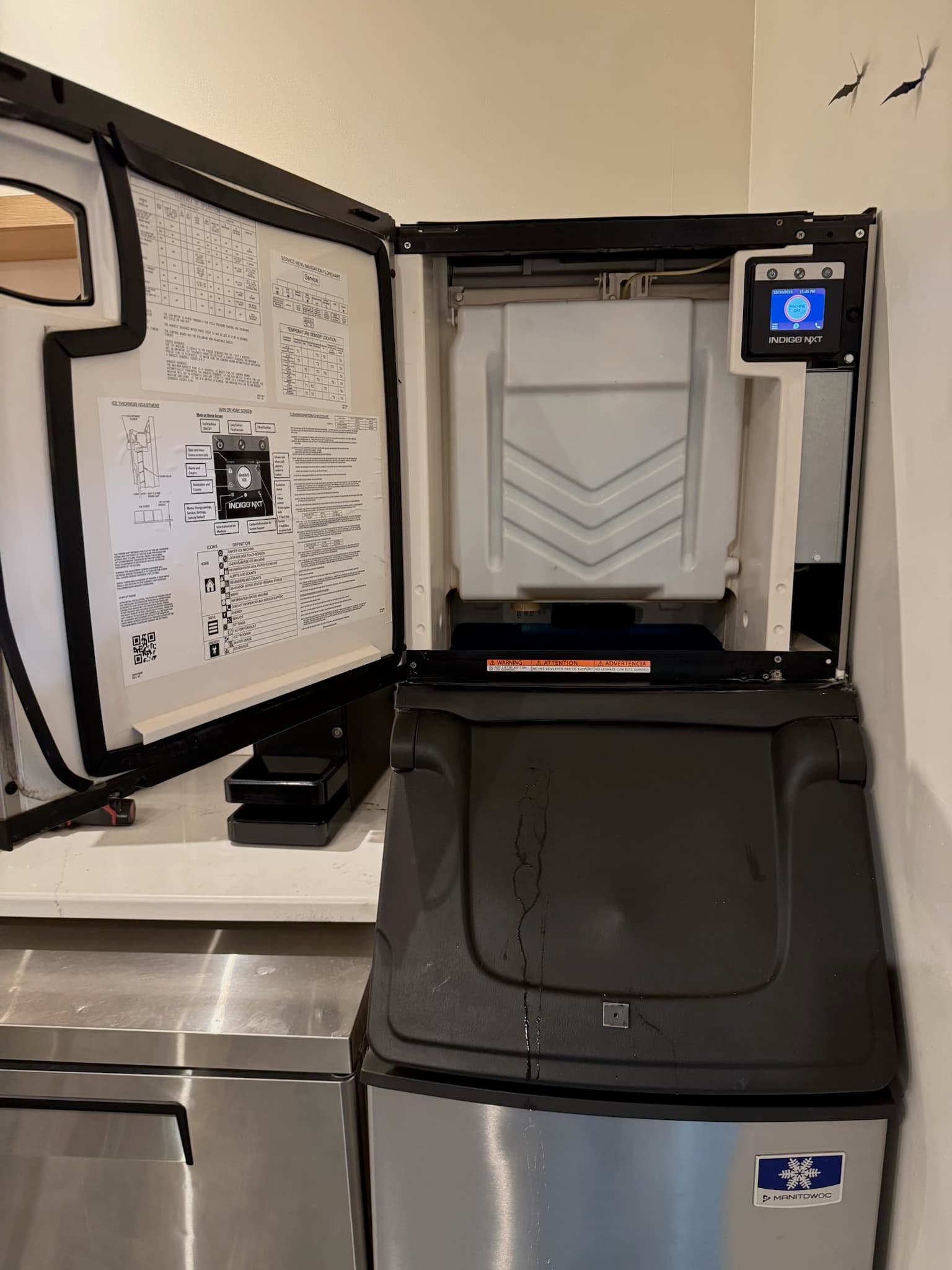
How ice machine service work plays out in Pomona
Pomona's hard water is the first thing to understand about ice machines here. Scale builds on evaporator plates, float sensors and water distribution tubes faster than operators expect, and a machine that was descaled in spring can be throwing thin, cloudy cubes by the end of a hot summer. Restaurants and bars in downtown, the hotel and event concessions around Fairplex Drive, and the dining and athletics facilities on the Cal Poly Pomona side of town all run machines that fight the same water, so filtration selection and a realistic cleaning interval matter more than brand.
Heat is the second factor. Many downtown machines sit in back hallways or utility closets with no mechanical cooling, and an air-cooled condenser in a 100-degree closet produces less ice, runs longer and wears out sooner. We look at clearances, whether a remote condenser or a water-cooled head makes sense for the space, and whether the drain and air gap are correct. In medical office buildings near the hospital, the question is sanitation documentation as much as production, since ice for patients is treated as food.
A typical service visit here follows a set order: inspect and photograph the bin and evaporator, descale and sanitize with the manufacturer's procedure, verify water pressure and filter condition, confirm harvest timing and cube quality, and record it all. Those records answer health inspectors and venue operators, and they tell you when a machine is costing more to keep alive than to replace. Details on the approach are in commercial ice machine service.
Pomona's climate and what it does to this equipment
Pomona lies in the eastern part of the Los Angeles basin where the marine layer rarely reaches in summer, so days are hot, sunny and dry, with frequent stretches above 95 degrees and occasional triple-digit heat. Cooling coils work long hours, condensers reject heat into very hot air, and compressors see sustained high head pressure. Santa Ana winds in fall bring dust and debris that clog outdoor coils and intake screens. Winters are mild but nights can be cool enough for heating calls. Smog and fine particulate also load filters faster than at the coast.
For the equipment background behind this page, read our commercial ice machine guide or the full Ice Machines — Service & Sanitation service page.
- Cal Poly Pomona campus and surrounding institutional areaUniversity buildings with chilled water, lab ventilation and public-agency procurement requirements.
- Fairplex and the Fairplex Drive corridorExhibition halls and event facilities with highly seasonal loads, large spaces and temporary-use cooling.
- Downtown Pomona and the Arts ColonyOlder masonry buildings housing restaurants, breweries and galleries, with tight back-of-house refrigeration and rooftop access challenges.
- Mission, Holt and Garey industrial parksMulti-generation warehouse and manufacturing buildings with mixed-vintage rooftop fleets and aging controls.
- Scale removal, deep sanitation, and filter change-out programs
- Bin sensors, harvest cycles, pumps, and valves checked
- OEM-spec readings taken against manufacturer PM intervals
- DaVinci Portal: photo-logged cleanings and reminder scheduling
What a ice machine service visit includes, and the problems we most often find
- Check ice quality, production rate, and bin sensor operation
- Full descale of water lines and evaporator plate
- Sanitize all food-contact surfaces per manufacturer spec
- Inspect water filtration and replace if due
- Photo-document the cleaning for your compliance records
- Scale buildup from hard water slowing production and clouding ice
- Bin sensors misreading and causing over- or under-production
- Water filters overdue for change, affecting both taste and machine health
- Visible slime or mold in the bin — the most common health-inspection flag