Ice Machine Service in El Segundo, CA
Hotels along Imperial and Sepulveda, plus corporate dining and cafe operations, lean hard on ice. Coastal humidity and airport-area dust push machines to foul condensers and scale water systems faster than expected, and a hotel ice machine that fails on a full-occupancy weekend affects guest service immediately. Service here covers cleaning, descaling, water filtration checks and sanitation records, along with the condenser and airflow clearances that matter when machines are crowded into small utility closets. Records are kept so health inspections and brand standards audits are straightforward.
Aerospace, technology and corporate campuses wedged between LAX, the refinery and the Pacific Coast Highway corridor, with salt-laden coastal air shortening equipment life.
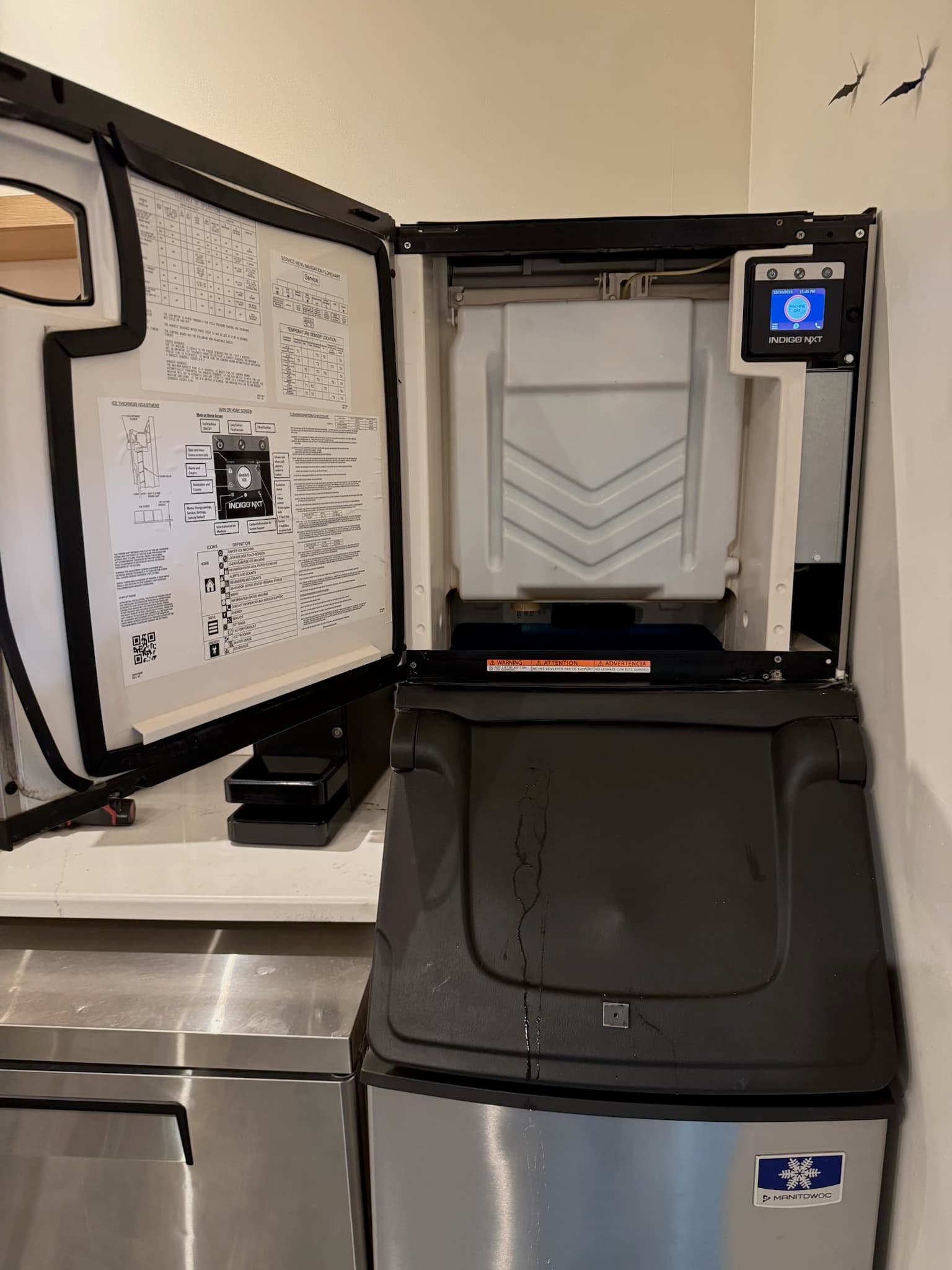
How ice machine service work plays out in El Segundo
Airport hotels run on ice around the clock. The properties along Imperial Highway and Sepulveda Boulevard serve crews and travelers arriving at every hour, so an ice machine in a guest-floor alcove or a kitchen that fails at 11 p.m. is a problem that night, not the next morning. Corporate dining operations on the campuses have their own heavy use at lunch and in coffee service, and downtown Main Street bars and restaurants round out the demand. All of them share the local conditions: salt-laden humidity, airport and refinery particulates, and machines installed in closets with poor airflow.
What goes wrong is predictable. Condensers foul from the airborne mix and extend freeze cycles until production falls off and faults appear. Water filters are forgotten and scale builds on evaporator plates and distribution tubes, producing small, cloudy cubes and eventually harvest failures. Hotel alcove machines stacked next to a vending unit or an air handler run in heated air, which cuts production further. Bins and interior surfaces develop biofilm faster in humid air, and a hotel brand standards audit will find it.
A service visit covers condenser cleaning and airflow clearance, water filter condition and sizing, a complete clean and sanitize, inspection of water distribution and the harvest system, and a cycle time check against the rating for the measured air and water temperatures. For hotels, we schedule during the mid-morning housekeeping window, and for campus dining, before the kitchen opens. Each visit is recorded with readings and sanitation notes for health inspections and brand audits. See commercial ice machine service and the ice machine guide.
El Segundo's climate and what it does to this equipment
El Segundo sits at the edge of Santa Monica Bay, so mornings often open under the marine layer and afternoons rarely reach the extremes seen inland. That mildness hides the real stress: constant salt-laden air attacks condenser fins, copper tubing, fan guards and rooftop cabinets, and airport and refinery particulates load coils and filters faster than inland offices. Humidity runs higher than most of Los Angeles County, which affects economizer behavior and condensate management. Equipment is rarely heat-stressed, but coating failure and coil corrosion cut service life well short of inland counterparts.
For the equipment background behind this page, read our commercial ice machine guide or the full Ice Machines — Service & Sanitation service page.
- Campus and corporate row (Douglas, Continental and Nash)Aerospace, entertainment-tech and corporate campuses with chilled-water plants, VAV systems and tight uptime expectations for labs and data rooms.
- Sepulveda and Imperial hotel and office stripAirport-serving hotels and mid-rise offices with continuous hot water demand, rooftop plant and strict noise limits at night.
- Downtown El Segundo (Main Street)Older low-rise buildings with restaurants, cafes and small retail, where walk-ins, makeup air and shared roofs are the main challenges.
- Smoky Hollow and the southern industrial blocksOlder creative-office conversions and light industrial buildings mixing legacy packaged units with newer tenant-driven mini-splits.
- Scale removal, deep sanitation, and filter change-out programs
- Bin sensors, harvest cycles, pumps, and valves checked
- OEM-spec readings taken against manufacturer PM intervals
- DaVinci Portal: photo-logged cleanings and reminder scheduling
What a ice machine service visit includes, and the problems we most often find
- Check ice quality, production rate, and bin sensor operation
- Full descale of water lines and evaporator plate
- Sanitize all food-contact surfaces per manufacturer spec
- Inspect water filtration and replace if due
- Photo-document the cleaning for your compliance records
- Scale buildup from hard water slowing production and clouding ice
- Bin sensors misreading and causing over- or under-production
- Water filters overdue for change, affecting both taste and machine health
- Visible slime or mold in the bin — the most common health-inspection flag
Ice Machine Service in El Segundo: questions we get
Our airport hotel has eight ice machines on guest floors. Can they be put on one schedule with one record?
Yes, and that is the best way to manage them. Each machine gets a QR-coded asset record with its own location, model, filter type, and service history, and all of them are serviced on a single visit cadence so housekeeping and front desk know when to expect us. Problem machines, usually the ones in warm alcoves, stand out in the record, and you can decide whether to relocate or replace them based on the history rather than on complaints.
Why do our ice machines near the airport need filters changed more often than the manufacturer's interval?
The filter interval in the manual assumes average water conditions and average air. In El Segundo, the water side depends on local supply hardness, which varies, and the air side carries more particulate from the airport and refinery area than the manufacturer's assumptions. The practical approach is to check filter pressure drop and condenser condition at each visit and set the interval from what the machine shows rather than the calendar in the manual.
How often should ice machines be sanitized?
Most manufacturers recommend sanitizing every six months minimum, more often in high-mineral water areas. We'll set the interval based on your machine and water supply.
Can you fix low production without a full replacement?
Often, yes. Scale buildup, refrigerant charge, and water filtration are the most common causes of low ice production and are usually repairable.