Chiller & Central Plant Service in Pomona, CA
Cal Poly Pomona and some institutional and medical buildings rely on chilled-water systems that run hard through the hot months. In Pomona's dry heat, cooling towers evaporate quickly and need careful water treatment and basin maintenance, while dust loads fill. Chillers at the end of their life are expensive to replace in the middle of a school year, so we trend performance, plan staged replacements and use temporary cooling where needed. For public agencies, the work follows bid documents and certified-payroll requirements.
A mixed inland city of Cal Poly Pomona, the Fairplex, industrial parks and a revitalizing downtown, where hot, dry summers drive heavy cooling loads.
How chiller & central plant service work plays out in Pomona
Chilled-water plants in Pomona are concentrated on the institutional side: campus buildings, the hospital district and a handful of larger office and public buildings. What the inland climate does to them is consistent. Cooling towers on hot, dry afternoons evaporate hard, which concentrates minerals in the basin quickly, so water treatment that works in a coastal city falls behind here, and scale on tubes and fill shows up as a chiller that cannot make setpoint on the hottest days of the year. Dust from Santa Ana winds and nearby construction fills tower fill and coats condenser coils on air-cooled machines, and that compounds the same problem.
Scheduling is the other constraint. A campus cannot take a plant down in September, a hospital cannot take it down at all without a plan, and a public agency has a procurement process that moves on its own timeline. So the useful work is trending: logging approach temperatures, kW per ton, tower performance and refrigerant conditions through a season so a replacement or retube can be planned for a winter window and budgeted a year ahead rather than forced by a July failure. Where the plant is a public asset, that work runs under prevailing wage and certified payroll from the first visit.
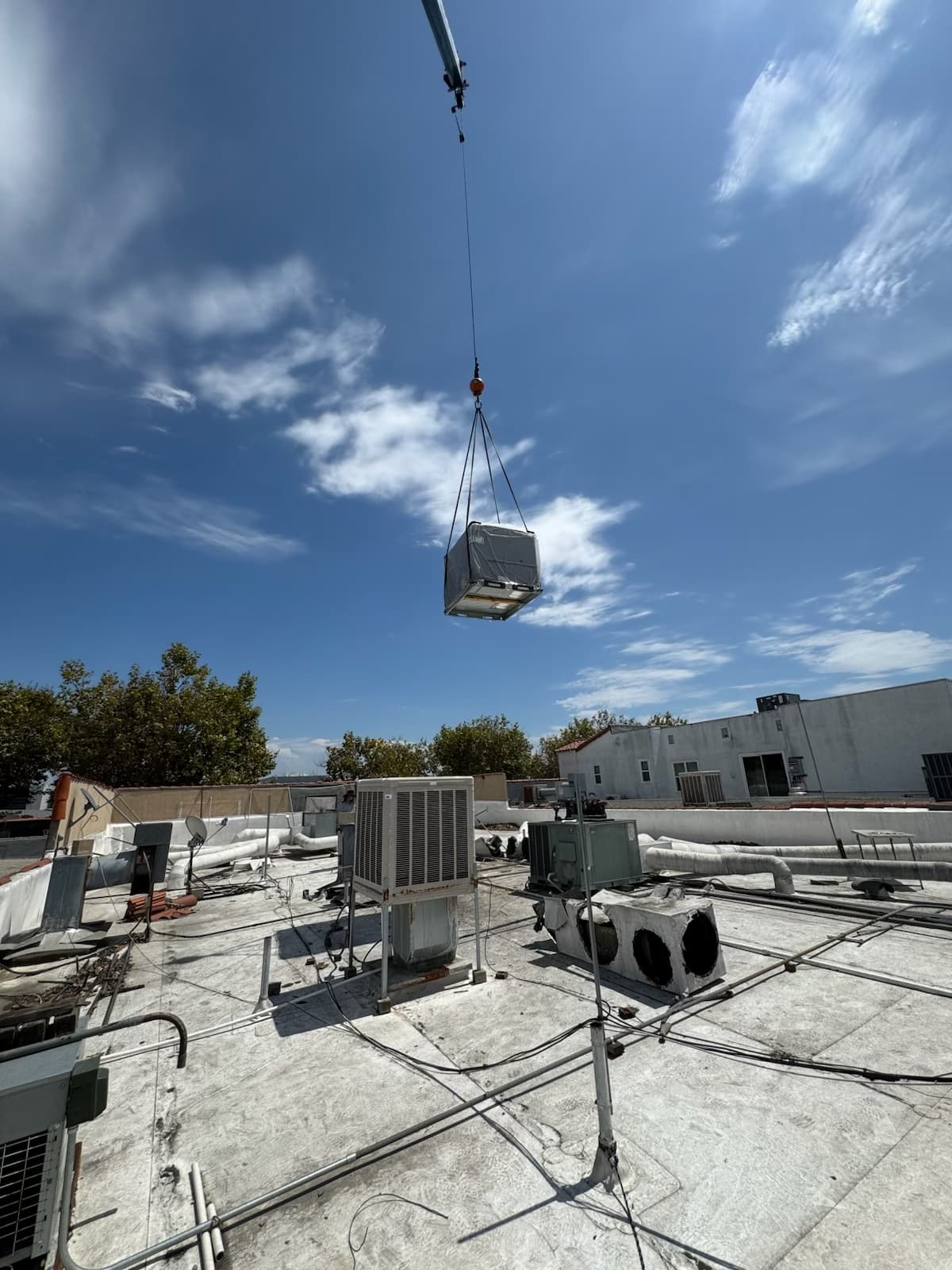
On the replacement side, we handle staged work, temporary cooling, pump and VFD upgrades and controls integration as one scope, so the owner is not managing four contractors. A chiller replacement on a working campus is a project in its own right, and our bid projects page describes how we approach that kind of work. For the technical background, the chillers and hydronic systems guide covers what to watch.
Pomona's climate and what it does to this equipment
Pomona lies in the eastern part of the Los Angeles basin where the marine layer rarely reaches in summer, so days are hot, sunny and dry, with frequent stretches above 95 degrees and occasional triple-digit heat. Cooling coils work long hours, condensers reject heat into very hot air, and compressors see sustained high head pressure. Santa Ana winds in fall bring dust and debris that clog outdoor coils and intake screens. Winters are mild but nights can be cool enough for heating calls. Smog and fine particulate also load filters faster than at the coast.
For the equipment background behind this page, read our chillers and hydronic systems guide or the full Chillers & Central Plant Service service page.
- Cal Poly Pomona campus and surrounding institutional areaUniversity buildings with chilled water, lab ventilation and public-agency procurement requirements.
- Fairplex and the Fairplex Drive corridorExhibition halls and event facilities with highly seasonal loads, large spaces and temporary-use cooling.
- Downtown Pomona and the Arts ColonyOlder masonry buildings housing restaurants, breweries and galleries, with tight back-of-house refrigeration and rooftop access challenges.
- Mission, Holt and Garey industrial parksMulti-generation warehouse and manufacturing buildings with mixed-vintage rooftop fleets and aging controls.
- Chiller, tower, pump, and VFD service with logged operating data
- Trend-based diagnosis: approach, delta-T, amp draw, and pressures
- Replacement planning with rigging, power, and temporary cooling considered
- Water-treatment and Legionella-control coordination for water-cooled plants
What a chiller & central plant service visit includes, and the problems we most often find
- Review the plant: chillers, pumps, towers, controls, and recent operating history
- Take full operating readings and compare against design and prior visits
- Inspect and test safeties, strainers, VFDs, valves, and control sequences
- Report findings with prioritized repairs and a forward capital outlook
- Document the plant by asset in the DaVinci Portal for the next visit
- Falling delta-T pushing chillers to run more than the load requires
- Fouled condenser tubes or coils raising approach temperature and amp draw
- Neglected water treatment causing scale, corrosion, and biological growth
- Controls overridden to manual and never returned to automatic