Chiller & Central Plant Service in Carson, CA
Larger Carson plants and campus buildings use chillers and cooling towers for process cooling or comfort, and these systems operate for long hours in a dusty, humid basin. Tower fill and basin cleanliness, water treatment and condenser approach temperatures decide how efficiently the plant runs. At the university and institutional sites, pump and valve condition affect comfort across many buildings at once. We service chillers, towers and pumps, trend performance, and stage replacements so process or classroom cooling is not interrupted.
Large industrial and distribution base in the South Bay, with food and consumer-product manufacturing, refinery-adjacent sites and the Dignity Health Sports Park area.
How chiller & central plant service work plays out in Carson
Central plants in Carson are concentrated at the institutional sites and the larger manufacturing operations. The Cal State Dominguez Hills campus and the sports park complex use chilled water across multiple buildings, and some of the older consumer-product and food plants run process chillers for cooling jackets, packaging lines or product tempering. These are not comfort-only systems; when a process chiller trips in a plant off Figueroa Street, a line stops, and the production manager is not interested in a repair that treats the symptom.
Cooling towers in this part of the South Bay fight dirty air and humid afternoons at the same time. Particulate from the freeway and port corridors ends up in the basin and on the fill, the humid summer air reduces the tower's approach, and poor water treatment lets scale and biological growth take over fast. We inspect fill, drift eliminators, basin condition and treatment results on every visit, and we trend condenser approach temperature on the chiller so the owner can see the tower's performance decline before it becomes a capacity complaint in August.
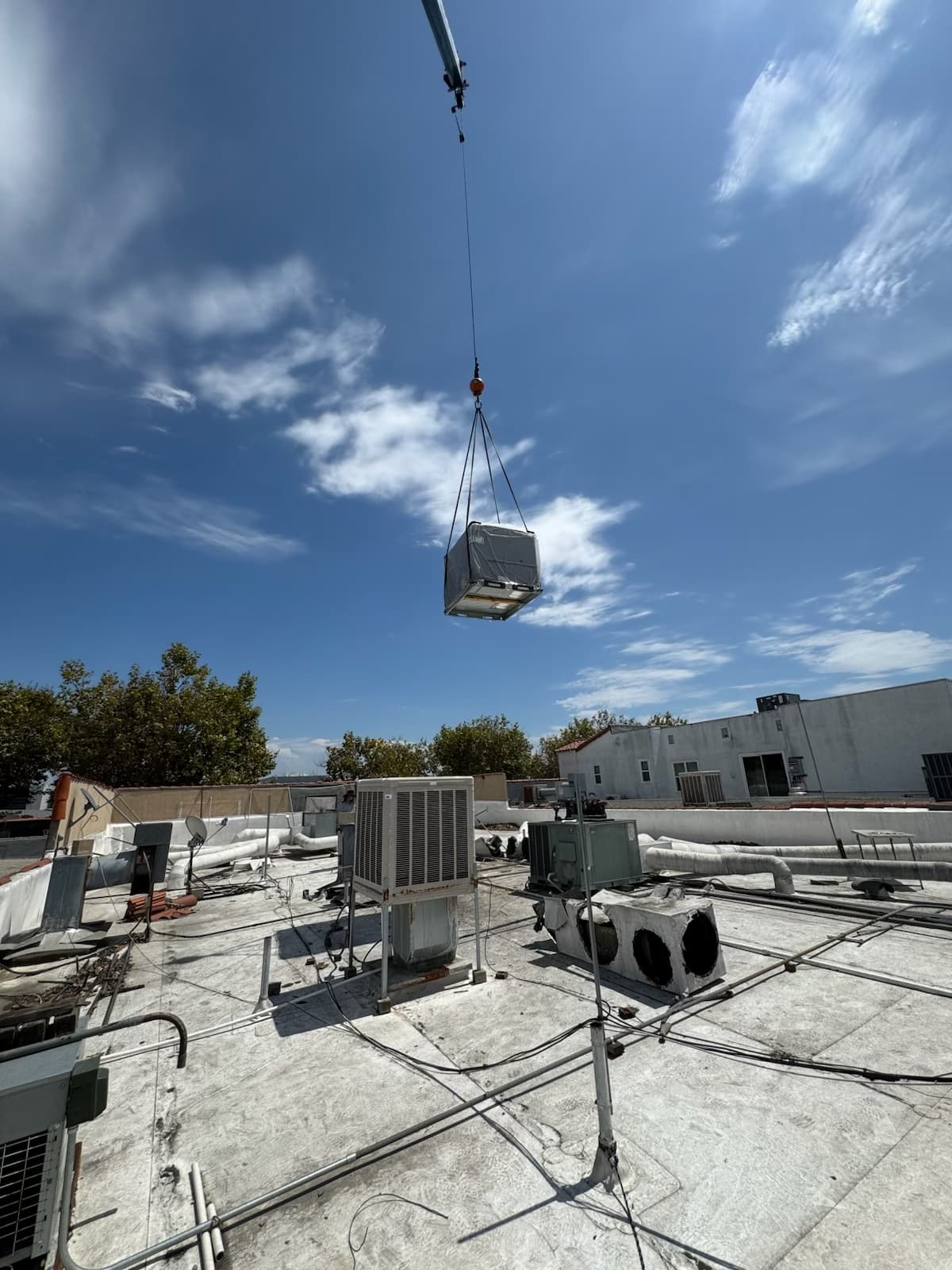
On replacement projects at public facilities, the work is bid-level with prevailing wage, certified payroll and a phased sequence that keeps classrooms or event spaces cooled through the changeover. We stage temporary cooling where a process or an occupied building cannot wait and commission the new plant with written data. See the chillers and hydronic systems guide and the bid projects page for how we structure those jobs.
Carson's climate and what it does to this equipment
Carson sits in the South Bay basin, close enough to the coast to get the marine layer on many mornings but inland enough to see warm, humid afternoons in late summer. The mix is hard on equipment in a quiet way: summer humidity loads cooling coils and condensate systems, warm nights keep cooling running late, and airborne particulate from freeways, ports and refineries coats outdoor coils and clogs filters. Hot spells push large warehouse roofs to extremes. Equipment is stressed by long run hours and dirty air more than by any single heat wave.
For the equipment background behind this page, read our chillers and hydronic systems guide or the full Chillers & Central Plant Service service page.
- Dominguez and 405 corridor industrial parksTilt-up distribution and light manufacturing buildings with large RTU fleets over office and warehouse zones.
- Dignity Health Sports Park and Cal State Dominguez HillsEvent venues, athletic facilities and university buildings with highly variable loads and public-agency procurement rules.
- South Bay Pavilion and Avalon Boulevard retailBig-box and strip retail with older packaged units, food service tenants and shared-roof access issues.
- Refinery-adjacent and food-manufacturing blocksFood and consumer-product plants with process refrigeration, make-up air and equipment exposed to industrial air.
- Chiller, tower, pump, and VFD service with logged operating data
- Trend-based diagnosis: approach, delta-T, amp draw, and pressures
- Replacement planning with rigging, power, and temporary cooling considered
- Water-treatment and Legionella-control coordination for water-cooled plants
What a chiller & central plant service visit includes, and the problems we most often find
- Review the plant: chillers, pumps, towers, controls, and recent operating history
- Take full operating readings and compare against design and prior visits
- Inspect and test safeties, strainers, VFDs, valves, and control sequences
- Report findings with prioritized repairs and a forward capital outlook
- Document the plant by asset in the DaVinci Portal for the next visit
- Falling delta-T pushing chillers to run more than the load requires
- Fouled condenser tubes or coils raising approach temperature and amp draw
- Neglected water treatment causing scale, corrosion, and biological growth
- Controls overridden to manual and never returned to automatic