Chiller & Central Plant Service in El Segundo, CA
Central plants are a defining feature of the larger El Segundo campuses, serving multi-building complexes where chilled water is the backbone of lab and office cooling. Cooling towers and condenser water systems here face coastal air and airborne particulates, so water treatment, fill condition and basin cleanliness deserve scheduled attention. Performance trending, approach temperatures, pump efficiency and sequencing all matter when a plant runs year-round. We service chillers, towers and pumps and plan replacements in stages, so tenants keep cooling while older machines are retired and new capacity is commissioned.
Aerospace, technology and corporate campuses wedged between LAX, the refinery and the Pacific Coast Highway corridor, with salt-laden coastal air shortening equipment life.
How chiller & central plant service work plays out in El Segundo
Chilled water is the backbone of El Segundo's campus economy. The multi-building complexes along Continental Boulevard, Douglas Street, and Nash Street were built with central plants because labs, server rooms, and large office floors are easier to serve from chillers and air handlers than from dozens of packaged units. The hotels along Imperial Highway and the mid-rise towers on Sepulveda Boulevard add more plants. Many run year-round because internal loads from equipment and people outlast the mild weather.
The coast and the airport define the maintenance problem. Cooling towers pull in salt air that raises basin conductivity, and airport and refinery particulates foul fill and settle in basins, so water treatment and mechanical cleaning have to work together or neither works. Condenser tubes foul and approach temperatures climb. Tower fan motors, fasteners, and structural members corrode. Inside, chillers that run every day accumulate the ordinary wear that only trending catches: pump amperage creeping up, refrigerant approach widening, sequencing that no longer matches the load profile after a tenant change.
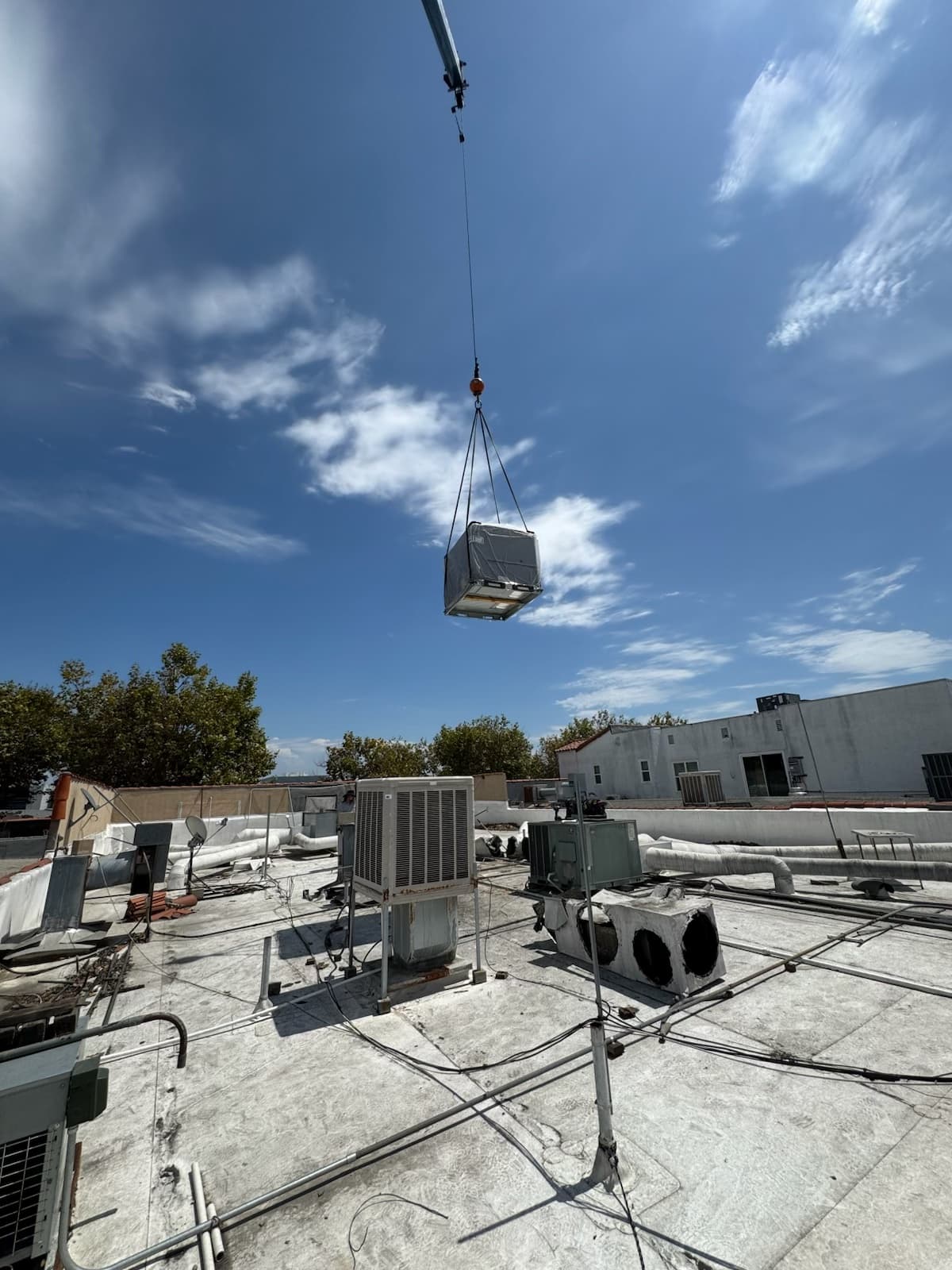
Plant work on a campus is scheduled against uptime commitments, so a chiller overhaul or replacement is staged with one machine or a temporary unit carrying the load while the other is down, and rigging through loading docks or by crane follows the campus security and the airport airspace rules that apply to any lift here. Readings are recorded at every stage so the plant has a continuous history. See chillers and central plant, the chillers and hydronic systems guide, and for larger projects, bid and project work.
El Segundo's climate and what it does to this equipment
El Segundo sits at the edge of Santa Monica Bay, so mornings often open under the marine layer and afternoons rarely reach the extremes seen inland. That mildness hides the real stress: constant salt-laden air attacks condenser fins, copper tubing, fan guards and rooftop cabinets, and airport and refinery particulates load coils and filters faster than inland offices. Humidity runs higher than most of Los Angeles County, which affects economizer behavior and condensate management. Equipment is rarely heat-stressed, but coating failure and coil corrosion cut service life well short of inland counterparts.
For the equipment background behind this page, read our chillers and hydronic systems guide or the full Chillers & Central Plant Service service page.
- Campus and corporate row (Douglas, Continental and Nash)Aerospace, entertainment-tech and corporate campuses with chilled-water plants, VAV systems and tight uptime expectations for labs and data rooms.
- Sepulveda and Imperial hotel and office stripAirport-serving hotels and mid-rise offices with continuous hot water demand, rooftop plant and strict noise limits at night.
- Downtown El Segundo (Main Street)Older low-rise buildings with restaurants, cafes and small retail, where walk-ins, makeup air and shared roofs are the main challenges.
- Smoky Hollow and the southern industrial blocksOlder creative-office conversions and light industrial buildings mixing legacy packaged units with newer tenant-driven mini-splits.
- Chiller, tower, pump, and VFD service with logged operating data
- Trend-based diagnosis: approach, delta-T, amp draw, and pressures
- Replacement planning with rigging, power, and temporary cooling considered
- Water-treatment and Legionella-control coordination for water-cooled plants
What a chiller & central plant service visit includes, and the problems we most often find
- Review the plant: chillers, pumps, towers, controls, and recent operating history
- Take full operating readings and compare against design and prior visits
- Inspect and test safeties, strainers, VFDs, valves, and control sequences
- Report findings with prioritized repairs and a forward capital outlook
- Document the plant by asset in the DaVinci Portal for the next visit
- Falling delta-T pushing chillers to run more than the load requires
- Fouled condenser tubes or coils raising approach temperature and amp draw
- Neglected water treatment causing scale, corrosion, and biological growth
- Controls overridden to manual and never returned to automatic