Chiller & Central Plant Service in Burbank, CA
Burbank's larger studio campuses, hospital facilities, and office buildings use chilled water plants to keep sensitive spaces cool through long valley summers. Because chillers and cooling towers run for many hours, wear and fouling accumulate faster than in cooler climates. Davinci Mechanical monitors performance trends, tower condition, and water treatment, and helps plan overhaul or replacement outside the hottest weeks, so cooling capacity is available when production schedules demand it.
Studio and media campuses, airport-area industrial buildings, a restaurant-rich Magnolia Park, and hospital facilities in the heat of the San Fernando Valley.
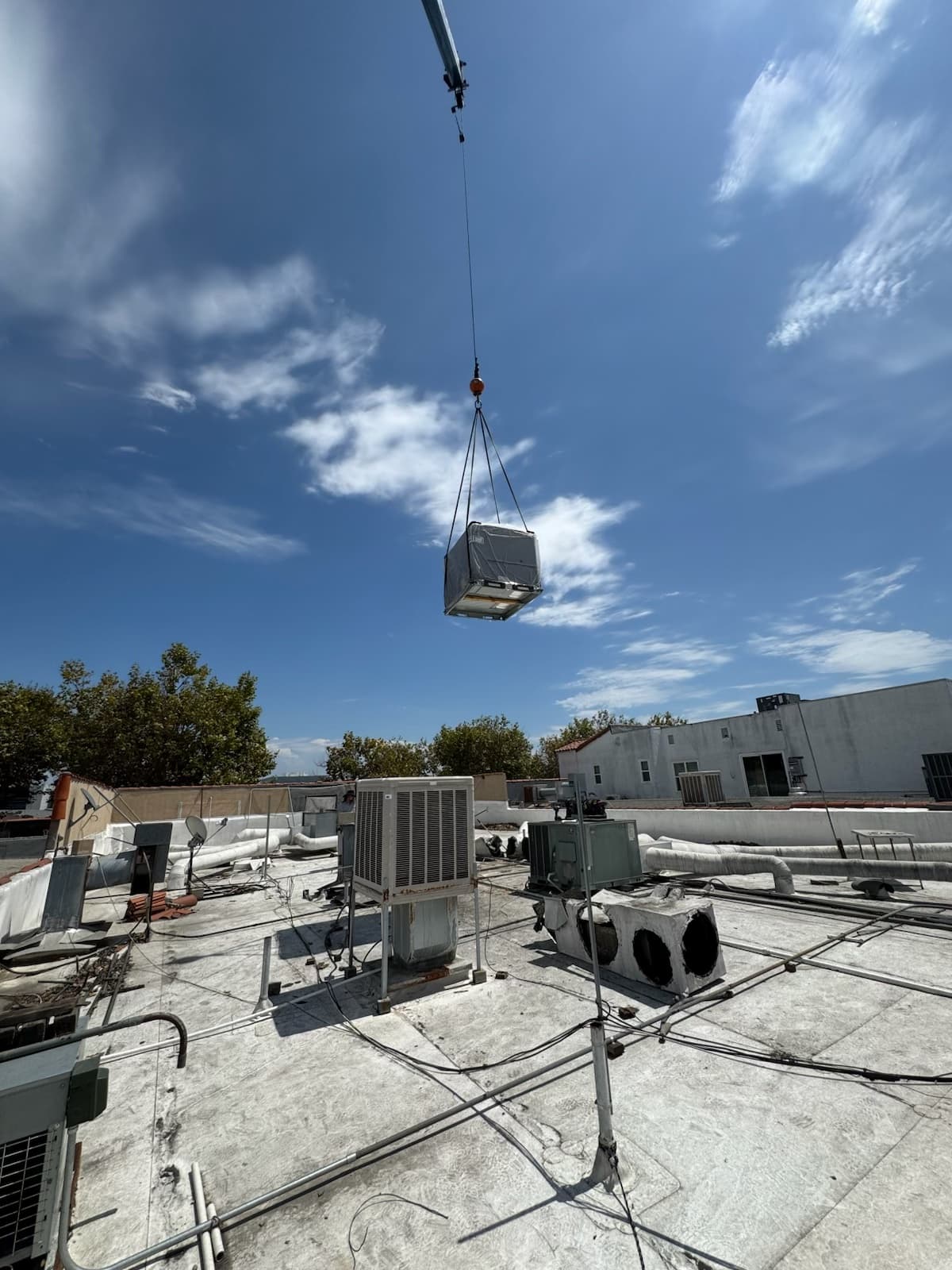
How chiller & central plant service work plays out in Burbank
Burbank's central plants serve the buildings that cannot be allowed to get warm: the hospital campus, the large studio office buildings and technical facilities in the Media District, the bigger downtown office properties along San Fernando Boulevard and Olive Avenue, and the larger retail structures. Many run chillers and cooling towers that have been in service for decades, maintained by rotating staff and documented in binders that do not always agree with each other. The equipment is often fundamentally sound; the problem is that nobody has a clear picture of how far it has drifted from design.
Long valley summers are what make drift expensive. A chiller running 12 to 14 hours a day from May through October accumulates tube fouling, seal and bearing wear, and refrigerant and oil issues faster than one in a coastal city, and a cooling tower in Burbank evaporates heavily in dry air, concentrating water chemistry and stressing fill, nozzles, and basins if blowdown and treatment are not kept up. Dust from the surrounding hills and fire-season ash land in the basin. We start with a baseline of chiller logs, approach temperatures, tower condition, water treatment history, and pump performance, then show the owner where the plant stands relative to design.
The point is to choose the outage window instead of having it chosen for you. Hospital engineering teams need overhaul or tube cleaning sequenced around redundancy; studio technical facilities need plant work on dark days or in the shoulder season; office landlords want chiller downtime when economizers can carry the building. Trend data in the DaVinci Portal supports those decisions. The chillers and central plant page, the chillers and hydronic guide, and the hospitals sector page cover the process.
Burbank's climate and what it does to this equipment
Burbank sits in the San Fernando Valley, and the valley holds heat. Summer days regularly reach the upper 90s and into the 100s during heat waves, with warm nights that limit equipment recovery. The marine layer that cools coastal cities rarely reaches this far, so cooling seasons are long and intense. Santa Ana winds add dry air, dust, and fire-season smoke that load filters and coils. In these conditions, rooftop condensers and chillers work close to their limits more often than elsewhere in the county.
For the equipment background behind this page, read our chillers and hydronic systems guide or the full Chillers & Central Plant Service service page.
- Media District and studio campusesProduction lots, office buildings, edit suites, and server areas with steady cooling loads and limited tolerance for interruption.
- Magnolia ParkIndependent restaurants, cafes, and shops in older commercial buildings, where kitchens, coolers, and rooftop equipment are compact.
- Airport-area industrial and business parksLarge industrial and light-industrial buildings near Hollywood Burbank Airport with substantial rooftop equipment counts.
- Downtown Burbank and hospital campusesOffices, retail, and medical buildings where comfort, filtration, and scheduling around clinical or business hours are essential.
- Chiller, tower, pump, and VFD service with logged operating data
- Trend-based diagnosis: approach, delta-T, amp draw, and pressures
- Replacement planning with rigging, power, and temporary cooling considered
- Water-treatment and Legionella-control coordination for water-cooled plants
What a chiller & central plant service visit includes, and the problems we most often find
- Review the plant: chillers, pumps, towers, controls, and recent operating history
- Take full operating readings and compare against design and prior visits
- Inspect and test safeties, strainers, VFDs, valves, and control sequences
- Report findings with prioritized repairs and a forward capital outlook
- Document the plant by asset in the DaVinci Portal for the next visit
- Falling delta-T pushing chillers to run more than the load requires
- Fouled condenser tubes or coils raising approach temperature and amp draw
- Neglected water treatment causing scale, corrosion, and biological growth
- Controls overridden to manual and never returned to automatic