Chiller & Central Plant Service in City of Industry, CA
Chilled-water plants in Industry usually serve process loads, larger office components or the resort and event facilities, and they run through long, hot summers with significant dust loading on cooling towers. Tower basin cleanliness, drift, water treatment and fill condition affect plant efficiency, and low-humidity air makes towers effective when maintained. We service chillers, towers, pumps and controls, trend operating data, and stage replacements for process areas that cannot shut down, using temporary cooling and phased commissioning when needed.
One of the largest warehouse, distribution and manufacturing concentrations in the San Gabriel Valley, with food processing, rail corridors and punishing inland summer heat.
How chiller & central plant service work plays out in City of Industry
Central plants in City of Industry serve process loads first. Food processors use chilled water or glycol for product cooling and packaging lines, manufacturing operations cool equipment and controlled rooms, and the larger office components and the resort and conference facilities in the Industry Hills run chilled water for comfort. When a process chiller on Nelson Avenue trips in August, a line stops and product may be lost, so the diagnostic has to find the actual cause rather than restart the machine and hope.
Cooling towers here have an advantage and a problem. The dry San Gabriel Valley air gives towers a low wet-bulb to work against, so a well-maintained tower performs very well. But dust from rail yards, truck courts and the surrounding hills loads the fill and basin quickly, water treatment struggles with hard makeup water, and a tower that has been neglected for a season loses the approach advantage it should have. We inspect fill, drift eliminators, basin and spray distribution on every visit, review treatment results, and trend condenser approach on the chiller so a declining tower shows up in the data before it shows up as lost production.
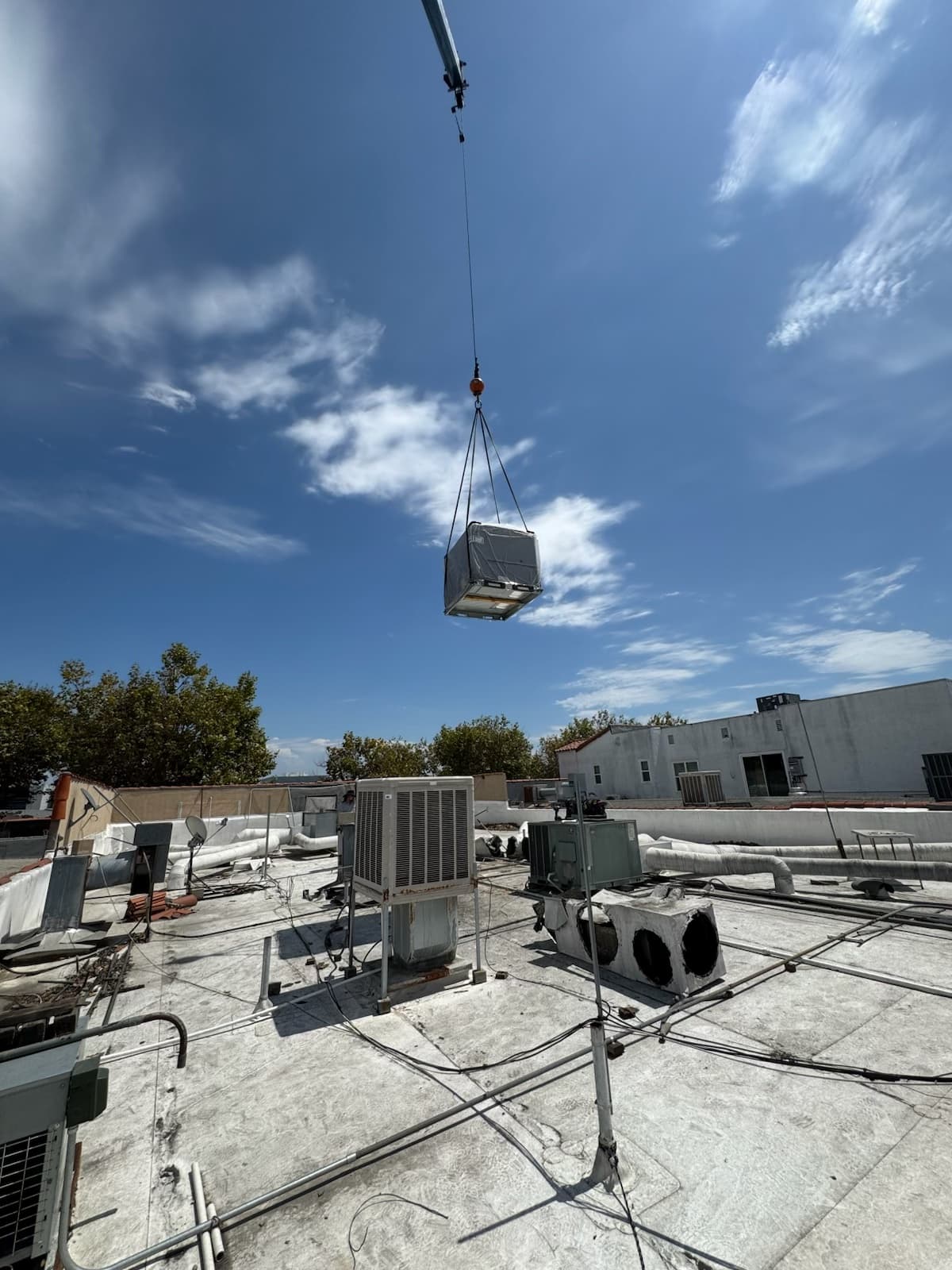
Replacement and major repair at plants that cannot stop run as staged projects: temporary chillers where the load is critical, phased piping changes during planned shutdowns, and commissioning with recorded performance before the old equipment is removed. For the hospitality and office sites, the same approach keeps occupied spaces cool through the change. The chillers and hydronic systems guide and bid projects page describe how those projects are structured.
City of Industry's climate and what it does to this equipment
City of Industry sits in the San Gabriel Valley, well inland, and summer afternoons regularly push past 95 degrees with stretches of triple digits. Large dark roofs soak up that heat, so rooftop units work against extreme ambient conditions plus radiant load from the roof surface. Low humidity makes evaporative approaches effective but also puts a premium on clean condensers, since dusty air from rail yards and truck traffic builds up fast on coils. Santa Ana wind events add debris and static pressure problems, and winter nights are mild enough that heating loads stay light.
For the equipment background behind this page, read our chillers and hydronic systems guide or the full Chillers & Central Plant Service service page.
- Valley Boulevard and Azusa Avenue distribution corridorLarge tilt-up warehouses with long rooftop unit rows, dock offices and multi-shift operations.
- Gale Avenue and Nelson Avenue manufacturing and food-processing blocksPlants with process refrigeration, sanitation hot water and make-up air demands that change with production.
- Puente Hills Mall and Fullerton Road retailAnchor and strip retail with restaurants, older packaged equipment and shared roof infrastructure.
- Industry Hills hospitality and business park areaResort, event and office properties with hot water loads, chilled-water or large packaged systems and seasonal event peaks.
- Chiller, tower, pump, and VFD service with logged operating data
- Trend-based diagnosis: approach, delta-T, amp draw, and pressures
- Replacement planning with rigging, power, and temporary cooling considered
- Water-treatment and Legionella-control coordination for water-cooled plants
What a chiller & central plant service visit includes, and the problems we most often find
- Review the plant: chillers, pumps, towers, controls, and recent operating history
- Take full operating readings and compare against design and prior visits
- Inspect and test safeties, strainers, VFDs, valves, and control sequences
- Report findings with prioritized repairs and a forward capital outlook
- Document the plant by asset in the DaVinci Portal for the next visit
- Falling delta-T pushing chillers to run more than the load requires
- Fouled condenser tubes or coils raising approach temperature and amp draw
- Neglected water treatment causing scale, corrosion, and biological growth
- Controls overridden to manual and never returned to automatic