Maintenance Plans in Torrance, CA
A Torrance maintenance plan often needs to span different property types under one owner: a retail center with several tenants, an industrial building with offices and equipment rooms, or a medical building with strict comfort needs. Visits are timed to shifts, store hours, or clinic schedules, and each unit's service history is stored in the DaVinci Portal. That record helps owners see which equipment deserves repair investment and which is approaching replacement.
South Bay industrial parks tied to aerospace and automotive work, heavy retail along Hawthorne Boulevard and Del Amo, and a significant medical presence.
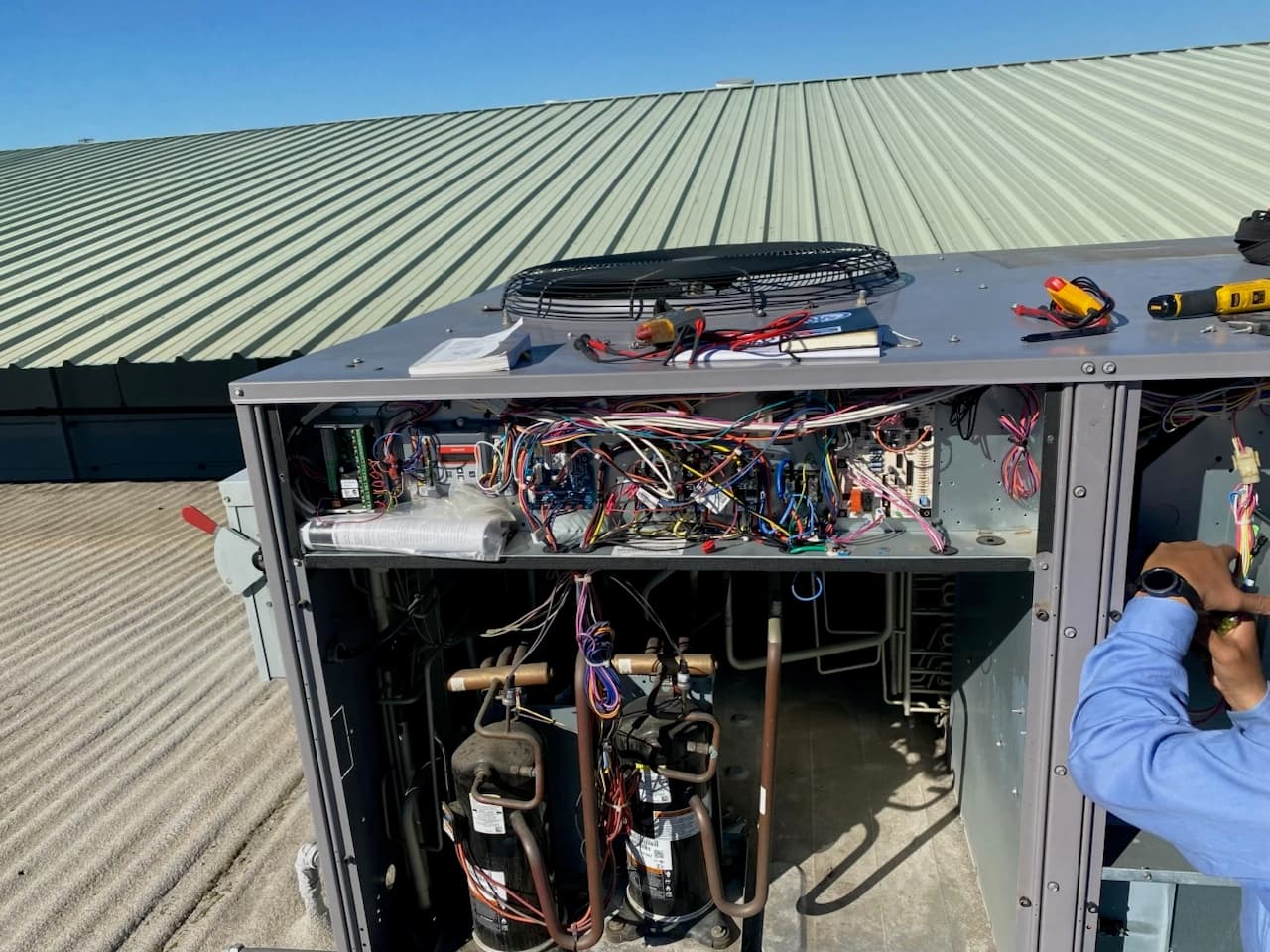
How maintenance plans work plays out in Torrance
The owner who gets the most from a maintenance program in Torrance is usually managing more than one kind of building. A common portfolio here is a retail center along Torrance Boulevard, a couple of flex-industrial buildings near Western Avenue, and a medical office building off Lomita Boulevard. Each has different equipment, different tenants, and different hours, and without a program the service history lives in three contractors' invoice folders. A single plan with visit timing set per property is the fix.
Seasonal timing in the South Bay is less about surviving extreme heat and more about managing a long cooling season and a short, wet winter. The spring visit matters most: coils cleaned before the first warm stretch, economizers verified so the mild months run on outside air, condensate drains cleared before the marine layer adds humidity. A fall visit covers heat exchangers, gas pressures, and the filter loading that Santa Ana wind events cause even in Torrance. Quarterly visits make sense for restaurants and markets with refrigeration; bi-annual visits fit offices, clinics, and most retail; annual visits suit light-duty industrial space where the equipment mostly serves an office.
On each visit, readings go into the DaVinci Portal by unit, so an owner can see that the unit on Building B has needed a contactor, a capacitor, and a fan motor in eighteen months and probably belongs on the replacement list. That record is also what a buyer or lender asks for during due diligence. Details on tiers are at maintenance plans and in the preventive maintenance guide.
Torrance's climate and what it does to this equipment
Torrance sits in the South Bay, close enough to the ocean that the marine layer shapes much of the year, though it is not directly on the surf the way beach cities are. Mornings are often gray and cool, afternoons clear, and summer heat is milder than in the valleys or inland basin, with occasional spikes when offshore winds push temperatures up. Equipment runs fewer extreme hours but gets cooling duty across a long season, and moist, slightly salty air plus industrial dust affects coils and electrical components in outdoor installations.
For the equipment background behind this page, read our preventive maintenance program guide or the full Commercial Maintenance Plans service page.
- Del Amo and the Torrance Boulevard retail coreLarge retail centers, restaurants, and big-box tenants with shared rooftop equipment and grocery-style refrigeration needs.
- Industrial parks along Crenshaw and WesternAerospace, automotive, and light industrial buildings with mixed office and shop areas, where process or equipment-room cooling often matters.
- Hawthorne Boulevard commercial corridorA long stretch of strip retail, restaurants, banks, and service tenants, many with older rooftop units and shared electrical service.
- Medical area and Old TorranceHospital and medical office buildings along with the older downtown core, where smaller tenant spaces and clinical comfort needs sit side by side.
- Free diagnostic on repairs for plan members
- Included labor per tier, with a member rate for anything over
- Photo-logged reports with temps, pressures, and amp draws
- DaVinci Portal included with QR tracking and self-service scheduling
What a maintenance plans visit includes, and the problems we most often find
- Walk every covered asset — RTUs, refrigeration, ice machines, water heaters
- Take and log readings against each unit's history, not a generic checklist
- Flag anything trending toward failure before it becomes a breakdown
- Deliver a photo-logged report after every visit
- Free diagnostic on any repair that comes out of the visit
- Equipment that 'seemed fine' failing without any maintenance history to catch the trend
- Multiple pieces of equipment aging out around the same time with no replacement plan
- Surprise repair costs that a documented PM history would have flagged months earlier
- Multi-location accounts with no consistent record across sites
Maintenance tiers for Torrance properties
Torrance plans work best when they bundle retail, industrial, and medical-adjacent equipment under one schedule with visit timing set by shifts and store hours. Service history is kept in the DaVinci Portal for each unit.
See maintenance plan tiers