Building Controls & Automation in City of Industry, CA
Many Industry warehouses run basic thermostats with no centralized visibility, so units can cycle against each other or run all night in empty offices. We commission schedules, setpoints and economizer logic, verify sensors and dampers, and for larger sites, tie rooftop units into a monitoring platform. With peak summer days stressing both equipment and electrical service, scheduling and staging controls can reduce simultaneous starts and unnecessary run time. Trend data also gives owners evidence for repair-versus-replace decisions across large rooftop fleets.
One of the largest warehouse, distribution and manufacturing concentrations in the San Gabriel Valley, with food processing, rail corridors and punishing inland summer heat.
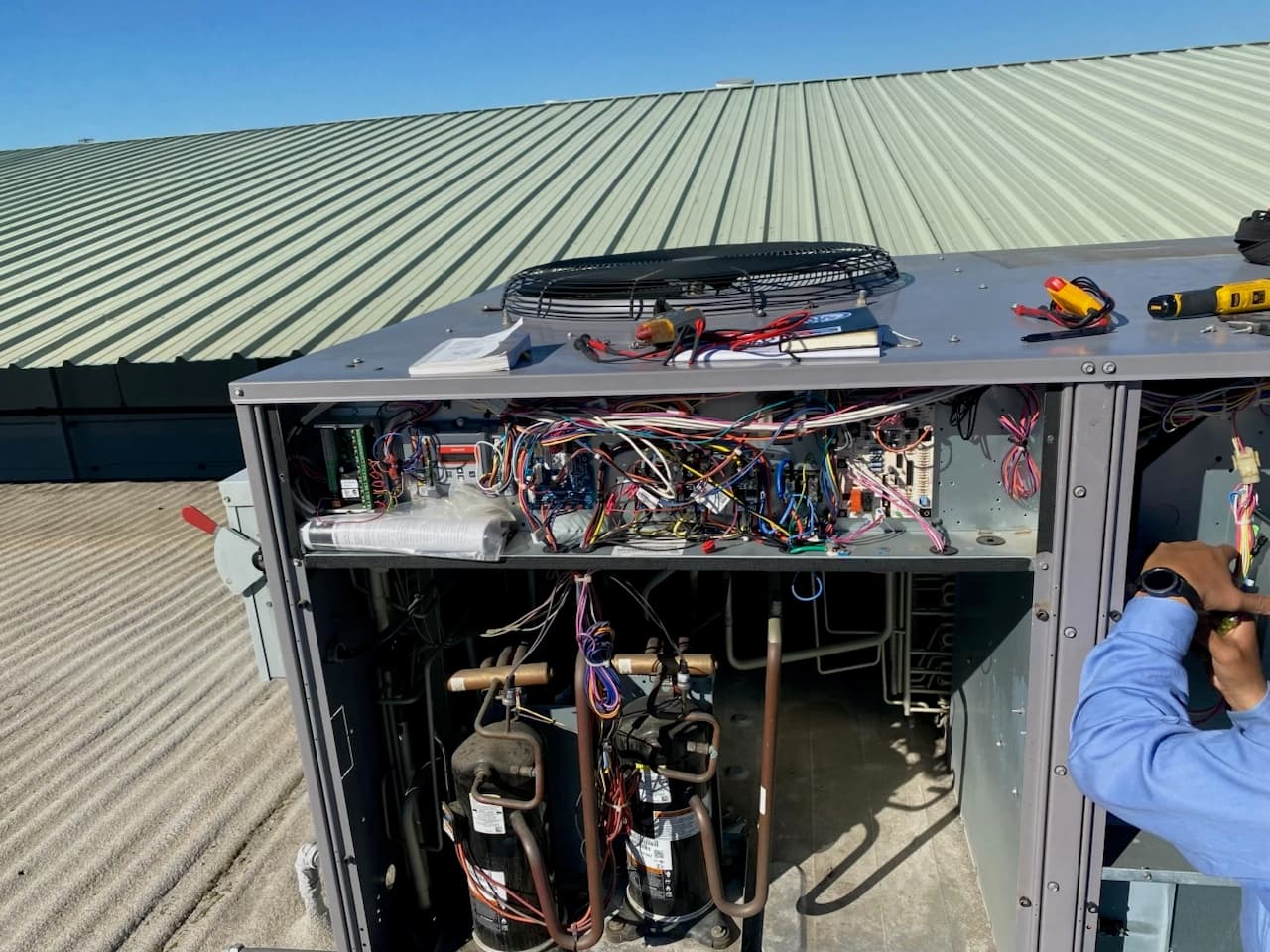
How building controls & automation work plays out in City of Industry
In most City of Industry warehouses, the control system is a wall of thermostats in a dock office and sixty more scattered across mezzanines, each set by whoever last complained. Nothing is scheduled, economizers were never commissioned, and the only feedback the owner receives is the utility bill. On a 500,000 square foot building, that bill is large enough that an afternoon spent surveying what each unit does, and when, pays for itself in the first summer.
Our approach is a controls survey first: which spaces each unit serves, what hours they actually keep across the shifts, whether economizer dampers and sensors function, and whether any central platform exists. For single-tenant buildings, networked thermostats with schedules, setpoint limits and remote visibility are usually enough. For plants, the resort and conference properties, and buildings with chilled-water plants, we work within the existing automation system, verify sensors against calibrated instruments and complete sequences that were never finished at commissioning.
The Industry-specific payoff is in peak management. Summer afternoons here stress both the equipment and the electrical service, and staggering compressor starts after a utility event, pre-cooling offices in the morning and locking out non-critical units during the peak reduce simultaneous load and demand charges. Trend data also gives owners runtime evidence for repair-versus-replace decisions across a large fleet. Sequences and setpoints are recorded in the DaVinci Portal, and the building controls service page covers the platforms we work with.
City of Industry's climate and what it does to this equipment
City of Industry sits in the San Gabriel Valley, well inland, and summer afternoons regularly push past 95 degrees with stretches of triple digits. Large dark roofs soak up that heat, so rooftop units work against extreme ambient conditions plus radiant load from the roof surface. Low humidity makes evaporative approaches effective but also puts a premium on clean condensers, since dusty air from rail yards and truck traffic builds up fast on coils. Santa Ana wind events add debris and static pressure problems, and winter nights are mild enough that heating loads stay light.
For the equipment background behind this page, read our building controls and energy guide or the full Building Controls & Automation service page.
- Valley Boulevard and Azusa Avenue distribution corridorLarge tilt-up warehouses with long rooftop unit rows, dock offices and multi-shift operations.
- Gale Avenue and Nelson Avenue manufacturing and food-processing blocksPlants with process refrigeration, sanitation hot water and make-up air demands that change with production.
- Puente Hills Mall and Fullerton Road retailAnchor and strip retail with restaurants, older packaged equipment and shared roof infrastructure.
- Industry Hills hospitality and business park areaResort, event and office properties with hot water loads, chilled-water or large packaged systems and seasonal event peaks.
- Schedule, setpoint, and sequence review across rooftop and central equipment
- Sensor calibration and economizer verification
- Alarm and trend setup so problems surface early
- Programmable and networked thermostat installation
What a building controls & automation visit includes, and the problems we most often find
- Inventory controllers, thermostats, and any building automation system
- Compare schedules and setpoints to how the building is actually used
- Verify sensors, actuators, and economizer logic against measured conditions
- Correct overrides, sequences, and alarms; document the changes
- Review trends after adjustment to confirm savings and stability
- Schedules left at default so equipment runs when nobody is there
- Equipment overridden manually and never returned to automatic
- Drifting or miswired sensors producing comfort complaints
- Economizers that never actually modulate
Building Controls & Automation in City of Industry: questions we get
We lease a City of Industry warehouse and pay the electric bill. Is a controls upgrade worth it on equipment we do not own?
Usually yes, because the savings go to whoever pays the bill. Networked thermostats with schedules are a modest investment that can be removed at lease end if the landlord requires, and the runtime reduction on a large rooftop fleet in this climate is significant. We also document the economizer and sensor condition, which is useful if the lease makes the landlord responsible for equipment that is failing rather than simply misconfigured.
Our units all start at once after a power blip and trip the main. Can controls fix that?
Yes. A staggered restart sequence, either through networked thermostats with randomized delays or through a building automation system, spreads compressor starts over several minutes so the inrush does not stack. We also check for units with failed start components that draw excessive current, since one or two bad units can cause the trip on their own. It is a common problem on large Industry roofs during summer grid events.
Do you install building automation systems?
We install and service thermostats and controls on rooftop and mechanical equipment, and work with larger automation systems on a project basis.
Can better controls really cut energy use?
Often. Correct schedules, setpoints, and economizer operation are among the cheapest efficiency gains in an existing building.
Can you connect to our existing system?
In most cases. Send us what is installed and we will confirm the integration approach.