RTU & Split Installs in City of Industry, CA
On a 400,000 square foot tilt-up, replacing rooftop units is a logistics exercise: crane placement in truck yards, coordination with dock schedules, curb adapters for mismatched footprints, and structural checks on older roofs. In Industry, we plan phased replacements that keep the warehouse office, break rooms and refrigerated spaces conditioned while changeouts proceed. Title 24 requirements, permits and economizer provisions are handled in advance. Owners with many buildings in the city often want a standard unit platform, so we help them settle on one that is practical to maintain.
One of the largest warehouse, distribution and manufacturing concentrations in the San Gabriel Valley, with food processing, rail corridors and punishing inland summer heat.
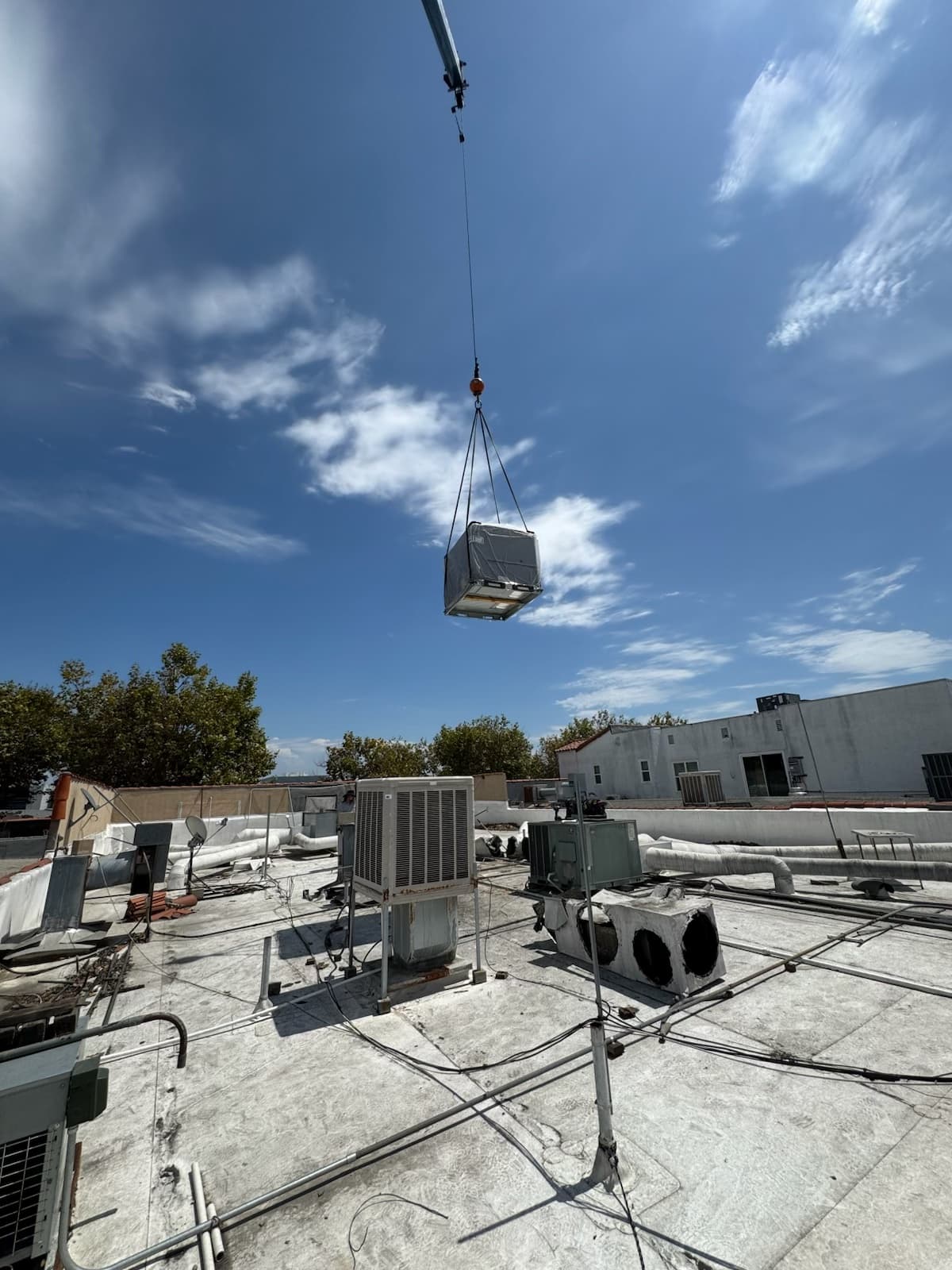
How rtu & split installs work plays out in City of Industry
On a City of Industry roof, replacing packaged units is a scheduling and rigging exercise before it is a mechanical one. The buildings along the 60 and the Union Pacific line are long enough that a crane set in the truck court cannot reach the far side, so lifts are often split between two positions or two days, and the truck court itself is the busiest real estate on the property. We plan the sequence with the operations manager, hold or reroute inbound trailers for the lift window, and pre-set curb adapters so each unit is landed, connected and running the same day.
Heat drives the specification. A unit rated at standard conditions will not deliver that capacity on a dark Industry roof in August, so we review the actual design conditions, the roof surface and the spacing between units before confirming tonnage, and we favor units with coated coils and head-pressure control that tolerate extreme ambient. Older roofs may need structural verification by the owner's engineer, and curb and membrane condition around existing openings is checked before a heavier unit goes on. Title 24 acceptance tests for economizers and controls are part of the closeout.
Owners with several Industry buildings, and the national tenants who lease them, usually want to standardize on a single unit platform so parts and training carry across the portfolio. We help them weigh that against lead times and roof constraints, and we phase the work so dock offices, break rooms and refrigerated zones stay conditioned. The commercial RTU replacement page and the rooftop unit guide go deeper on planning multi-unit roofs.
City of Industry's climate and what it does to this equipment
City of Industry sits in the San Gabriel Valley, well inland, and summer afternoons regularly push past 95 degrees with stretches of triple digits. Large dark roofs soak up that heat, so rooftop units work against extreme ambient conditions plus radiant load from the roof surface. Low humidity makes evaporative approaches effective but also puts a premium on clean condensers, since dusty air from rail yards and truck traffic builds up fast on coils. Santa Ana wind events add debris and static pressure problems, and winter nights are mild enough that heating loads stay light.
For the equipment background behind this page, read our commercial rooftop unit guide or the full RTU & Split System Installs service page.
- Valley Boulevard and Azusa Avenue distribution corridorLarge tilt-up warehouses with long rooftop unit rows, dock offices and multi-shift operations.
- Gale Avenue and Nelson Avenue manufacturing and food-processing blocksPlants with process refrigeration, sanitation hot water and make-up air demands that change with production.
- Puente Hills Mall and Fullerton Road retailAnchor and strip retail with restaurants, older packaged equipment and shared roof infrastructure.
- Industry Hills hospitality and business park areaResort, event and office properties with hot water loads, chilled-water or large packaged systems and seasonal event peaks.
- Site survey covering load, airflow balancing, and duct condition
- Clean rigging with code-correct gas, electrical, and condensate work
- Startup readings documented and stored in the Portal
- DaVinci Portal included: asset QR tag + warranty paperwork on file
What a rtu & split installs visit includes, and the problems we most often find
- Site survey — existing curb/duct compatibility, load, and airflow requirements
- Equipment selection sized to actual load and hours of operation, not just square footage
- Crane scheduling and rigging coordinated for roof access
- Install with code-correct gas, electrical, and condensate work
- Startup readings taken and documented; warranty registered in the Portal
- Undersized or oversized replacement units causing short-cycling or poor comfort
- Curb mismatches that turn a 'simple swap' into a bigger job mid-install
- Duct transitions that don't match the new unit's airflow requirements
- Aging units on refrigerant types that are getting harder and more expensive to service