Maintenance Plans in Glendale, CA
A Glendale maintenance program often needs to cover retail centers, restaurants, creative offices, and medical suites with very different rhythms. Because summers are long and hot, programs emphasize pre-season coil cleaning, airflow verification, and electrical checks. Visit schedules are set around store hours, studio crunch periods, and clinic times, and each unit's history is logged in the DaVinci Portal for the owner or manager. Over a few seasons, the pattern shows which rooftops need more frequent attention than the rest.
Brand Boulevard retail and mixed-use, entertainment and animation offices, hospital campuses, and the Glendale Galleria area at the edge of the San Fernando Valley.
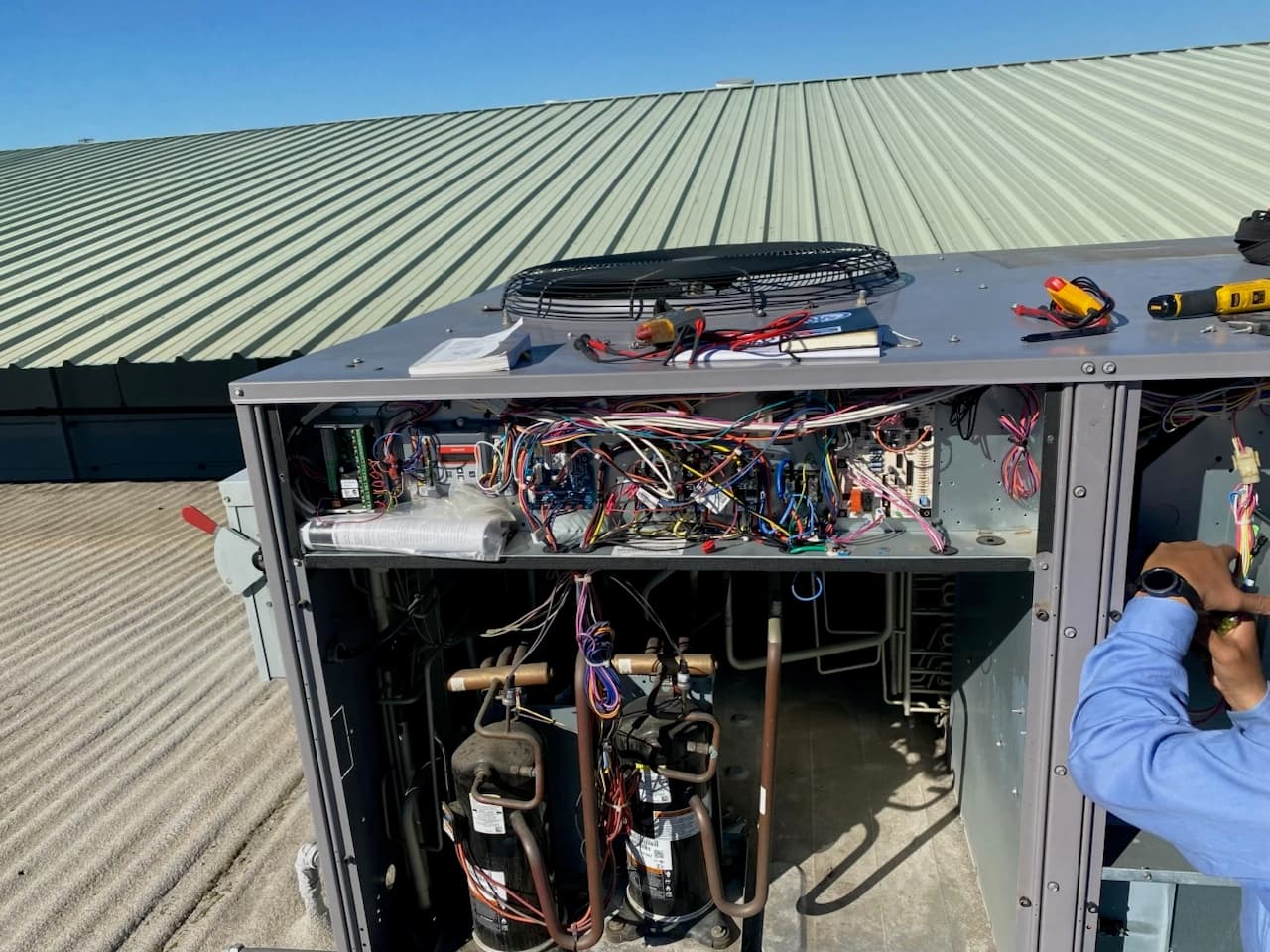
How maintenance plans work plays out in Glendale
The calendar matters more in Glendale than in coastal cities. By late May the foothill air is already warm, and by July rooftops along Central Avenue and the Galleria perimeter are running at full load every afternoon. A maintenance program here front-loads the work: coil cleaning, condenser fan and motor checks, refrigerant readings, belt and bearing inspection, and economizer verification all happen in spring, before the first stretch of 95-degree days exposes whatever was marginal. A second pass in early fall catches the dust and ash that Santa Ana winds and fire season leave on coils and filters.
The properties that benefit most are the ones with many identical units and no in-house engineer: strip retail along Glenoaks and San Fernando Road, medical office buildings around the hospital campuses, and the office floors in the Brand Boulevard towers that have a building engineer but no refrigeration background. Media and animation campuses are a special case, since edit rooms and server closets need year-round attention and the production calendar dictates when access is possible. We schedule around crunch periods instead of asking a studio to pause for a filter change.
Each visit is recorded per unit in the DaVinci Portal: readings, photos, findings, and a plain recommendation. After a season or two the record shows which rooftops are drifting and which are stable, which is what lets an owner plan a replacement during mild weather instead of reacting during a heat wave. For details on tiers and what each visit includes, see the maintenance program page and the preventive maintenance guide.
Glendale's climate and what it does to this equipment
Glendale is warmer than the coast, with hot, dry summers shaped by its position against the Verdugo Mountains and the edge of the San Fernando Valley. Summer afternoons regularly reach the 90s, with heat waves that go higher, and nights offer less relief than coastal cities. Santa Ana winds bring dry air, dust, and fire-season smoke that clog filters and coils. Hillside and foothill conditions also deposit leaves and debris in outdoor equipment, and long cooling seasons make efficient airflow essential.
For the equipment background behind this page, read our preventive maintenance program guide or the full Commercial Maintenance Plans service page.
- Downtown Glendale, Brand Boulevard, and AmericanaMixed-use retail, restaurants, offices, and residential-adjacent commercial space with central equipment rooms and extensive rooftop packages.
- Glendale Galleria areaLarge-format retail, food courts, and parking structures with long operating hours and high cooling demand.
- Entertainment and animation officesCreative campuses and studio-style offices with irregular schedules, server and edit rooms, and specialized comfort needs.
- Hospital campuses and medical officesMedical buildings where filtration, redundancy, and careful scheduling shape every service visit.
- Free diagnostic on repairs for plan members
- Included labor per tier, with a member rate for anything over
- Photo-logged reports with temps, pressures, and amp draws
- DaVinci Portal included with QR tracking and self-service scheduling
What a maintenance plans visit includes, and the problems we most often find
- Walk every covered asset — RTUs, refrigeration, ice machines, water heaters
- Take and log readings against each unit's history, not a generic checklist
- Flag anything trending toward failure before it becomes a breakdown
- Deliver a photo-logged report after every visit
- Free diagnostic on any repair that comes out of the visit
- Equipment that 'seemed fine' failing without any maintenance history to catch the trend
- Multiple pieces of equipment aging out around the same time with no replacement plan
- Surprise repair costs that a documented PM history would have flagged months earlier
- Multi-location accounts with no consistent record across sites
Maintenance tiers for Glendale properties
Glendale plans typically combine pre-summer coil and airflow work with scheduling around retail hours and studio deadlines. Each unit's service history lives in the DaVinci Portal.
See maintenance plan tiers