Commercial Refrigeration in Downey, CA
Restaurants around Stonewood Center, along Firestone Boulevard and in Downtown Downey rely on walk-ins and reach-ins that work hard in warm, humid summers. Humidity adds frost and condensation problems to defrost cycles and door seals, and grocery and convenience tenants add display cases. We diagnose airflow, defrost, condenser condition and box load, and correct the actual cause of recurring service calls. Temperature logging is part of the job so operators can show consistent records during inspections.
Stonewood-area retail, multiple hospital campuses, former aerospace sites and light industrial blocks in the Gateway Cities.
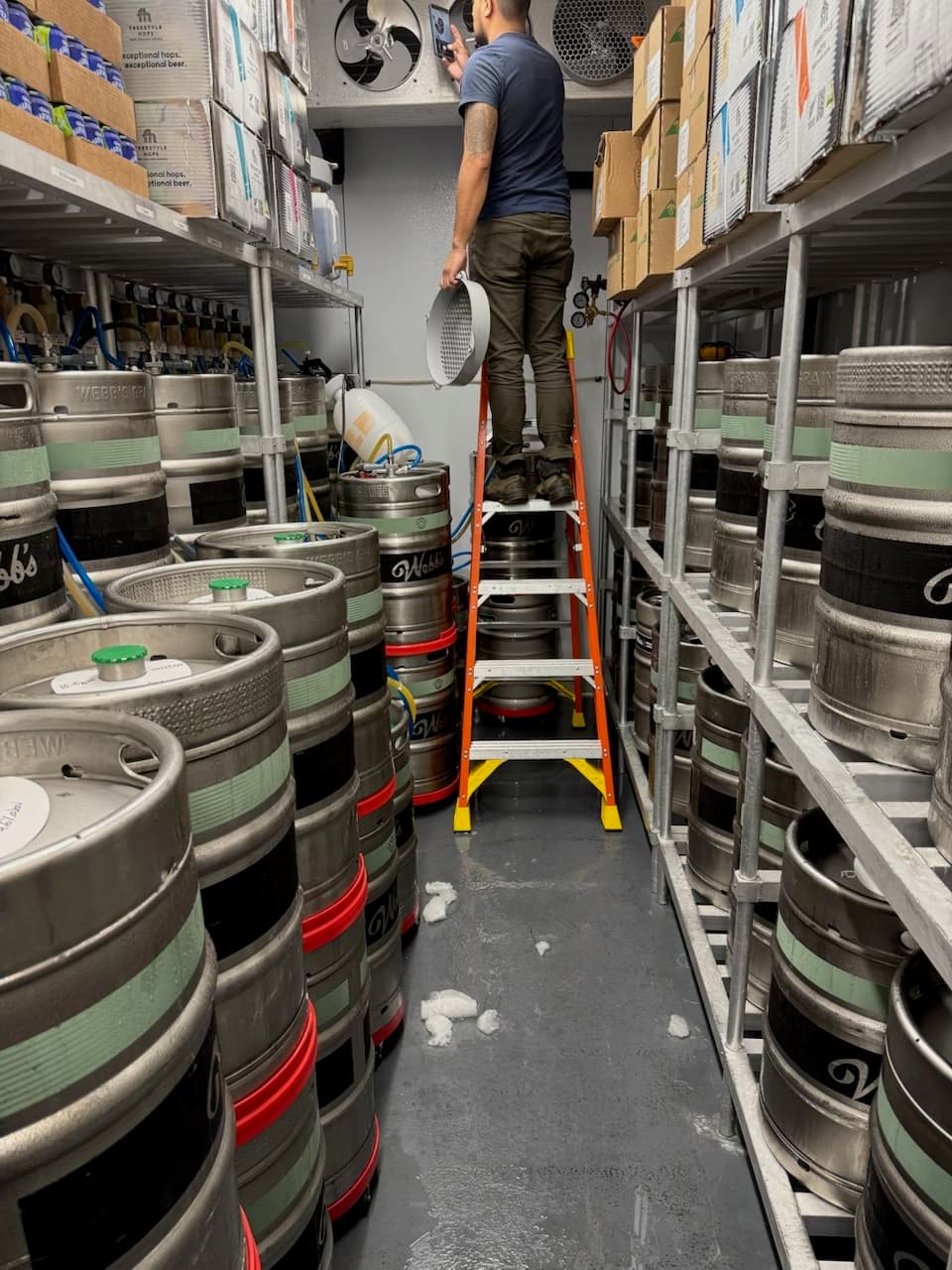
How commercial refrigeration work plays out in Downey
Downey's refrigeration load is concentrated in a few places: the food court and restaurant row at Stonewood Center, the restaurant pads at the Promenade at Downey, the Mexican and Latin American restaurants, panaderias and carnicerias along Firestone, Paramount and Florence, and the grocery and warehouse-club style stores along Lakewood Boulevard. Add hospital and rehabilitation kitchens near Imperial Highway, and the city has an unusual number of walk-ins for its size, most of them in buildings that were not designed for them.
The failure mode we see most in Downey is the humid-summer walk-in. The box sits against a west-facing wall in a strip center, the condensing unit is on a roof that runs hot and dirty, and from July through September the evaporator ices between defrosts, the door sweats and the floor gets slick. Operators respond by turning the thermostat down, which makes the icing worse. We measure box load and infiltration, correct the defrost schedule and termination, repair sweeps and gaskets, clean and verify the condenser, and only then adjust setpoints. In meat and produce departments we also check case airflow and anti-sweat settings.
A job in a Downey strip center usually means working in a tight back room during prep hours, so we schedule around deliveries and lunch. A good result is a box that holds temperature through a heat wave without manual defrosts, a temperature log the health inspector can read, and a refrigerant record that meets state reporting rules, which we help you confirm against the current requirements. The walk-in guide explains the diagnostics we run.
Downey's climate and what it does to this equipment
Downey is part of the flat, warm Gateway Cities plain, inland of the coast but still influenced by the marine layer on many mornings. Summers bring warm, humid afternoons in the 80s and low 90s, with occasional heat waves that push higher, and warm nights that keep cooling equipment running late. Humidity makes condensate and coil cleanliness more important than in drier valleys. Freeway traffic, rail and nearby industry put fine particulate on filters and coils. Equipment is rarely heat-limited but works long hours in moderately dirty, humid air.
For the equipment background behind this page, read our walk-in cooler and freezer guide or the full Refrigeration: Walk-In & Reach-In Coolers/Freezers service page.
- Stonewood Center and Lakewood Boulevard retailEnclosed-mall and surrounding national tenants with restaurants, food courts and shared roof and plant systems.
- Kaiser Downey and Rancho Los Amigos medical corridorHospital and rehabilitation campuses plus nearby medical offices with strict environmental and documentation requirements.
- Downtown Downey and Firestone BoulevardOlder low-rise offices, restaurants and professional buildings with aging rooftop and split-system equipment.
- Former aerospace and rail-line light industrial areasLarge legacy buildings and smaller industrial properties adapted from aerospace use, often with mixed-vintage mechanical systems.
- Evaporator/condenser coil cleaning and defrost checks
- TXV/EEV, superheat, subcool, and pressure readings logged
- Door seals, drains, heaters, and fan packages inspected
- DaVinci Portal: temps and pressures logged by asset over time
What a commercial refrigeration visit includes, and the problems we most often find
- Check current box temperature against setpoint and recent trend
- Inspect door seals, drains, and evaporator/condenser coils for buildup
- Take superheat, subcool, and pressure readings against manufacturer spec
- Address the root cause — not just a temporary recharge
- Log readings to the asset so drift is caught early next visit
- Door seals and hinges that no longer hold a tight close
- Evaporator coils iced over from a defrost cycle issue
- Condenser coils caked with grease or debris, especially near kitchen exhaust
- Slow refrigerant leaks that show up as gradual temperature drift, not sudden failure