Commercial Refrigeration in Culver City, CA
Downtown Culver City restaurants often fit walk-ins and reach-ins into former retail or industrial spaces, sometimes with condensing units on rooftops shared with other tenants. Food halls and busy dining rooms run their coolers hard and need fast recovery after deliveries. Studio catering operations and craft-service areas add additional coolers and freezers that may be used intermittently. We diagnose defrost, airflow, door seals and condenser performance, and we document temperatures so operators can prove compliance and protect product.
Studio and creative offices, Downtown Culver City restaurants, converted Hayden Tract buildings and medical offices on the Westside.
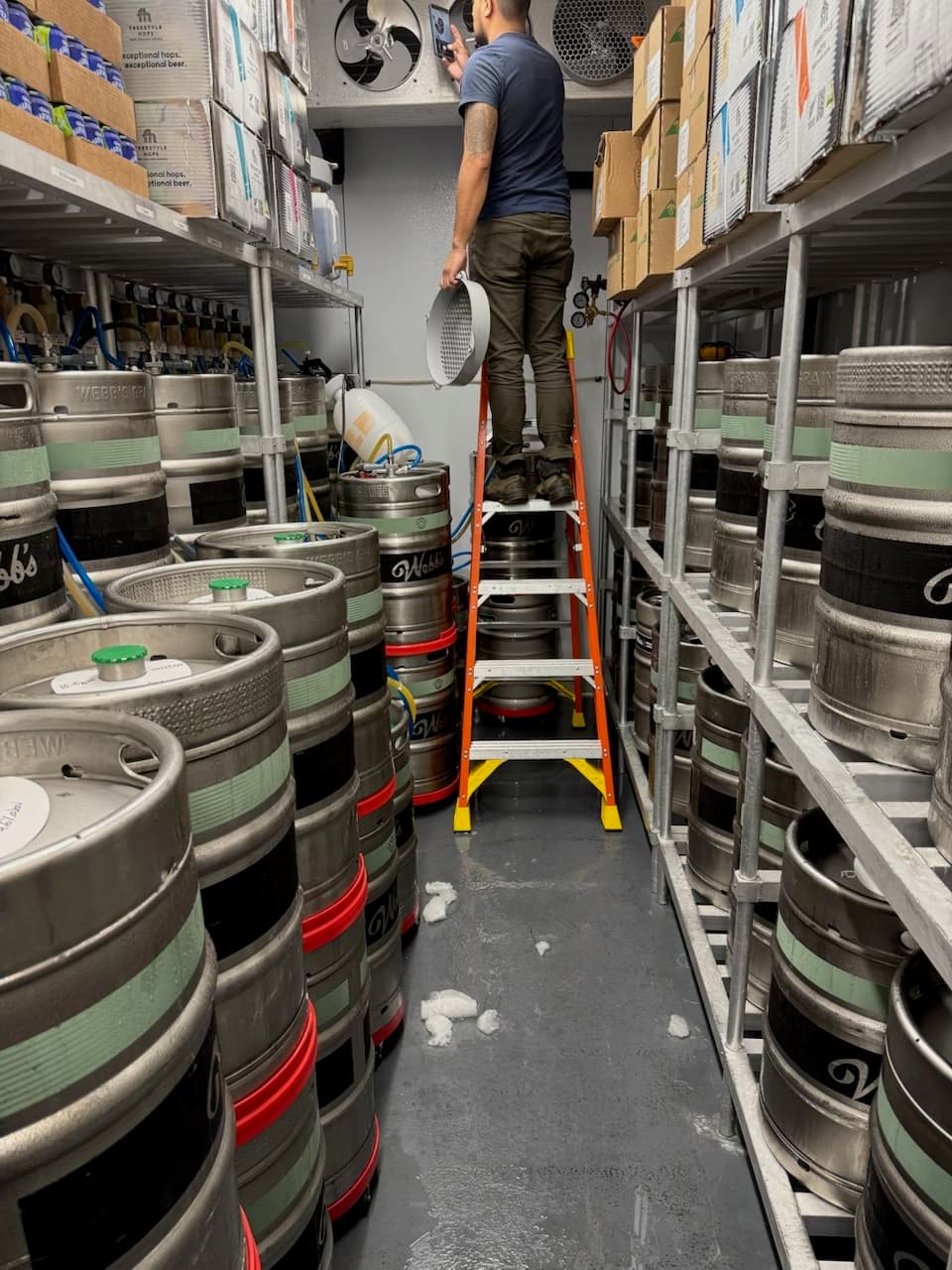
How commercial refrigeration work plays out in Culver City
Culver City has far more refrigeration per block than its size suggests. Downtown's restaurant and food hall density along Culver and Washington packs walk-ins and reach-ins into former storefronts and basements, the Helms Bakery District and Platform area add bakeries, specialty food and cafes, and the studio lots run commissaries, catering kitchens and craft-service storage that cycle between heavy production-day use and near idle. Grocery and specialty markets along Sepulveda and Jefferson round it out. Many of these boxes were installed in spaces that were offices or shops before.
The most common Culver City scenario is a walk-in with a remote condensing unit on a shared downtown roof, run through a line set that is too long, routed past kitchen exhaust, and installed without a proper receiver or head-pressure control for mild Westside nights. The box holds temperature in July and struggles in a cool, damp February because the condensing unit cannot develop enough head pressure. Add food hall tenants opening and closing doors constantly and the problem looks like a compressor failure when it is a system design issue. We check line sizing, head-pressure control, defrost settings, door gaskets and infiltration before condemning anything.
A job here means working in tight back-of-house spaces during off hours, coordinating roof access through a landlord and sometimes a neighboring tenant, and keeping noise down for upstairs residents in the mixed-use buildings now common downtown. The result that matters to an operator is stable temperature logs for the health inspector, product that does not spoil during a heat wave, and a refrigerant record that fits state requirements, which we help you confirm. The walk-in guide covers the diagnostics.
Culver City's climate and what it does to this equipment
Culver City sits a few miles inland from the coast on the Westside, so the marine layer regularly cools mornings and evenings, and the city sees fewer extreme heat days than the valleys. Afternoons in summer are warm, with a heat wave now and then, and humidity is moderate. That mildness means free cooling is available much of the year, which makes economizer function valuable. Salt is a lesser concern than at the beach, but sea breeze, traffic and nearby freeway particulate still load coils. Equipment runs a long cooling season with moderate peak stress.
For the equipment background behind this page, read our walk-in cooler and freezer guide or the full Refrigeration: Walk-In & Reach-In Coolers/Freezers service page.
- Studio campuses (Sony Pictures Studios and the Culver Studios area)Soundstages, edit suites, chilled-water systems and noise-sensitive spaces with strict uptime and acoustic requirements.
- Downtown Culver City (Culver and Washington Boulevards)Restaurants, food halls and boutique retail in older low-rise buildings with tight kitchens and shared roofs.
- Hayden Tract and the Helms Bakery DistrictConverted warehouse and creative-office buildings with exposed systems, unusual roof structures and mixed-generation equipment.
- Sepulveda, Venice and Fox Hills medical and office corridorsMedical offices and mid-rise professional buildings with zoned comfort and after-hours service needs.
- Evaporator/condenser coil cleaning and defrost checks
- TXV/EEV, superheat, subcool, and pressure readings logged
- Door seals, drains, heaters, and fan packages inspected
- DaVinci Portal: temps and pressures logged by asset over time
What a commercial refrigeration visit includes, and the problems we most often find
- Check current box temperature against setpoint and recent trend
- Inspect door seals, drains, and evaporator/condenser coils for buildup
- Take superheat, subcool, and pressure readings against manufacturer spec
- Address the root cause — not just a temporary recharge
- Log readings to the asset so drift is caught early next visit
- Door seals and hinges that no longer hold a tight close
- Evaporator coils iced over from a defrost cycle issue
- Condenser coils caked with grease or debris, especially near kitchen exhaust
- Slow refrigerant leaks that show up as gradual temperature drift, not sudden failure