Commercial Refrigeration in Los Angeles, CA
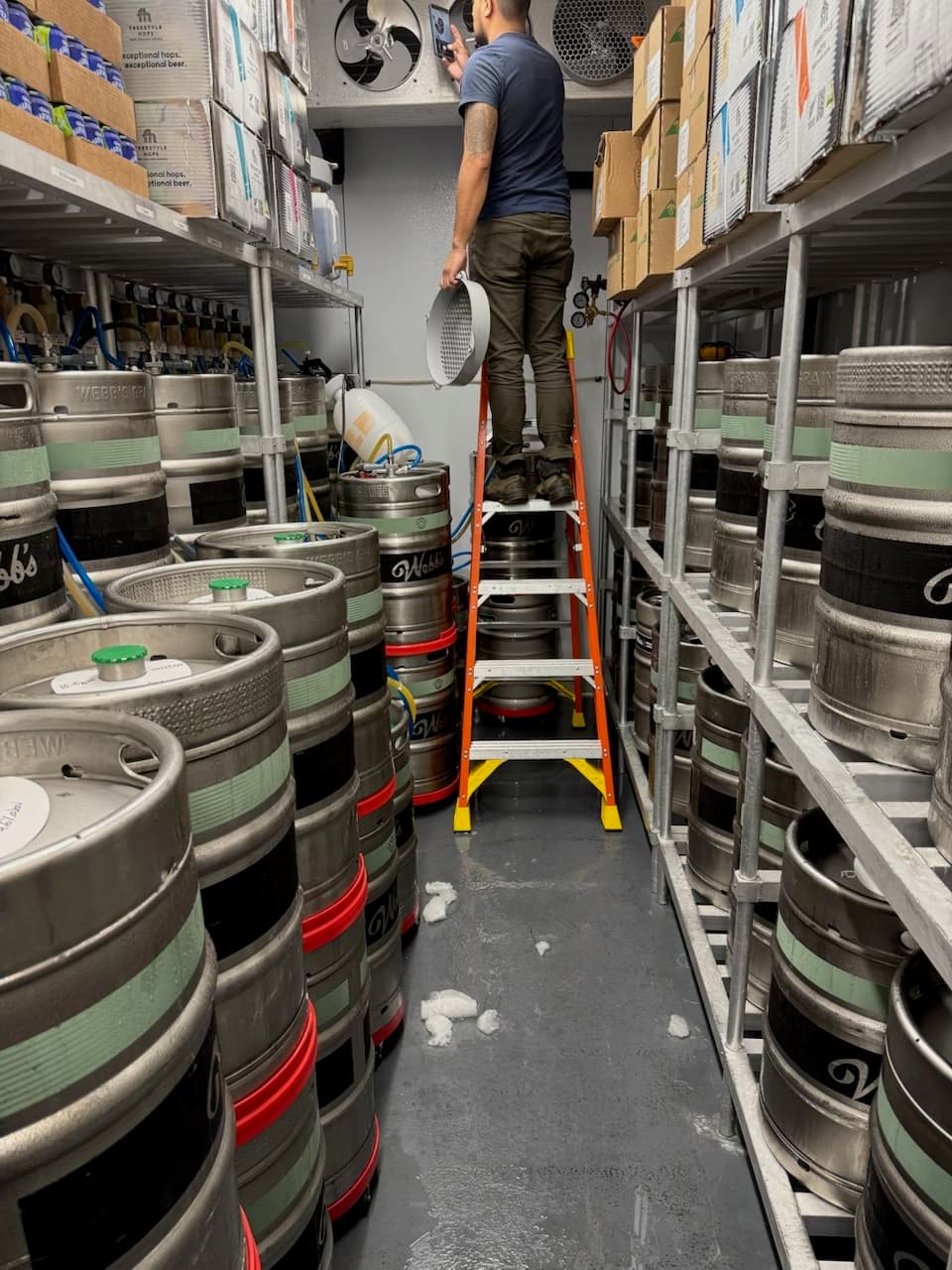
Walk-in coolers and freezers show up all over Los Angeles, from restaurant kitchens in older strip buildings to the larger cold rooms in produce and food distribution blocks near the Arts District and Vernon. The work ranges from evaporator fan failures and door gasket issues to defrost problems and compressor short-cycling on high-volume rooms. Diagnosing why a box loses temperature, rather than just topping off refrigerant, protects product, keeps health inspections clean, and avoids repeat visits during busy delivery windows.
A sprawling mix of high-rise offices, production and creative space, food distribution in the industrial core, and a long LAX-adjacent logistics corridor, all under one of the state's most demanding permit environments.
How commercial refrigeration work plays out in Los Angeles
The refrigeration load in Los Angeles concentrates in two very different places. The first is the produce and food distribution corridor from the Arts District south through the wholesale produce market area and into Vernon, where buildings run large walk-in boxes, dock-door coolers, and racked refrigeration that cycles doors open from 2 a.m. onward. Failures there are high-stakes and fast: a condensing unit tripping on a rooftop at 100 degrees can cost a full cold room of inventory before the day shift notices. The second is the restaurant storefront, from Sawtelle to Boyle Heights, where a walk-in was shoehorned into a back room and its condenser sits in an alley with no airflow.
In the distribution buildings the work is about load and defrost. Doors that stay open for forklift traffic push humid air onto evaporator coils, which ice over, which triggers extended defrost, which raises box temperature, which prompts someone to lower the setpoint, which makes the icing worse. Strip doors, door switches, defrost timing, and evaporator fan condition are checked before anyone decides the compressor is weak. In the storefronts, the problem is more often the condenser: grease-laden air from a nearby kitchen exhaust, a fence built too close, or a unit mounted where afternoon sun cooks it.
Good outcomes are measured in temperature logs. A box that holds its setpoint through a hot afternoon and a busy delivery window, with defrost cycles that end cleanly, is fixed. The walk-in cooler and freezer guide covers the mechanics; for operators in the LA food distribution core, the food manufacturing and cold storage sector page covers how larger programs are structured.
Los Angeles's climate and what it does to this equipment
Los Angeles has a Mediterranean climate, but the city spans very different conditions. Areas near the coast stay under the marine layer through much of late spring and early summer, while the basin and downtown run noticeably hotter in late summer and early fall, and Santa Ana wind events can bring dry heat and blowing dust. Equipment sees long cooling seasons, and rooftop condensers in urban areas collect soot, leaf litter, and airborne grime. Older buildings with undersized airflow often show problems only during the first stretch of real heat, which is exactly when response time matters most.
For the equipment background behind this page, read our walk-in cooler and freezer guide or the full Refrigeration: Walk-In & Reach-In Coolers/Freezers service page.
- Downtown Los Angeles and the Historic CoreConverted older buildings, high-rise offices, and new mixed-use towers, with a mix of central plants, VRF, and rooftop equipment that often needs careful hoisting and access planning.
- Mid-Wilshire, Miracle Mile, and Century CityDense office towers and professional suites along Wilshire, where chilled water systems, after-hours scheduling, and tenant-sensitive work windows shape every service call.
- Hollywood and studio-related production spaceProduction offices, post-production suites, and sound-sensitive rooms where noise, humidity, and tight temperature control matter as much as capacity.
- Arts District, Vernon-adjacent industrial, and the LAX corridorFood distribution, cold storage, and warehouse buildings east of downtown, plus hotels and logistics buildings along the airport corridor on the west side.
- Evaporator/condenser coil cleaning and defrost checks
- TXV/EEV, superheat, subcool, and pressure readings logged
- Door seals, drains, heaters, and fan packages inspected
- DaVinci Portal: temps and pressures logged by asset over time
What a commercial refrigeration visit includes, and the problems we most often find
- Check current box temperature against setpoint and recent trend
- Inspect door seals, drains, and evaporator/condenser coils for buildup
- Take superheat, subcool, and pressure readings against manufacturer spec
- Address the root cause — not just a temporary recharge
- Log readings to the asset so drift is caught early next visit
- Door seals and hinges that no longer hold a tight close
- Evaporator coils iced over from a defrost cycle issue
- Condenser coils caked with grease or debris, especially near kitchen exhaust
- Slow refrigerant leaks that show up as gradual temperature drift, not sudden failure
Commercial Refrigeration in Los Angeles: questions we get
Our Vernon-area distribution building has a walk-in that freezes up every few weeks. The last contractor keeps defrosting it and leaving. What should actually be checked?
Repeated icing on a high-traffic box is almost always an infiltration and defrost problem rather than a refrigerant problem. Door gaskets, strip curtains, door-open time during receiving, defrost frequency and termination, and evaporator fan operation are the usual suspects. Once the humidity load and defrost cycle are matched to how the room is actually used, the icing stops. Clearing the coil without fixing those conditions guarantees a repeat call.
Health inspectors in Los Angeles County want temperature records for our restaurant coolers. Can service visits support that?
Yes. Each visit records box temperature, evaporator and condenser readings, and what was adjusted or replaced, and those records live in the DaVinci Portal under the specific unit. That does not replace the daily logs the operator keeps, but it gives a documented history of professional service that inspectors and landlords both tend to accept as evidence that the equipment is being maintained.
Can you service equipment during business hours?
We can work around service windows for kitchens and retail floors, including early-morning or after-hours visits when product safety is time-sensitive.
Do you handle health-department documentation?
Yes — temperature and pressure readings are logged to the asset in the Portal, so you have a record ready for inspection.