Commercial Refrigeration in Whittier, CA
Uptown Whittier restaurants frequently work with walk-ins and reach-ins fitted into old storage rooms, basements or patios with poor ventilation. Whittier's grocery and pharmacy tenants along the boulevard add display cases and walk-in coolers that run all day. We examine airflow, defrost, door seals and condenser conditions, and we correct causes like blocked condenser intake or drain freezing instead of repeatedly recharging systems. Temperature records are kept for each box, which supports health inspections and reduces product-loss risk.
Uptown Whittier restaurants, hospital and medical campuses, light industrial streets and Quad-area retail on aging but well-kept commercial buildings.
How commercial refrigeration work plays out in Whittier
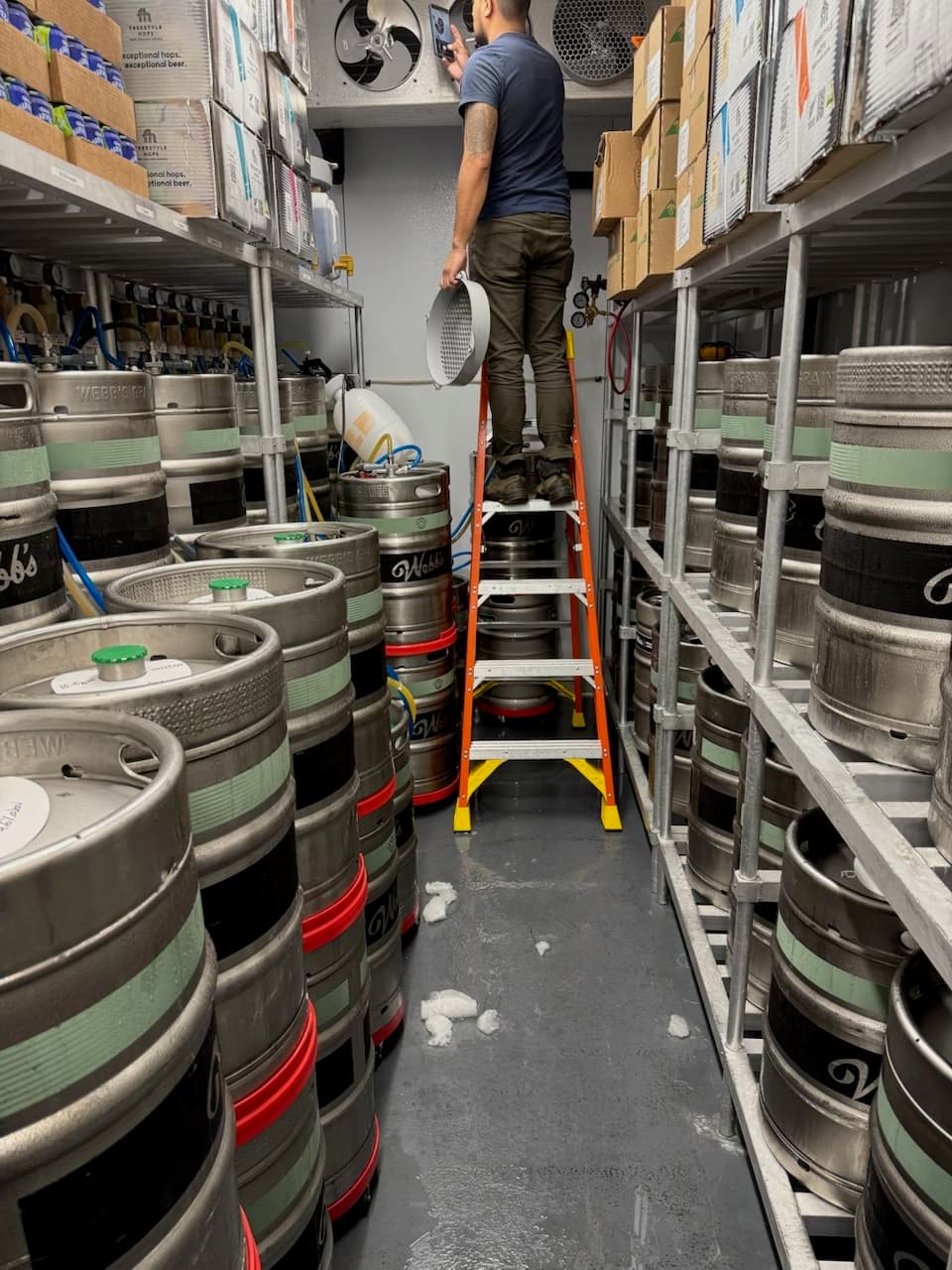
The walk-in behind an Uptown Whittier restaurant was very likely built into whatever space the building had left: a basement reached by a narrow stair, a rear addition with a tin roof, a patio alcove shared with the trash enclosure. The condensing unit discharges into that same space, so on a 95-degree afternoon it is trying to reject heat into air that is already hotter than it was designed for, and the box that held temperature all spring creeps into the 40s by late afternoon. Operators respond with service calls for refrigerant, but the real fix is almost always heat rejection, airflow across the evaporator or a defrost cycle that stopped doing its job.
Grocery, pharmacy and restaurant tenants along Whittier Boulevard and in the centers near Painter Avenue run display cases and reach-ins all day under retail lighting, and those are a different problem: case fans and evaporator coils that ice over, door gaskets that have never been replaced, drains that freeze and overflow onto the sales floor. Medical offices and the hospital campus add vaccine and medication refrigeration where temperature logging is not optional, and a failure is a compliance event rather than an inconvenience.
Across all of them, the useful output is a record: a temperature and condition log per box, kept in the DaVinci Portal, that answers a health inspector, a pharmacy auditor or an insurance adjuster. Whittier owners who have held a building for decades tend to appreciate that kind of continuity, and it lets a repeat failure get traced to its cause rather than patched a third time. The service is outlined at commercial refrigeration, with background in the walk-in guide.
Whittier's climate and what it does to this equipment
Whittier sits in the foothills edge of the Los Angeles basin, with the Puente Hills to the east, and the marine layer reaches it more often than it reaches the San Gabriel Valley. Summers are warm to hot, commonly in the 80s and 90s with periodic heat waves, and nights cool enough to give economizers real use. Hillside areas see higher fire-season smoke and ash, which clog filters and coils. Santa Ana winds bring dust and heat in fall. Equipment faces moderate heat but significant air quality swings and the wear of buildings that are decades old.
For the equipment background behind this page, read our walk-in cooler and freezer guide or the full Refrigeration: Walk-In & Reach-In Coolers/Freezers service page.
- Uptown Whittier (Greenleaf Avenue)Historic low-rise restaurants, cafes and shops with retrofitted kitchens, walk-ins and shared or hard-to-reach roofs.
- Whittier Boulevard and Painter Avenue retailMid-size centers and freestanding pads with grocery, pharmacy and restaurant tenants and aging packaged units.
- PIH Health Whittier Hospital and medical office areaHospital-adjacent buildings with strict temperature, humidity and ventilation needs and after-hours service demands.
- Telegraph Road and light-industrial blocksSmall manufacturing, auto and contractor buildings with a handful of older rooftop units and limited controls.
- Evaporator/condenser coil cleaning and defrost checks
- TXV/EEV, superheat, subcool, and pressure readings logged
- Door seals, drains, heaters, and fan packages inspected
- DaVinci Portal: temps and pressures logged by asset over time
What a commercial refrigeration visit includes, and the problems we most often find
- Check current box temperature against setpoint and recent trend
- Inspect door seals, drains, and evaporator/condenser coils for buildup
- Take superheat, subcool, and pressure readings against manufacturer spec
- Address the root cause — not just a temporary recharge
- Log readings to the asset so drift is caught early next visit
- Door seals and hinges that no longer hold a tight close
- Evaporator coils iced over from a defrost cycle issue
- Condenser coils caked with grease or debris, especially near kitchen exhaust
- Slow refrigerant leaks that show up as gradual temperature drift, not sudden failure