Ice Machine Service in Whittier, CA
Restaurants, bars and cafes in Uptown Whittier rely on ice machines installed in cramped back rooms, often with limited drain access and poor ventilation. Medical and hospital-adjacent facilities need ice that meets sanitation expectations. We clean, descale and sanitize machines, check water filtration and drains, and inspect clearances for air-cooled condensers. Records of each service are kept so inspections, brand standards and internal audits are easy to answer.
Uptown Whittier restaurants, hospital and medical campuses, light industrial streets and Quad-area retail on aging but well-kept commercial buildings.
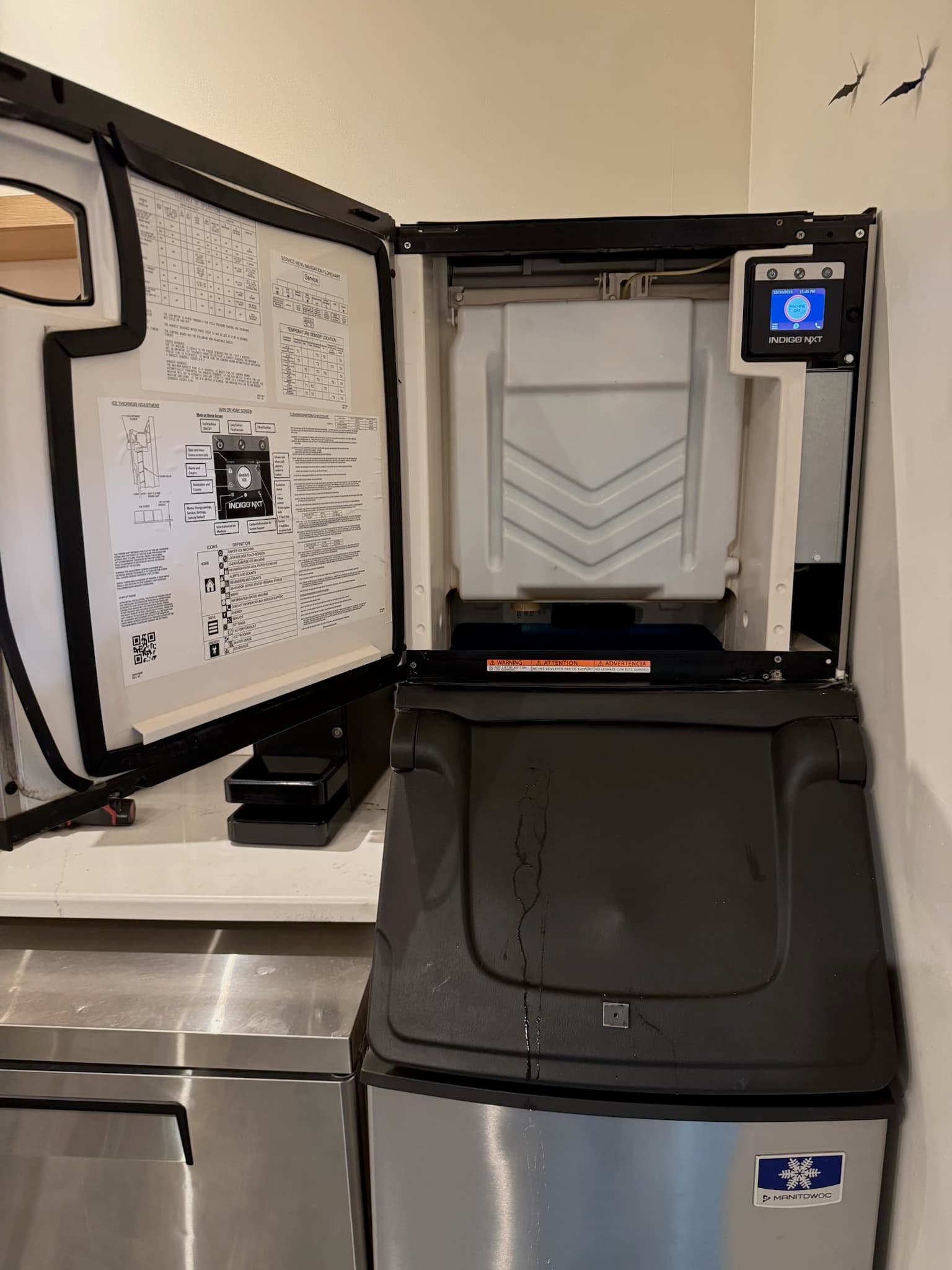
How ice machine service work plays out in Whittier
Ice machines in Whittier fail quietly in cramped rooms. Uptown bars and cafes keep them in back hallways and storage closets with no mechanical ventilation, the drain is a long run to a floor sink that was added later, and the air-cooled condenser is pulling in air that the kitchen just heated. Production falls, the machine runs longer, and scale from the local water builds on the evaporator until cubes come out thin and cloudy. By the time an operator calls, the machine is often three problems deep.
The hospital campus and the medical offices around it, along with senior-care facilities and dental practices scattered through the city, run ice machines where sanitation is the primary concern. Ice served to patients is handled as food, so cleaning records, filter changes and a sanitation procedure that follows the manufacturer's steps are not just good practice but what an inspection will ask about. Restaurants along Whittier Boulevard sit in between: busy production, moderate space, and a need for records that satisfy health inspectors.
A service visit here follows a fixed sequence: photograph and inspect the bin and evaporator, descale and sanitize, verify water pressure and filter condition, check the drain and air gap, confirm clearances around the condenser and run a production test. When a machine in a back hallway cannot be given the air it needs, we discuss a remote condenser or relocating the head. All of it goes into the asset record. The approach is described at commercial ice machine service and in the ice machine guide.
Whittier's climate and what it does to this equipment
Whittier sits in the foothills edge of the Los Angeles basin, with the Puente Hills to the east, and the marine layer reaches it more often than it reaches the San Gabriel Valley. Summers are warm to hot, commonly in the 80s and 90s with periodic heat waves, and nights cool enough to give economizers real use. Hillside areas see higher fire-season smoke and ash, which clog filters and coils. Santa Ana winds bring dust and heat in fall. Equipment faces moderate heat but significant air quality swings and the wear of buildings that are decades old.
For the equipment background behind this page, read our commercial ice machine guide or the full Ice Machines — Service & Sanitation service page.
- Uptown Whittier (Greenleaf Avenue)Historic low-rise restaurants, cafes and shops with retrofitted kitchens, walk-ins and shared or hard-to-reach roofs.
- Whittier Boulevard and Painter Avenue retailMid-size centers and freestanding pads with grocery, pharmacy and restaurant tenants and aging packaged units.
- PIH Health Whittier Hospital and medical office areaHospital-adjacent buildings with strict temperature, humidity and ventilation needs and after-hours service demands.
- Telegraph Road and light-industrial blocksSmall manufacturing, auto and contractor buildings with a handful of older rooftop units and limited controls.
- Scale removal, deep sanitation, and filter change-out programs
- Bin sensors, harvest cycles, pumps, and valves checked
- OEM-spec readings taken against manufacturer PM intervals
- DaVinci Portal: photo-logged cleanings and reminder scheduling
What a ice machine service visit includes, and the problems we most often find
- Check ice quality, production rate, and bin sensor operation
- Full descale of water lines and evaporator plate
- Sanitize all food-contact surfaces per manufacturer spec
- Inspect water filtration and replace if due
- Photo-document the cleaning for your compliance records
- Scale buildup from hard water slowing production and clouding ice
- Bin sensors misreading and causing over- or under-production
- Water filters overdue for change, affecting both taste and machine health
- Visible slime or mold in the bin — the most common health-inspection flag
Ice Machine Service in Whittier: questions we get
Our Uptown Whittier bar's ice machine is in a closet with no vent. Can anything be done short of moving it?
Sometimes. If the closet can take a louvered door or a transfer grille to a cooler space, the condenser gets better air. If not, a remote air-cooled condenser on the roof with the head left in place is often the practical solution in an old building, since it removes the heat source from the room entirely. We measure the closet temperature during service hours first, because that number decides which option is worth the cost.
What should a Whittier medical office expect in ice machine sanitation records?
A record for every service that shows the date, the technician, the cleaning and sanitizing steps performed per the manufacturer's procedure, filter status and any findings, with photographs of the evaporator and bin. Most accrediting and licensing reviews want to see a consistent interval and evidence the procedure was actually followed. We keep that in the asset record so it is available at inspection time without digging through paper.
How often should ice machines be sanitized?
Most manufacturers recommend sanitizing every six months minimum, more often in high-mineral water areas. We'll set the interval based on your machine and water supply.
Can you fix low production without a full replacement?
Often, yes. Scale buildup, refrigerant charge, and water filtration are the most common causes of low ice production and are usually repairable.