Ice Machine Service in Downey, CA
Mall food courts, restaurants, medical-adjacent cafes and convenience tenants in Downey all use ice daily, and humidity plus warm utility rooms are hard on air-cooled machines. We clean, descale and sanitize units, check filtration and drains, and look at clearances around condensers, where boxes and shelving are often stacked against machines. For medical and care facilities, sanitation records and ice-handling practices are part of our documentation. Service is scheduled to avoid peak mall and lunch hours.
Stonewood-area retail, multiple hospital campuses, former aerospace sites and light industrial blocks in the Gateway Cities.
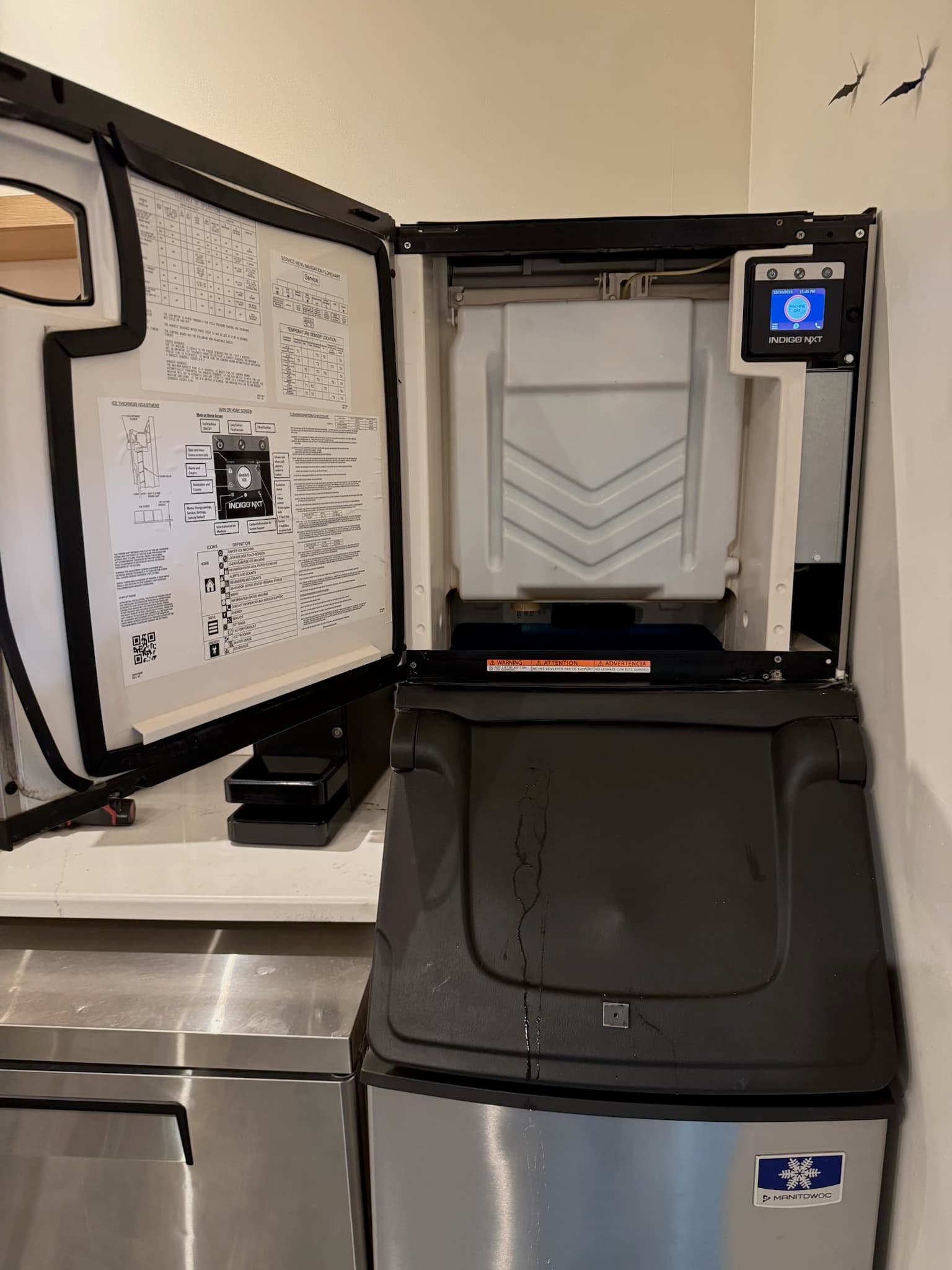
How ice machine service work plays out in Downey
Where the ice is in Downey tells you how it fails. Food court tenants at Stonewood have machines in shared service corridors that run warm and get little airflow. Quick-service restaurants along Firestone and Lakewood put machines beside fryers and dish machines. Hospital and rehabilitation cafeterias near Imperial Highway have machines that must meet infection-control expectations, and the hotels along Lakewood and Firestone near the 105 have dispensers on guest floors that no one looks at until a guest complains. In every case the warm, humid Gateway Cities summer accelerates slime and scale, and a machine that was fine in spring is making half its rated ice by August.
Our service visit covers the full sanitation cycle, descaling, bin and dispenser cleaning, and a check of water filtration, drains and condenser clearance. Air-cooled machines pushed against a wall in a 95-degree utility room are the single most common cause of low production here, and relocating the condenser intake or adding a remote condenser often solves a problem that has been treated with repeated service calls. For medical and care facilities we document the sanitation procedure and results so the record fits an inspection file.
Scheduling in Downey follows the operation. Mall tenants want service before the food court opens, restaurants want it between lunch and dinner, and hospital kitchens want a window agreed with their food service manager. We also check the water quality, since mineral content in the local supply drives scale, and we recommend filter change intervals that match your actual run time rather than a calendar default. The ice machine guide covers sanitation and production expectations in more detail.
Downey's climate and what it does to this equipment
Downey is part of the flat, warm Gateway Cities plain, inland of the coast but still influenced by the marine layer on many mornings. Summers bring warm, humid afternoons in the 80s and low 90s, with occasional heat waves that push higher, and warm nights that keep cooling equipment running late. Humidity makes condensate and coil cleanliness more important than in drier valleys. Freeway traffic, rail and nearby industry put fine particulate on filters and coils. Equipment is rarely heat-limited but works long hours in moderately dirty, humid air.
For the equipment background behind this page, read our commercial ice machine guide or the full Ice Machines — Service & Sanitation service page.
- Stonewood Center and Lakewood Boulevard retailEnclosed-mall and surrounding national tenants with restaurants, food courts and shared roof and plant systems.
- Kaiser Downey and Rancho Los Amigos medical corridorHospital and rehabilitation campuses plus nearby medical offices with strict environmental and documentation requirements.
- Downtown Downey and Firestone BoulevardOlder low-rise offices, restaurants and professional buildings with aging rooftop and split-system equipment.
- Former aerospace and rail-line light industrial areasLarge legacy buildings and smaller industrial properties adapted from aerospace use, often with mixed-vintage mechanical systems.
- Scale removal, deep sanitation, and filter change-out programs
- Bin sensors, harvest cycles, pumps, and valves checked
- OEM-spec readings taken against manufacturer PM intervals
- DaVinci Portal: photo-logged cleanings and reminder scheduling
What a ice machine service visit includes, and the problems we most often find
- Check ice quality, production rate, and bin sensor operation
- Full descale of water lines and evaporator plate
- Sanitize all food-contact surfaces per manufacturer spec
- Inspect water filtration and replace if due
- Photo-document the cleaning for your compliance records
- Scale buildup from hard water slowing production and clouding ice
- Bin sensors misreading and causing over- or under-production
- Water filters overdue for change, affecting both taste and machine health
- Visible slime or mold in the bin — the most common health-inspection flag