Ice Machine Service in Los Angeles, CA
In Los Angeles, ice machines are everywhere hospitality is: hotels near LAX and downtown, bars and restaurants across Hollywood and Mid-Wilshire, and hospital and clinic locations that need clean, dependable ice. The recurring problems are scale from variable water quality, slime and biofilm in the bin, and condensers choked by grease or dust in tight back-of-house spaces. Service focuses on cleaning, sanitation, water filtration checks, and condenser performance, with a record of what was done so the next inspection goes smoothly.
A sprawling mix of high-rise offices, production and creative space, food distribution in the industrial core, and a long LAX-adjacent logistics corridor, all under one of the state's most demanding permit environments.
How ice machine service work plays out in Los Angeles
Hotel ice machines near LAX run on a rhythm set by flight schedules. The Century Boulevard corridor is lined with properties where guests arrive late, leave early, and expect the floor machine to be full at both ends of the night. A machine that drops production in August because its air-cooled condenser is caked with jet-corridor grime and the mechanical closet runs hot is a guest complaint by the second day. Downtown hotels around the Convention Center and L.A. Live see the same pressure during event weeks, when banquet operations draw hundreds of pounds of ice in a few hours.
Restaurants and bars from Hollywood Boulevard through Koreatown to the Arts District have a different failure pattern. The machine lives in a cramped back-of-house space next to a fryer, its condenser breathes grease, and the bin develops slime because nobody has time to sanitize it between shifts. Los Angeles water is a blend from several sources, and its hardness varies by neighborhood and by season, so scale accumulates on evaporator plates at different rates across the city. Filtration that worked at one location may be inadequate at another a few miles away.
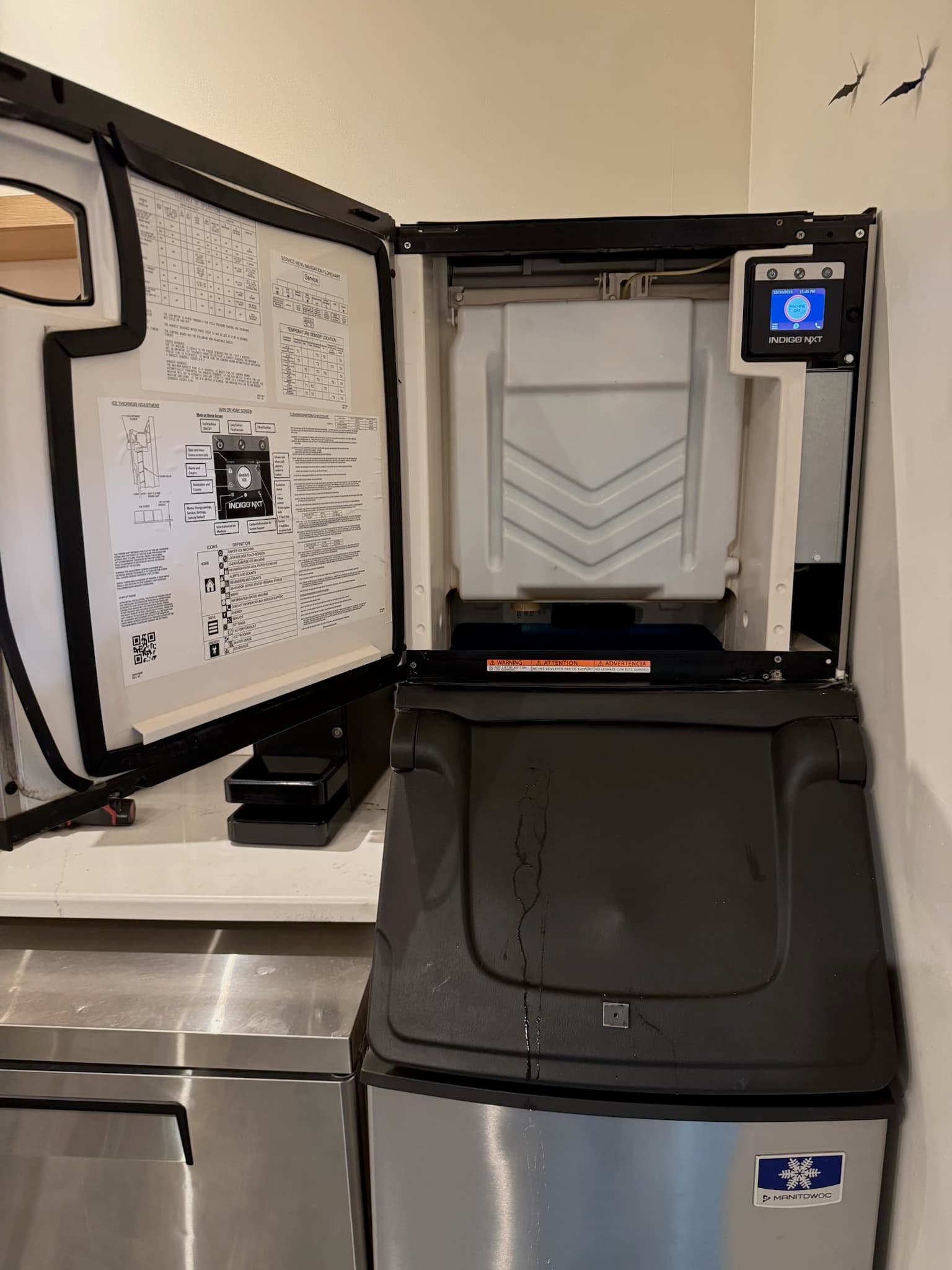
Service that works here combines a full descale and sanitation cycle, a condenser cleaning, a check on water filtration against the actual water at that address, and a look at the air around the machine. For hospitals and clinics along the Wilshire and Westwood medical corridors, documentation matters as much as the cleaning, and each visit is logged against the specific machine. The commercial ice machine guide covers the general sanitation cycle; Los Angeles adds heat, grease, and variable water to the list.
Los Angeles's climate and what it does to this equipment
Los Angeles has a Mediterranean climate, but the city spans very different conditions. Areas near the coast stay under the marine layer through much of late spring and early summer, while the basin and downtown run noticeably hotter in late summer and early fall, and Santa Ana wind events can bring dry heat and blowing dust. Equipment sees long cooling seasons, and rooftop condensers in urban areas collect soot, leaf litter, and airborne grime. Older buildings with undersized airflow often show problems only during the first stretch of real heat, which is exactly when response time matters most.
For the equipment background behind this page, read our commercial ice machine guide or the full Ice Machines — Service & Sanitation service page.
- Downtown Los Angeles and the Historic CoreConverted older buildings, high-rise offices, and new mixed-use towers, with a mix of central plants, VRF, and rooftop equipment that often needs careful hoisting and access planning.
- Mid-Wilshire, Miracle Mile, and Century CityDense office towers and professional suites along Wilshire, where chilled water systems, after-hours scheduling, and tenant-sensitive work windows shape every service call.
- Hollywood and studio-related production spaceProduction offices, post-production suites, and sound-sensitive rooms where noise, humidity, and tight temperature control matter as much as capacity.
- Arts District, Vernon-adjacent industrial, and the LAX corridorFood distribution, cold storage, and warehouse buildings east of downtown, plus hotels and logistics buildings along the airport corridor on the west side.
- Scale removal, deep sanitation, and filter change-out programs
- Bin sensors, harvest cycles, pumps, and valves checked
- OEM-spec readings taken against manufacturer PM intervals
- DaVinci Portal: photo-logged cleanings and reminder scheduling
What a ice machine service visit includes, and the problems we most often find
- Check ice quality, production rate, and bin sensor operation
- Full descale of water lines and evaporator plate
- Sanitize all food-contact surfaces per manufacturer spec
- Inspect water filtration and replace if due
- Photo-document the cleaning for your compliance records
- Scale buildup from hard water slowing production and clouding ice
- Bin sensors misreading and causing over- or under-production
- Water filters overdue for change, affecting both taste and machine health
- Visible slime or mold in the bin — the most common health-inspection flag
Ice Machine Service in Los Angeles: questions we get
Our hotel near LAX has floor ice machines that cannot keep up in summer. Is that a capacity problem or a maintenance problem?
Usually maintenance. Air-cooled machines lose production quickly as the ambient temperature around them rises, and hotel ice closets along the airport corridor often run hot with poor ventilation and a condenser coated in airborne grime. Cleaning the condenser, correcting closet airflow, and confirming water supply temperature usually recovers the rated output. If the machine still falls short after that, then capacity or placement is the conversation.
Why does our Koreatown bar's ice machine scale up faster than the one at our Westside location?
Los Angeles water comes from several sources and its mineral content varies by area and time of year, so two locations a few miles apart can see different scale rates. A filter sized for one address can be wrong for another. The practical answer is to check the water at each machine, size filtration to that water, and set the descale interval by how fast scale actually builds there rather than using one schedule citywide.
How often should ice machines be sanitized?
Most manufacturers recommend sanitizing every six months minimum, more often in high-mineral water areas. We'll set the interval based on your machine and water supply.
Can you fix low production without a full replacement?
Often, yes. Scale buildup, refrigerant charge, and water filtration are the most common causes of low ice production and are usually repairable.