Building Controls & Automation in Chino, CA
In Chino, controls tie together HVAC, refrigeration monitoring, and sometimes sanitation schedules. Alarm thresholds that are too wide, sensors that have drifted, and overrides that were never removed hide developing problems. We verify sensor calibration, review alarm logic, test dampers and schedules, and document the settings. Reliable monitoring helps plant managers catch drift in temperature or pressure before product or compliance is affected.
A food processing, manufacturing, and former dairy-region industrial city with an airport-area business cluster, Chino Spectrum retail, and heavy refrigeration demand.
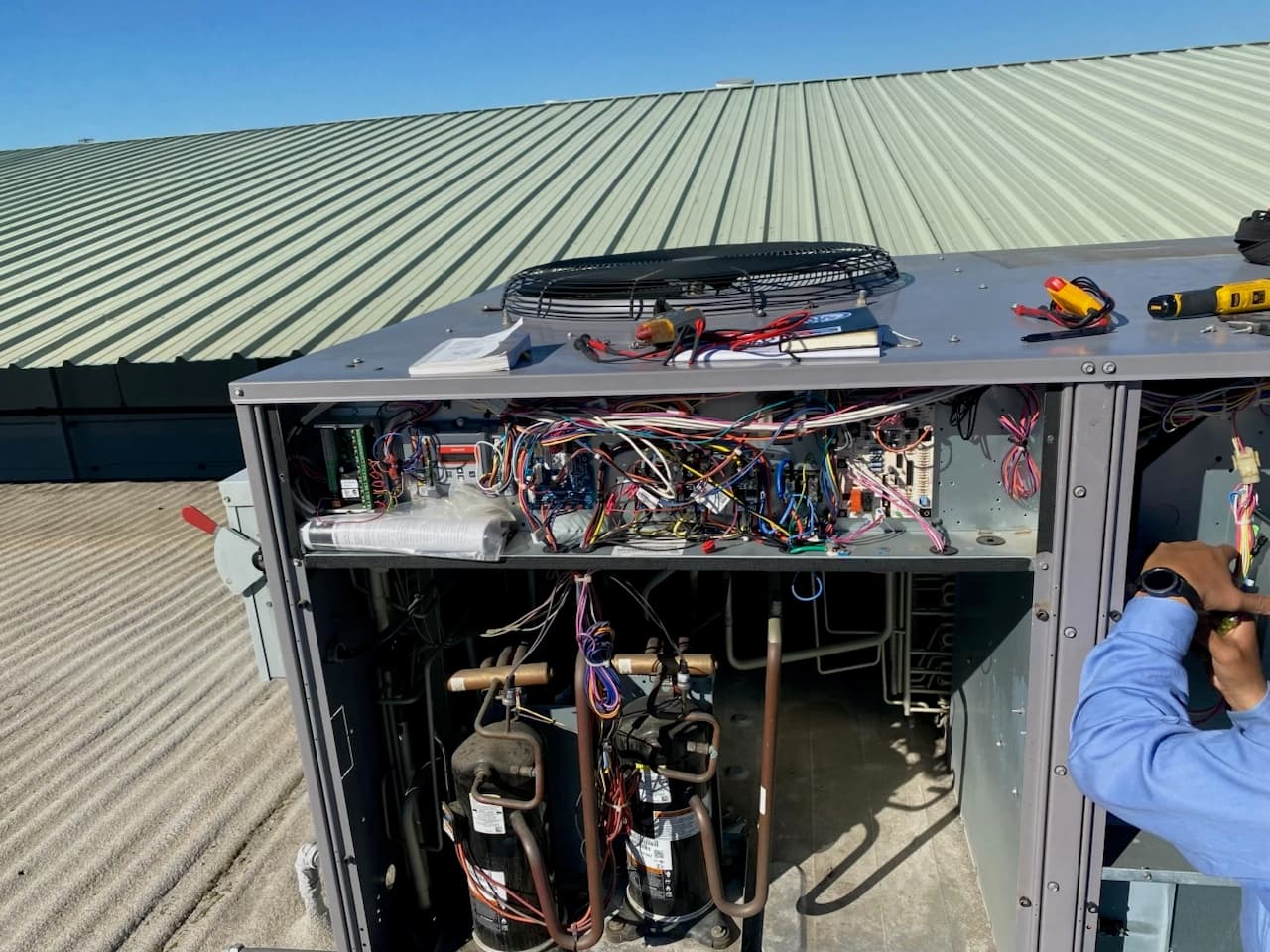
How building controls & automation work plays out in Chino
In Chino, controls are where HVAC meets food safety. The same system that schedules rooftop units often monitors cooler and freezer temperatures, alarms on excursions, and keeps the records that an auditor will ask for. When that system has drifted, the failures are quiet: an alarm threshold set so wide that a box can sit at 45 degrees for hours without notice, a temperature sensor reading three degrees low so the record looks fine while product warms, an override placed during a maintenance visit a year ago that has kept a compressor running continuously ever since. None of these show up as a breakdown. They show up as a corrective action, a utility bill, or a shortened compressor life.
Our controls work in these facilities begins with verification. We check every temperature sensor against a calibrated reference, review alarm logic and notification paths, test damper actuators and economizer lockouts, and compare programmed schedules with actual shift patterns. Many Chino plants run production hours that bear no relationship to the office schedule the controls were set to, and conditioning an empty area through a hot night is expensive.
For retail centers and the medical and professional buildings toward the Chino Hills border, the work is more conventional: economizer verification, schedule correction, and sensor calibration, with the dusty, hot conditions making actuator and damper maintenance more important than in milder cities. We document every sequence and setting so that a new plant engineer or property manager inherits a system they can understand. The root-cause diagnostics guide explains how controls problems masquerade as equipment problems.
Chino's climate and what it does to this equipment
Chino's flat terrain and open surroundings make it hot, breezy, and dusty. Summer highs are intense, Santa Ana winds blow through with little obstruction, and remaining agricultural land and busy industrial sites contribute dust to the air. Dairy and agricultural operations also add ammonia and organic particulate that can foul coils and filters faster than in a typical commercial area, and regional smog and wildfire smoke add more. For food processing and cold storage, hot afternoons coincide with peak production, so refrigeration condensers must hold performance exactly when the load is greatest.
For the equipment background behind this page, read our building controls and energy guide or the full Building Controls & Automation service page.
- Former dairy-region industrial areaFood processing, cold storage, manufacturing, and distribution buildings in the south and southeast, with large refrigeration and rooftop loads.
- Chino Spectrum and Ontario borderBig-box retail, restaurants, and entertainment with dense rooftop equipment and extended operating hours.
- Chino Airport and Merrill Avenue areaAviation-related users, light industrial tenants, and business space with wide-open exposure to wind.
- Downtown Chino and Chino Hills borderOlder storefronts, restaurants, medical offices, and community retail along the central corridors and at the city's northern edge.
- Schedule, setpoint, and sequence review across rooftop and central equipment
- Sensor calibration and economizer verification
- Alarm and trend setup so problems surface early
- Programmable and networked thermostat installation
What a building controls & automation visit includes, and the problems we most often find
- Inventory controllers, thermostats, and any building automation system
- Compare schedules and setpoints to how the building is actually used
- Verify sensors, actuators, and economizer logic against measured conditions
- Correct overrides, sequences, and alarms; document the changes
- Review trends after adjustment to confirm savings and stability
- Schedules left at default so equipment runs when nobody is there
- Equipment overridden manually and never returned to automatic
- Drifting or miswired sensors producing comfort complaints
- Economizers that never actually modulate
Building Controls & Automation in Chino: questions we get
Our Chino cold storage monitoring system shows normal temperatures, but product arrived warm at a customer. How is that possible?
Is it worth integrating refrigeration monitoring and HVAC controls at a Chino food facility?
Do you install building automation systems?
Can better controls really cut energy use?
Can you connect to our existing system?
Other services in Chino
Building Controls & Automation nearby in Inland Empire (Riverside & San Bernardino Counties)
Commercial HVAC and refrigeration across Inland Empire (Riverside & San Bernardino Counties)