Building Controls & Automation in San Bernardino, CA
Public buildings in San Bernardino often have automation systems that are partially functional: some points work, some sensors drift, and some schedules were overridden years ago. We audit what is actually controlling equipment, correct sensor and damper issues, update schedules, and document sequences. When smoke events make outdoor air unsuitable, controls should also let operators respond intentionally rather than discovering the problem through complaints.
The county seat, with downtown government buildings, hospitals, rail-served logistics, and aging mixed-use property stock that works hard through hot, smoggy summers.
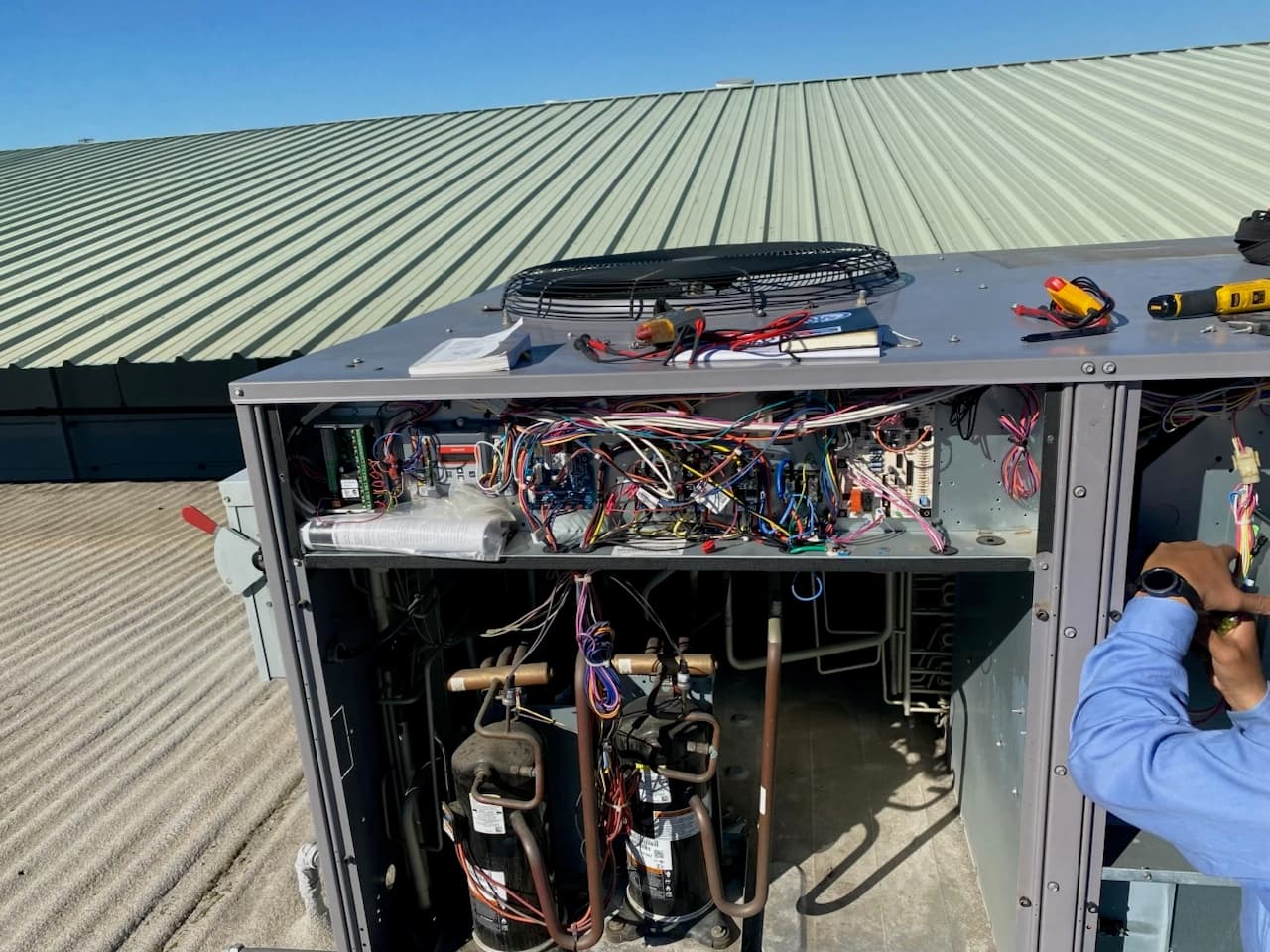
How building controls & automation work plays out in San Bernardino
The controls systems in San Bernardino's public buildings are often the most neglected asset on the property. A county office building may have a building automation system installed during a renovation, partly integrated with older pneumatic or stand-alone controls that were never fully replaced. Over the years, points stop reporting, sensors drift, schedules get overridden for a one-time event and never restored, and the operator workstation ends up showing a picture of the building that no longer matches reality. Meanwhile the rooftop units run on whatever the last override said, which in a cooling-dominated climate means a lot of hours of mechanical cooling that the weather did not require.
Our controls work begins with an audit of what is actually controlling what. We verify sensor readings against calibrated instruments, test economizer dampers and actuators, check outdoor air lockouts, and compare programmed schedules with real occupancy at courts, clinics, offices, and school buildings. In this city the outdoor air strategy needs one more layer: during smoke events, operators need a way to lock out economizers intentionally and bring them back when air quality clears. We make sure that control exists and that the facilities team knows how to use it.
The deliverable is a documented sequence of operations, corrected setpoints and schedules, and a list of failed points with a repair plan. For agencies, that documentation also supports energy reporting and justifies controls upgrades in a capital request. The government buildings sector page covers how controls fit into a public facility's long equipment life cycle.
San Bernardino's climate and what it does to this equipment
San Bernardino sits at the foot of the mountains in a pocket where hot, polluted air often collects. Summer highs are among the highest in the region, and smog and fine particulate coat coils and clog filters faster than in coastal areas. Santa Ana winds in fall and winter bring heat, dust, and elevated fire danger, and wildfire smoke from nearby mountains is a recurring factor, sometimes closing windows of acceptable outdoor air for economizer use. Cold winter nights give heating real work to do. Equipment here is hit by every factor at once: high ambient, dirty air, and wide seasonal range.
For the equipment background behind this page, read our building controls and energy guide or the full Building Controls & Automation service page.
- Downtown and government centerCounty and city offices, courts, and older commercial buildings with mixed equipment generations and strict reliability expectations.
- Hospitality Lane and Tri-City corporate areaHotels, offices, restaurants, and corporate buildings with large chilled and packaged systems and long cooling hours.
- Inland Center and Tippecanoe corridorMall-area retail, big-box tenants, and surrounding service businesses with dense rooftop equipment.
- Rail and airport logistics areaWarehouses, distribution buildings, and industrial space near the rail yards and San Bernardino International Airport.
- Schedule, setpoint, and sequence review across rooftop and central equipment
- Sensor calibration and economizer verification
- Alarm and trend setup so problems surface early
- Programmable and networked thermostat installation
What a building controls & automation visit includes, and the problems we most often find
- Inventory controllers, thermostats, and any building automation system
- Compare schedules and setpoints to how the building is actually used
- Verify sensors, actuators, and economizer logic against measured conditions
- Correct overrides, sequences, and alarms; document the changes
- Review trends after adjustment to confirm savings and stability
- Schedules left at default so equipment runs when nobody is there
- Equipment overridden manually and never returned to automatic
- Drifting or miswired sensors producing comfort complaints
- Economizers that never actually modulate
Building Controls & Automation in San Bernardino: questions we get
Our county building's automation system shows everything normal, but tenants complain constantly. Why?
Should economizers be used at all in San Bernardino given the heat and the smoke?
Do you install building automation systems?
Can better controls really cut energy use?
Can you connect to our existing system?
Other services in San Bernardino
Building Controls & Automation nearby in Inland Empire (Riverside & San Bernardino Counties)
Commercial HVAC and refrigeration across Inland Empire (Riverside & San Bernardino Counties)