Building Controls & Automation in Rancho Cucamonga, CA
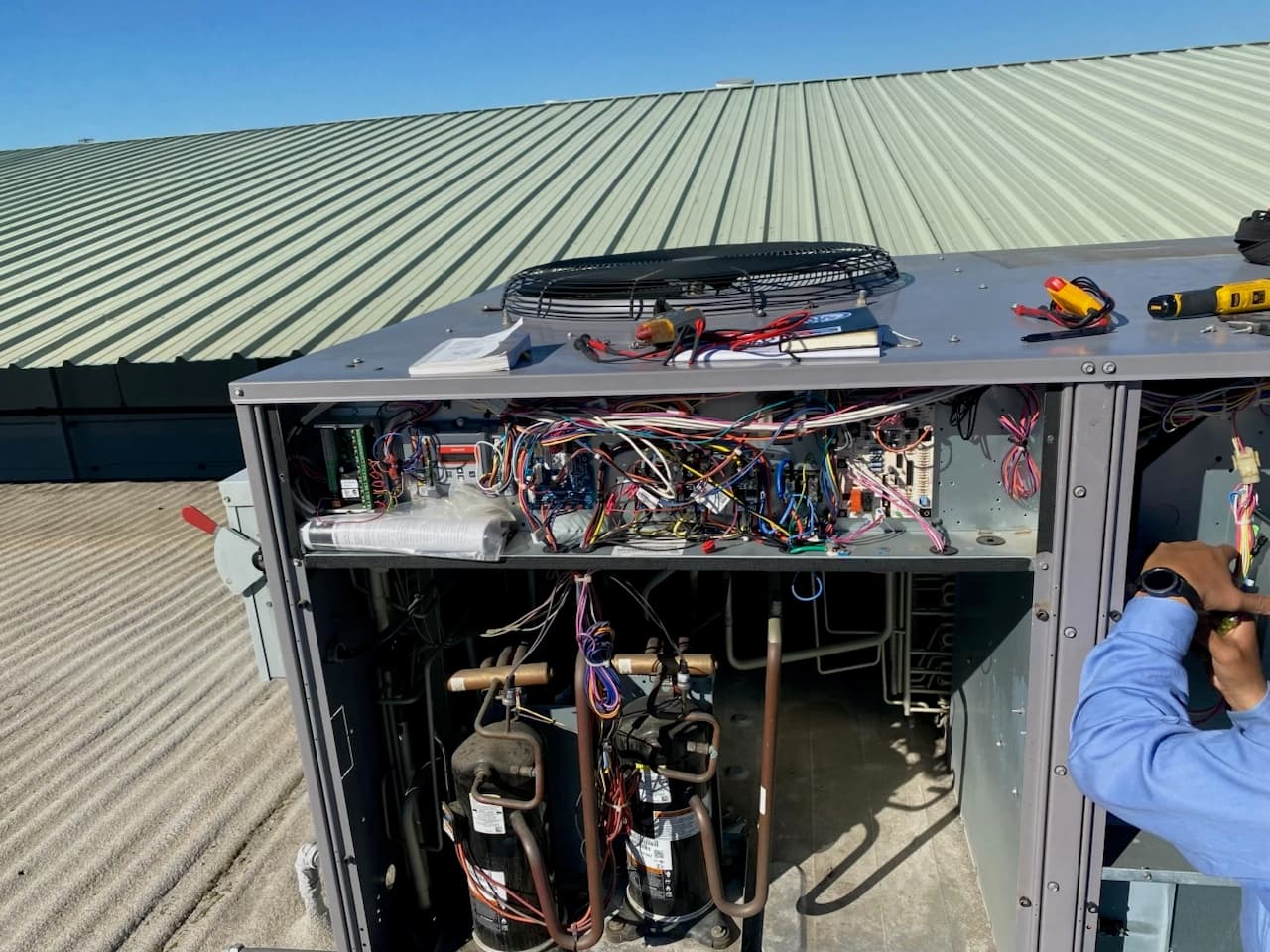
Rancho Cucamonga's cooler nights and mild winter days make economizers valuable, but only if they work. We test outdoor air dampers, return and mixed air sensors, and lockout settings, and verify that schedules reflect real operating hours at retail, medical, and industrial properties. When the controls respond to actual conditions, rooftop units spend fewer hours in mechanical cooling and wear more slowly.
A foothill city mixing Victoria Gardens retail, medical offices, Foothill Boulevard commercial strips, and large industrial parks that sit directly in the path of canyon wind.
How building controls & automation work plays out in Rancho Cucamonga
Few cities in the Inland Empire give economizers as much to work with as Rancho Cucamonga. Cool foothill nights and mild winter days mean a rooftop unit with a working outdoor air damper can cover a large share of the load without the compressor for months each year. The trouble is that most of the dampers we find on Foothill corridor and Haven Avenue roofs do not work: actuators seized, linkages disconnected after a repair, or outdoor air sensors that read ten degrees high because they are mounted in the sun. Units then run in mechanical cooling on a 60-degree morning and wear accordingly.
Retail centers add the schedule problem. Tenant hours at Victoria Gardens vary widely, with restaurants closing hours after retail, and a center-wide schedule set years ago means some units run empty suites while others start late. For medical offices, the issue is usually setpoint and humidity control in exam and procedure rooms, with thermostats that staff adjust constantly because the system never held a stable temperature in the first place.
A controls visit here starts with verifying what is actually installed and what is actually responding: damper travel, sensor accuracy against a reference, lockout settings, and schedules against real operating hours. Industrial buildings with stand-alone thermostats often benefit from a modest networked system that gives the owner one view of all units. Whatever the system, we document the sequences and settings in the DaVinci Portal so the next facility manager inherits a known configuration.
Rancho Cucamonga's climate and what it does to this equipment
The city's position at the base of the San Gabriel Mountains defines its climate. Canyon winds through Cucamonga and Day Creek can arrive suddenly and hard, throwing dust, leaves, and debris across rooftops and into condenser coils. Summers are hot and dry, with the foothills adding to afternoon temperatures, and fall brings Santa Ana conditions and heightened fire risk in the surrounding hills. Wildfire smoke can load filters quickly. Winter nights are noticeably cooler than elsewhere in the Inland Empire, so equipment sees a wide range and economizers and heating components actually get used.
For the equipment background behind this page, read our building controls and energy guide or the full Building Controls & Automation service page.
- Victoria Gardens and Day Creek areaOutdoor retail, dining, and entertainment with long operating hours and many tenant-controlled rooftop and split systems.
- Foothill Boulevard corridorRestaurants, medical offices, and older commercial strips along the historic route, many with mixed equipment generations.
- Industrial parks near Arrow Route and Haven AvenueManufacturing, food-related production, and distribution buildings with large rooftop packaged-unit arrays and refrigerated spaces.
- Epicenter and Etiwanda mixed-use areasEvent-oriented dining, newer offices, and developing commercial pads toward the city's northern and eastern edge.
- Schedule, setpoint, and sequence review across rooftop and central equipment
- Sensor calibration and economizer verification
- Alarm and trend setup so problems surface early
- Programmable and networked thermostat installation
What a building controls & automation visit includes, and the problems we most often find
- Inventory controllers, thermostats, and any building automation system
- Compare schedules and setpoints to how the building is actually used
- Verify sensors, actuators, and economizer logic against measured conditions
- Correct overrides, sequences, and alarms; document the changes
- Review trends after adjustment to confirm savings and stability
- Schedules left at default so equipment runs when nobody is there
- Equipment overridden manually and never returned to automatic
- Drifting or miswired sensors producing comfort complaints
- Economizers that never actually modulate