Commercial Refrigeration in Glendale, CA
Restaurants along Brand Boulevard, food tenants around the Galleria, and specialty food businesses throughout Glendale depend on walk-in and reach-in refrigeration. Hot valley-edge summers load condensers heavily, and rooftop or alley-located units collect dust and debris quickly. Typical problems include dirty condensers, failing evaporator fans, and defrost trouble. Diagnosis focuses on why temperature drifts, protecting product and keeping health inspections uneventful. Food tenants around the Galleria also deal with long delivery and operating hours that leave little downtime for repairs.
Brand Boulevard retail and mixed-use, entertainment and animation offices, hospital campuses, and the Glendale Galleria area at the edge of the San Fernando Valley.
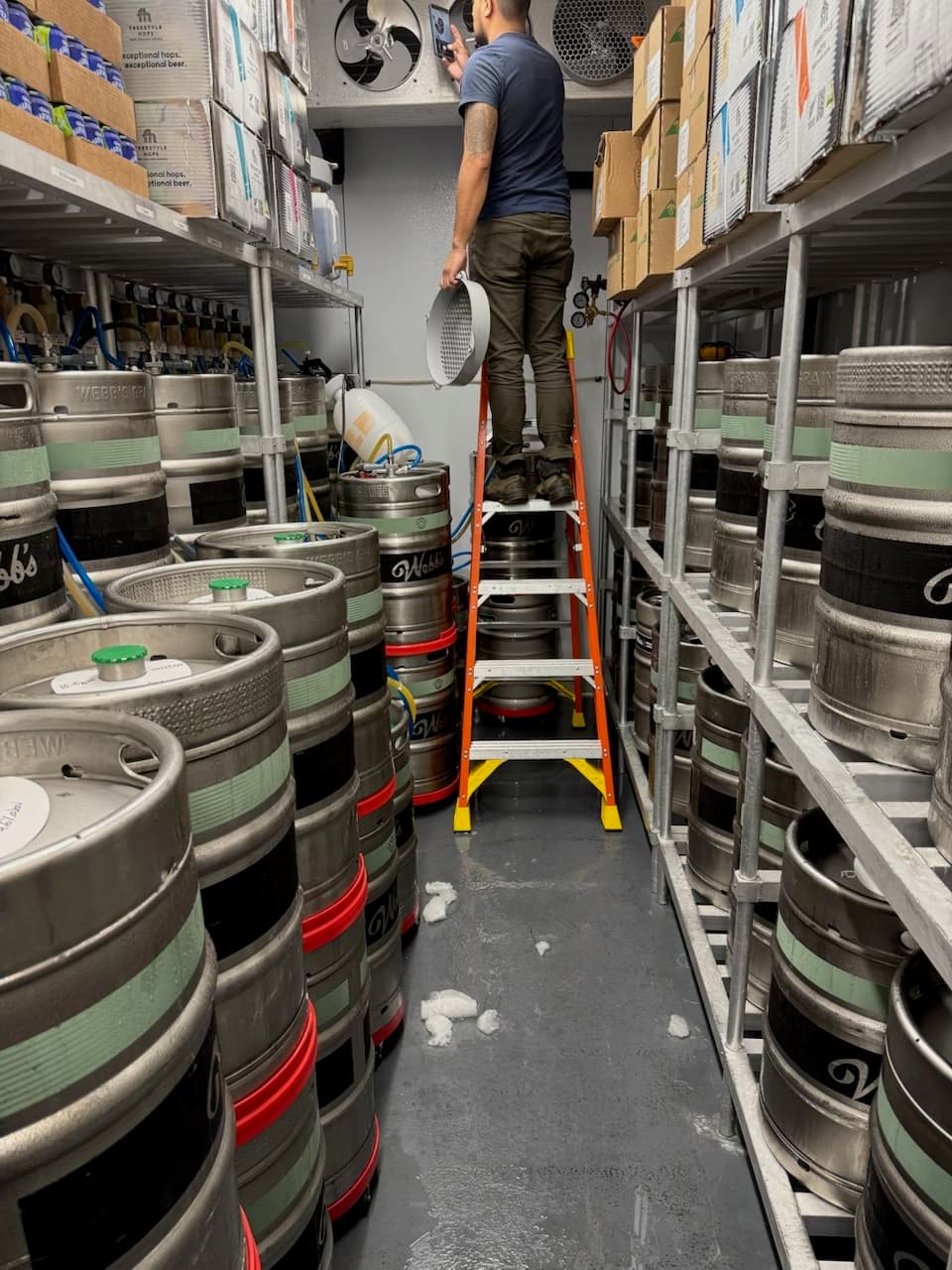
How commercial refrigeration work plays out in Glendale
Refrigeration in Glendale is concentrated in a handful of corridors. Independent markets, bakeries, and restaurants along Glenoaks Boulevard, Central Avenue, and the eastern end of Colorado Street run walk-in coolers and reach-in cases that were often installed by a previous tenant and have been serving a different menu ever since. Food-court tenants inside the Galleria and the restaurant row around the Americana run compact walk-ins in back corridors where the condensing unit sits on a shared roof or in a service alley with little airflow. Hospital kitchens and medical office pharmacies add temperature-critical refrigeration where a drifting box is a compliance problem, not just a product problem.
What fails here follows the climate. Condensing units on hot roofs along Central Avenue run at elevated head pressure through the long summer, which shortens compressor life and makes marginal coils fail first. Walk-in doors in busy kitchens stay open through long delivery windows, loading the evaporator with moisture and driving defrost problems that show up as ice on the coil and warm product on the shelf. The repair that lasts addresses the environment as well as the component: condenser location, airflow, gasket condition, and defrost control together.
A Glendale service visit typically starts before opening or after the dinner rush, since most of these kitchens have no slack in the middle of the day. We log box temperature trends, superheat, defrost timing, and photographs of coil and door condition so the owner can see the pattern over several visits. For markets and restaurants that cannot absorb product loss, that record is also what justifies replacing a tired condensing unit before it fails on a holiday weekend. The refrigeration service page and the walk-in cooler guide cover what we check.
Glendale's climate and what it does to this equipment
Glendale is warmer than the coast, with hot, dry summers shaped by its position against the Verdugo Mountains and the edge of the San Fernando Valley. Summer afternoons regularly reach the 90s, with heat waves that go higher, and nights offer less relief than coastal cities. Santa Ana winds bring dry air, dust, and fire-season smoke that clog filters and coils. Hillside and foothill conditions also deposit leaves and debris in outdoor equipment, and long cooling seasons make efficient airflow essential.
For the equipment background behind this page, read our walk-in cooler and freezer guide or the full Refrigeration: Walk-In & Reach-In Coolers/Freezers service page.
- Downtown Glendale, Brand Boulevard, and AmericanaMixed-use retail, restaurants, offices, and residential-adjacent commercial space with central equipment rooms and extensive rooftop packages.
- Glendale Galleria areaLarge-format retail, food courts, and parking structures with long operating hours and high cooling demand.
- Entertainment and animation officesCreative campuses and studio-style offices with irregular schedules, server and edit rooms, and specialized comfort needs.
- Hospital campuses and medical officesMedical buildings where filtration, redundancy, and careful scheduling shape every service visit.
- Evaporator/condenser coil cleaning and defrost checks
- TXV/EEV, superheat, subcool, and pressure readings logged
- Door seals, drains, heaters, and fan packages inspected
- DaVinci Portal: temps and pressures logged by asset over time
What a commercial refrigeration visit includes, and the problems we most often find
- Check current box temperature against setpoint and recent trend
- Inspect door seals, drains, and evaporator/condenser coils for buildup
- Take superheat, subcool, and pressure readings against manufacturer spec
- Address the root cause — not just a temporary recharge
- Log readings to the asset so drift is caught early next visit
- Door seals and hinges that no longer hold a tight close
- Evaporator coils iced over from a defrost cycle issue
- Condenser coils caked with grease or debris, especially near kitchen exhaust
- Slow refrigerant leaks that show up as gradual temperature drift, not sudden failure
Commercial Refrigeration in Glendale: questions we get
Our walk-in on Glenoaks keeps icing the evaporator every few weeks. Is that a refrigerant problem?
Usually not. In a busy Glendale kitchen the common causes are door gaskets or closers that let warm, humid air in during long prep and delivery periods, a defrost cycle that was set for a lighter load, or an evaporator fan that is not moving enough air across the coil. Low refrigerant can cause icing too, but it is lower on the list. We measure superheat, check defrost timing and heaters, and inspect the door before touching the charge so the fix holds.
Our condensing unit sits on the roof of a Galleria-area restaurant and gets very hot in summer. Is relocating it worth considering?
Sometimes. A condensing unit boxed in by parapets, screening, or neighboring equipment on a hot roof can run at head pressures that cut capacity and shorten compressor life every summer. Before relocating, we check whether better clearance, a condenser fan upgrade, or shading changes the numbers, since those are cheaper than new line sets. If relocation is still the right answer, it is planned around the landlord's roof rules and the tenant's operating hours.
Can you service equipment during business hours?
We can work around service windows for kitchens and retail floors, including early-morning or after-hours visits when product safety is time-sensitive.
Do you handle health-department documentation?
Yes — temperature and pressure readings are logged to the asset in the Portal, so you have a record ready for inspection.