RTU & Split Installs in Los Angeles, CA
Replacing a rooftop unit in Los Angeles usually starts with the roof itself. Older buildings can have limited structural capacity, crowded rooftops, awkward access, or street conditions that complicate a crane lift. Permits generally go through LADBS, and scope, plan check, and inspection sequencing depend on the project, so confirm current requirements before scheduling. Davinci Mechanical coordinates curb adapters, electrical upgrades, Title 24 requirements, and lift timing so the swap happens in a tight window instead of dragging across weeks of tenant disruption.
A sprawling mix of high-rise offices, production and creative space, food distribution in the industrial core, and a long LAX-adjacent logistics corridor, all under one of the state's most demanding permit environments.
How rtu & split installs work plays out in Los Angeles
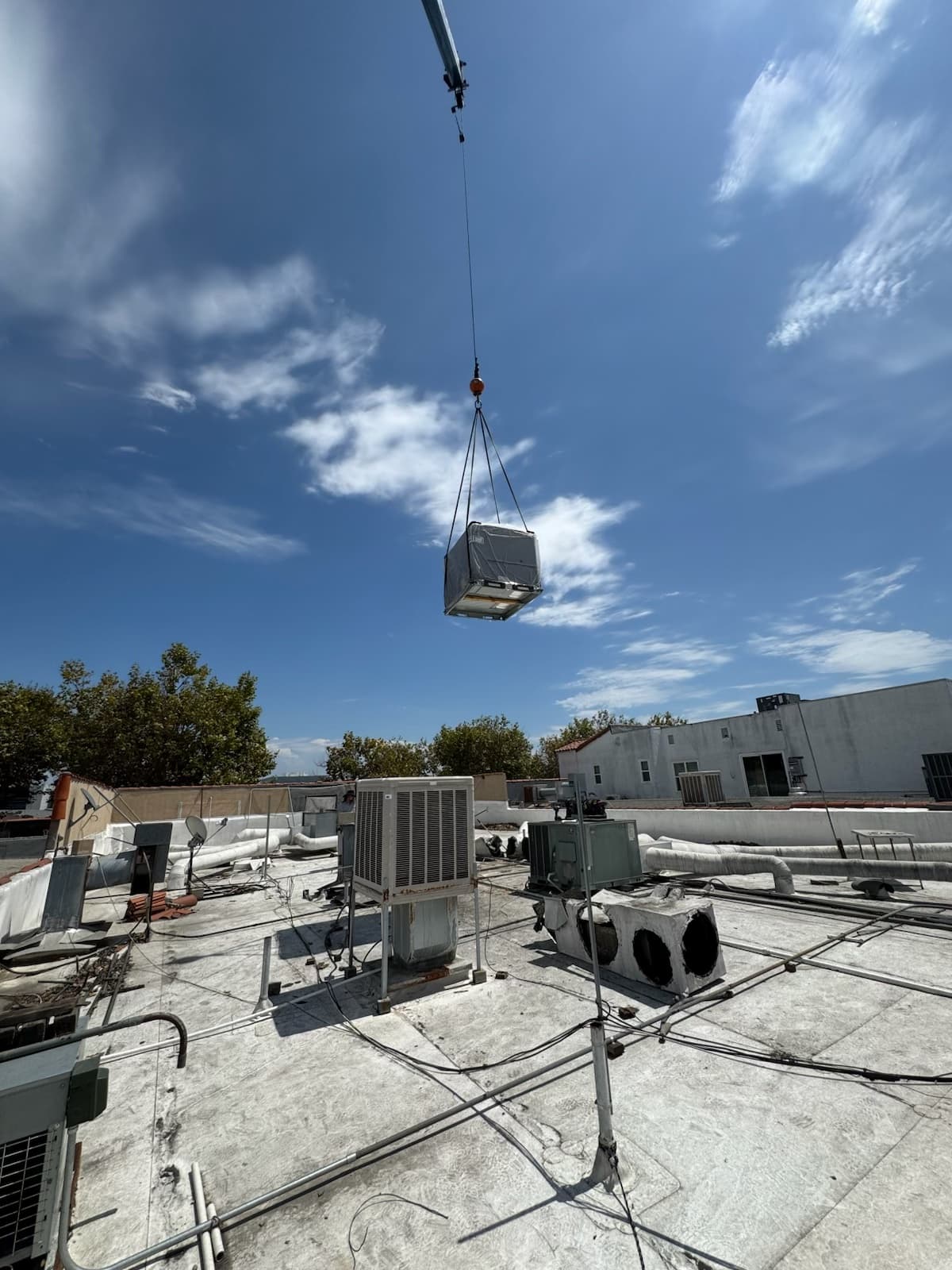
Rooftop replacements in Los Angeles are decided on the street before they are decided on the roof. A crane set on a strip center along Ventura Boulevard in Sherman Oaks is routine: wide parking lot, single-story roof, early morning lift before the stores open. The same unit going onto a four-story mixed-use building on Sunset in Echo Park means a lane closure, a traffic control plan, and timing around a bus route. Permits for both run through LADBS, and depending on tonnage, electrical changes, and whether the structure is being touched, the project may need plan check rather than an over-the-counter mechanical permit. Confirm current requirements early, because a surprise plan check adds weeks.
Older building stock drives most of the scope creep here. Pre-1980 roofs in Mid-City and the Westside often have units sitting on sleepers or improvised curbs rather than proper structural curbs, and the electrical disconnect may be fed by a conductor that would not pass inspection today. Title 24 adds its own layer: economizers, thermostat and fault-detection requirements, and acceptance testing where the scope triggers them. Studio-adjacent buildings in Hollywood add a twist, since a unit serving an edit suite or a stage support space may need to be swapped on a specific dark day with no slack.
A clean LA replacement looks like this: survey and structural check done before equipment is ordered, curb adapter fabricated in advance, electrical corrected the week before, crane permit and street closure in hand, and the lift finished in a single morning with the inspector scheduled for the following day. The commercial RTU replacement process and the rooftop unit guide cover the general decision points; in Los Angeles the local variables are roof structure, street access, and the permit path.
Los Angeles's climate and what it does to this equipment
Los Angeles has a Mediterranean climate, but the city spans very different conditions. Areas near the coast stay under the marine layer through much of late spring and early summer, while the basin and downtown run noticeably hotter in late summer and early fall, and Santa Ana wind events can bring dry heat and blowing dust. Equipment sees long cooling seasons, and rooftop condensers in urban areas collect soot, leaf litter, and airborne grime. Older buildings with undersized airflow often show problems only during the first stretch of real heat, which is exactly when response time matters most.
For the equipment background behind this page, read our commercial rooftop unit guide or the full RTU & Split System Installs service page.
- Downtown Los Angeles and the Historic CoreConverted older buildings, high-rise offices, and new mixed-use towers, with a mix of central plants, VRF, and rooftop equipment that often needs careful hoisting and access planning.
- Mid-Wilshire, Miracle Mile, and Century CityDense office towers and professional suites along Wilshire, where chilled water systems, after-hours scheduling, and tenant-sensitive work windows shape every service call.
- Hollywood and studio-related production spaceProduction offices, post-production suites, and sound-sensitive rooms where noise, humidity, and tight temperature control matter as much as capacity.
- Arts District, Vernon-adjacent industrial, and the LAX corridorFood distribution, cold storage, and warehouse buildings east of downtown, plus hotels and logistics buildings along the airport corridor on the west side.
- Site survey covering load, airflow balancing, and duct condition
- Clean rigging with code-correct gas, electrical, and condensate work
- Startup readings documented and stored in the Portal
- DaVinci Portal included: asset QR tag + warranty paperwork on file
What a rtu & split installs visit includes, and the problems we most often find
- Site survey — existing curb/duct compatibility, load, and airflow requirements
- Equipment selection sized to actual load and hours of operation, not just square footage
- Crane scheduling and rigging coordinated for roof access
- Install with code-correct gas, electrical, and condensate work
- Startup readings taken and documented; warranty registered in the Portal
- Undersized or oversized replacement units causing short-cycling or poor comfort
- Curb mismatches that turn a 'simple swap' into a bigger job mid-install
- Duct transitions that don't match the new unit's airflow requirements
- Aging units on refrigerant types that are getting harder and more expensive to service