Chiller & Central Plant Service in Los Angeles, CA
Downtown Los Angeles and the Wilshire corridor include buildings with central chilled water plants, cooling towers, and pumps that have been running for decades. Those systems tend to fail slowly: fouled tubes, drifting controls, water treatment gaps, and pump wear that reduces efficiency long before anything stops. Davinci Mechanical focuses on trend data, approach temperatures, and tower condition so owners can plan overhauls or replacements on a schedule instead of during a heat wave with a full building waiting.
A sprawling mix of high-rise offices, production and creative space, food distribution in the industrial core, and a long LAX-adjacent logistics corridor, all under one of the state's most demanding permit environments.
How chiller & central plant service work plays out in Los Angeles
Central plants in Los Angeles live in the towers: Bunker Hill, the Financial District, the Wilshire corridor through Mid-Wilshire and Westwood, and Century City. Many of these plants were built in the 1970s and 1980s and have been through one or two chiller replacements and several rounds of control upgrades. The cooling towers sit on roofs or in mechanical penthouses exposed to a basin atmosphere that carries soot, construction dust, and in fire season ash, which ends up in the basin and the fill. Hospital and university campuses in Westwood and the medical corridors add chillers that cannot be taken down without a redundancy plan.
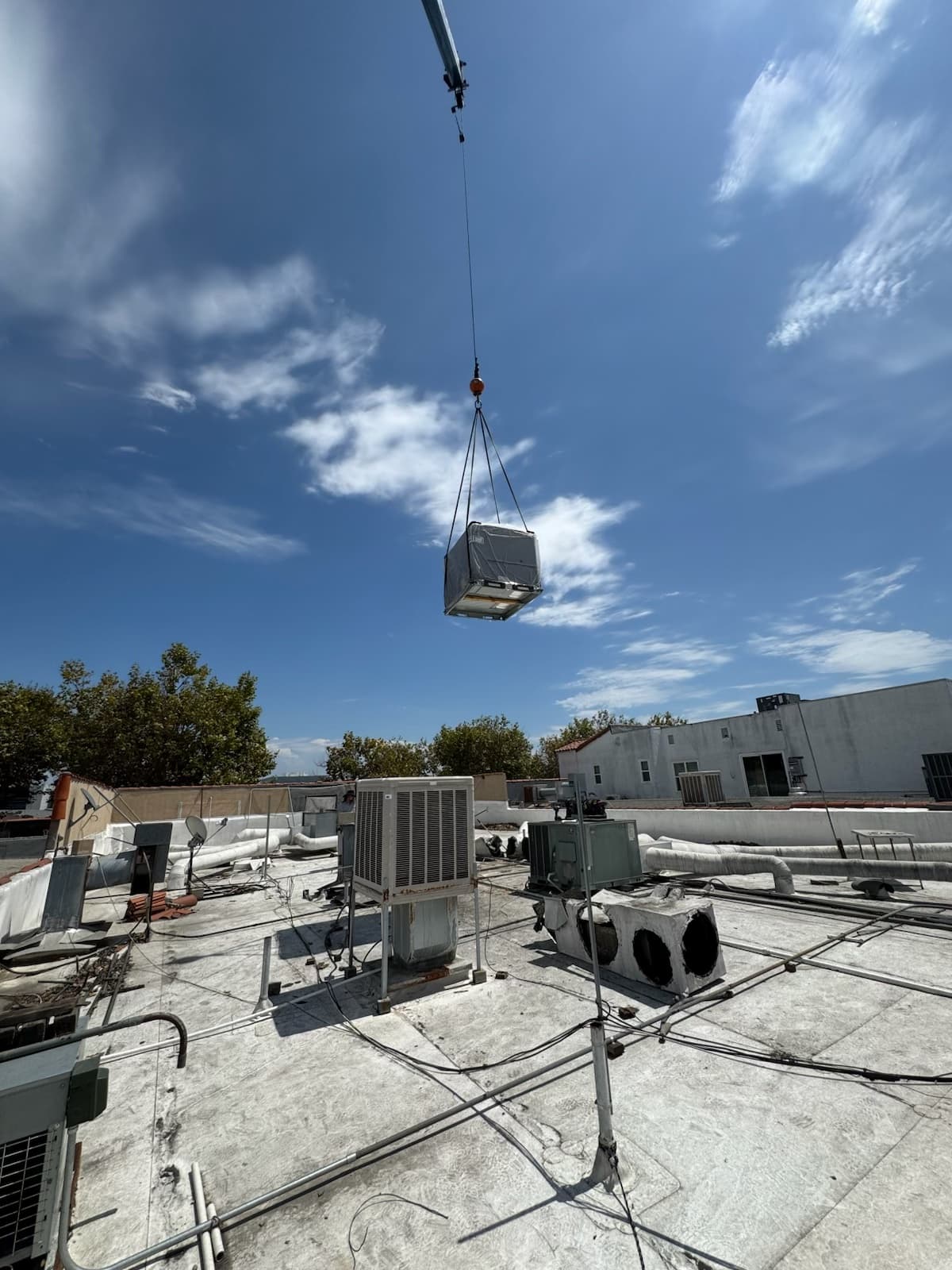
The failures are slow. Approach temperatures creep up as condenser tubes foul, water treatment lapses when a vendor changes, pump bearings wear, and controls drift until the plant is running two chillers where one should do. By the time a tenant complains in September, the plant has been losing efficiency for two years. Work in these buildings runs on engineering's calendar: eddy current testing and tube cleaning on weekends, tower work in the mild months, and anything involving a crane coordinated with building management and the city for the street.
The goal is a plant whose trend data tells the owner what is coming. Logged approach temperatures, tower performance, and pump readings over a few seasons show whether the next capital item is a tube bundle, a tower rebuild, or a chiller replacement, and when. The chillers and hydronic systems guide covers the mechanics, and plant work in Los Angeles is the kind of larger project that is mobilized from Orange County and planned as a bid-level engagement rather than a service call.
Los Angeles's climate and what it does to this equipment
Los Angeles has a Mediterranean climate, but the city spans very different conditions. Areas near the coast stay under the marine layer through much of late spring and early summer, while the basin and downtown run noticeably hotter in late summer and early fall, and Santa Ana wind events can bring dry heat and blowing dust. Equipment sees long cooling seasons, and rooftop condensers in urban areas collect soot, leaf litter, and airborne grime. Older buildings with undersized airflow often show problems only during the first stretch of real heat, which is exactly when response time matters most.
For the equipment background behind this page, read our chillers and hydronic systems guide or the full Chillers & Central Plant Service service page.
- Downtown Los Angeles and the Historic CoreConverted older buildings, high-rise offices, and new mixed-use towers, with a mix of central plants, VRF, and rooftop equipment that often needs careful hoisting and access planning.
- Mid-Wilshire, Miracle Mile, and Century CityDense office towers and professional suites along Wilshire, where chilled water systems, after-hours scheduling, and tenant-sensitive work windows shape every service call.
- Hollywood and studio-related production spaceProduction offices, post-production suites, and sound-sensitive rooms where noise, humidity, and tight temperature control matter as much as capacity.
- Arts District, Vernon-adjacent industrial, and the LAX corridorFood distribution, cold storage, and warehouse buildings east of downtown, plus hotels and logistics buildings along the airport corridor on the west side.
- Chiller, tower, pump, and VFD service with logged operating data
- Trend-based diagnosis: approach, delta-T, amp draw, and pressures
- Replacement planning with rigging, power, and temporary cooling considered
- Water-treatment and Legionella-control coordination for water-cooled plants
What a chiller & central plant service visit includes, and the problems we most often find
- Review the plant: chillers, pumps, towers, controls, and recent operating history
- Take full operating readings and compare against design and prior visits
- Inspect and test safeties, strainers, VFDs, valves, and control sequences
- Report findings with prioritized repairs and a forward capital outlook
- Document the plant by asset in the DaVinci Portal for the next visit
- Falling delta-T pushing chillers to run more than the load requires
- Fouled condenser tubes or coils raising approach temperature and amp draw
- Neglected water treatment causing scale, corrosion, and biological growth
- Controls overridden to manual and never returned to automatic